Health & Wellness
Hygiene has the demand, skin care, hair care and beauty have the momentum
Personal Hygiene remains the strongest demand pool in Personal Care. But Skin Care, Hair Care and Beauty are gaining ground.
Read the articleAnalysis from Kasi analysts, built on Kasi's own consumer data and the wider economic picture.
Personal Hygiene remains the strongest demand pool in Personal Care. But Skin Care, Hair Care and Beauty are gaining ground.
Read the articleMost businesses will enter 2027 with a brand tracker in one hand, sales history in the other, and a set of assumptions about what happens next. The real risk is not making those assumptions. It is failing to monitor whether they are still true.
Most African countries still rely more on external partners, leaving regional demand and production capacity largely untapped. Stronger regional supply chains can reduce exposure to global shocks while unlocking new growth.
For decades, marketers have been taught that brand loyalty is the ultimate measure of success. Companies invest millions of dollars building awareness, strengthening brand equity and increasing customer loyalty, believing that consumers who love a…
Even under pressure, consumers continue to prioritize everyday categories, showing that the wallet is not disappearing, it is being redistributed
Nearly half (47%) of consumers are changing what they purchase in response to rising prices, switching to cheaper alternatives or changing their purchasing habits.
Staples are moving in different directions, protein demand is holding up in some formats but not others, while even snacks and discretionary foods are showing pockets of growth.
Growth depends not only on what brands offer, but on what moves consumers from consideration to action. Affordability, accessibility, trust and convenience can determine whether intent becomes conversion.
Our previous analysis showed that African consumers are mission loyal rather than channel loyal. Supermarkets dominate large monthly stock-up trips, open-air markets remain central to fresh produce purchases, while kiosks continue to own quick top-up…
Kasi Insight Retail in Africa Survey, showed that African consumers are becoming increasingly mission-led in the way they shop. Households are moving fluidly between supermarkets, kiosks, open-air markets, wholesalers and digital channels, selecting each format…
Africa's retail landscape is often described as a battle between modern trade and traditional trade, but the data suggests something far more complex is happening. The same household may buy fresh produce from an open-air…
Uganda’s retail sector slowed in early 2025 as consumers pulled back on essentials, but remained engaged in wellness, entertainment, and digital categories. Gen Z and male consumers emerged as key demand drivers, revealing new opportunities for brands.
Kenya’s consumer market is shifting toward intentional spending, holistic wellbeing, and environmentally conscious choices. This evolution challenges brands to move beyond visibility and deliver meaningful, purpose-led value.
Inflation remains a major stressor for Ivorian consumers, especially in essential categories like food, education, and transport. While some sectors show price relief, high-income earners and Millennials report the highest financial stress.
Staples and fresh produce drive food demand in Cameroon, with mid-income consumers favoring cooking oil, low-income groups prioritizing flour, and high-income earners leading in fresh groceries. Affordability remains key, shaping product innovations.
Households in Ivory Coast prioritize dishwasher detergent, oven cleaner, and dishwashing liquid, reflecting evolving cleaning habits. Gen X and Millennials clean more frequently than Gen Z, with women leading in daily usage.
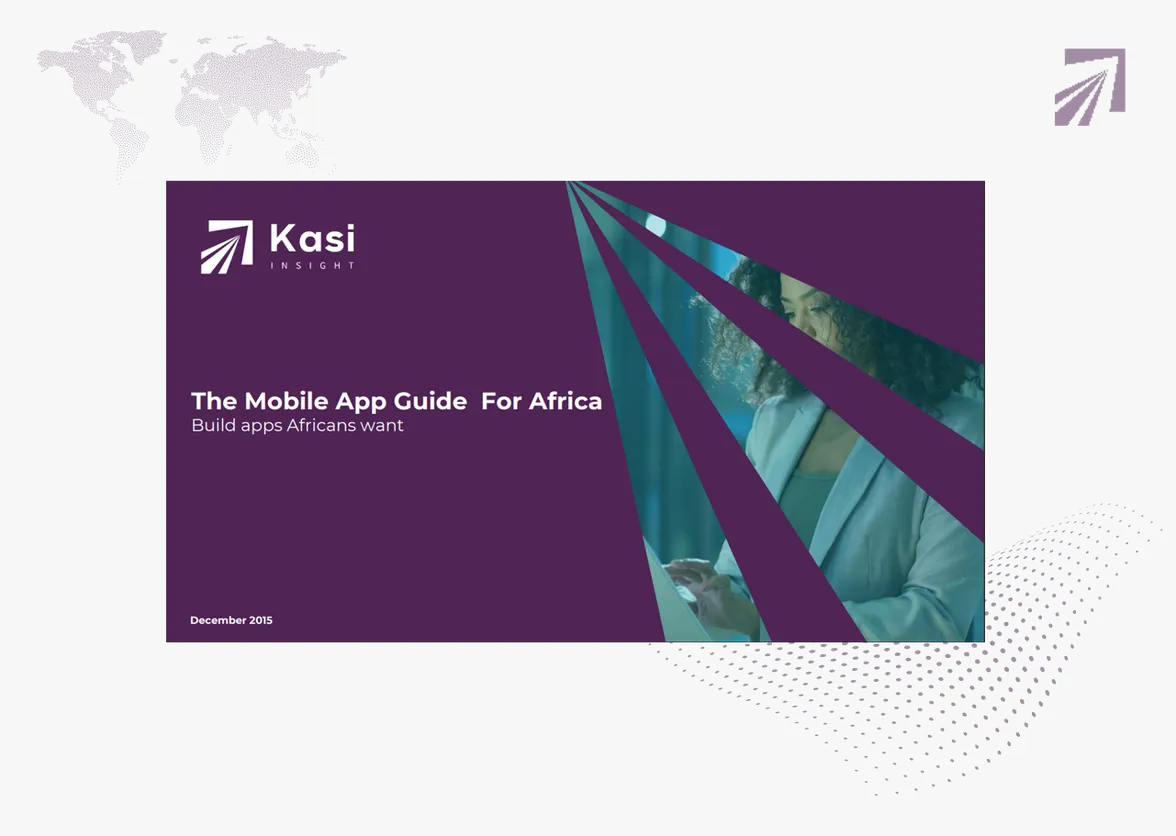
Overview Kasi Insight's report, "The Mobile App Guide for Africa," delves into the dynamics of the mobile app landscape in Kenya, Cameroon, and Ghana. Published in December 2015, the report aims to unravel the challenges…
Overview The report, titled "COVID-19 PULSE: Its impact on Africans and your business," explores the repercussions of the COVID-19 pandemic on African consumers and businesses. Despite the relatively low number of cases in Africa at…
Tell us what your business needs to understand, and we'll recommend the appropriate approach.