Health & Wellness
Hygiene has the demand, skin care, hair care and beauty have the momentum
Personal Hygiene remains the strongest demand pool in Personal Care. But Skin Care, Hair Care and Beauty are gaining ground.
Read the articleAnalysis from Kasi analysts, built on Kasi's own consumer data and the wider economic picture.
Personal Hygiene remains the strongest demand pool in Personal Care. But Skin Care, Hair Care and Beauty are gaining ground.
Read the articleMost businesses will enter 2027 with a brand tracker in one hand, sales history in the other, and a set of assumptions about what happens next. The real risk is not making those assumptions. It is failing to monitor whether they are still true.
Most African countries still rely more on external partners, leaving regional demand and production capacity largely untapped. Stronger regional supply chains can reduce exposure to global shocks while unlocking new growth.
For decades, marketers have been taught that brand loyalty is the ultimate measure of success. Companies invest millions of dollars building awareness, strengthening brand equity and increasing customer loyalty, believing that consumers who love a…
Canadian consumer confidence has remained slightly negative over the past year, suggesting voters are cautious but not seeking drastic change. With steady sentiment and a preference for stability, the Liberal Party is poised for victory in the elections.
The world is moving from a U.S.-led model of global confidence to a multipolar system anchored by regional trust and institutional strength. Africa now has a unique opportunity to emerge as a key cluster of global stability, innovation, and leadership.
Kenya’s Central Bank has cut rates five times since August 2024 to stimulate a fragile economy. But credit remains costly, consumer sentiment is stuck in negative territory, and lending is slow to respond. The easing path is right, but it must go deeper.
Consumer sentiment in Africa declined again in March, driven by falling confidence in current conditions and rising financial stress. Most household indices worsened, with discretionary spending and job prospects hit hardest.
In Ivory Coast, financial fairness remains a challenge, with Gen Z the least satisfied. Traditional gender roles still shape responsibilities, but younger generations are starting to push back.
Trump’s return has sparked sharp divisions across Africa. While some countries still support him, many are turning toward self-reliance, regional trade, and new global alliances.
Inflation remains a major stressor for Ivorian consumers, especially in essential categories like food, education, and transport. While some sectors show price relief, high-income earners and Millennials report the highest financial stress.
Ghanaians are adapting to rising living costs by cutting spending, seeking discounts, and relying on community support. Millennials and lower-income groups are most affected, creating opportunities for brands to offer affordable, value-driven solutions.
In February, consumer confidence in Africa fell by 3 points, ending three months of stability. While current conditions improved, there was a drop in future expectations and weaker household finances kept spending cautious.
Ghana’s relationships are rewriting partnership rules in decision-making but remain tethered to traditional labor divides. With women disproportionately burdened, gender advocacy must reimagine—not reject—tradition to build equitable homes.
Businesses that embed sustainability into their strategy are more resilient, innovative, and future-proof. By balancing short-term agility with long-term vision, companies can thrive in an era of conscious capitalism.
Financial expectations are quietly reshaping relationships in Kenya, with many partners feeling an unfair burden. When money and traditional gender roles clash, tensions rise, making open conversations about finances more crucial than ever.
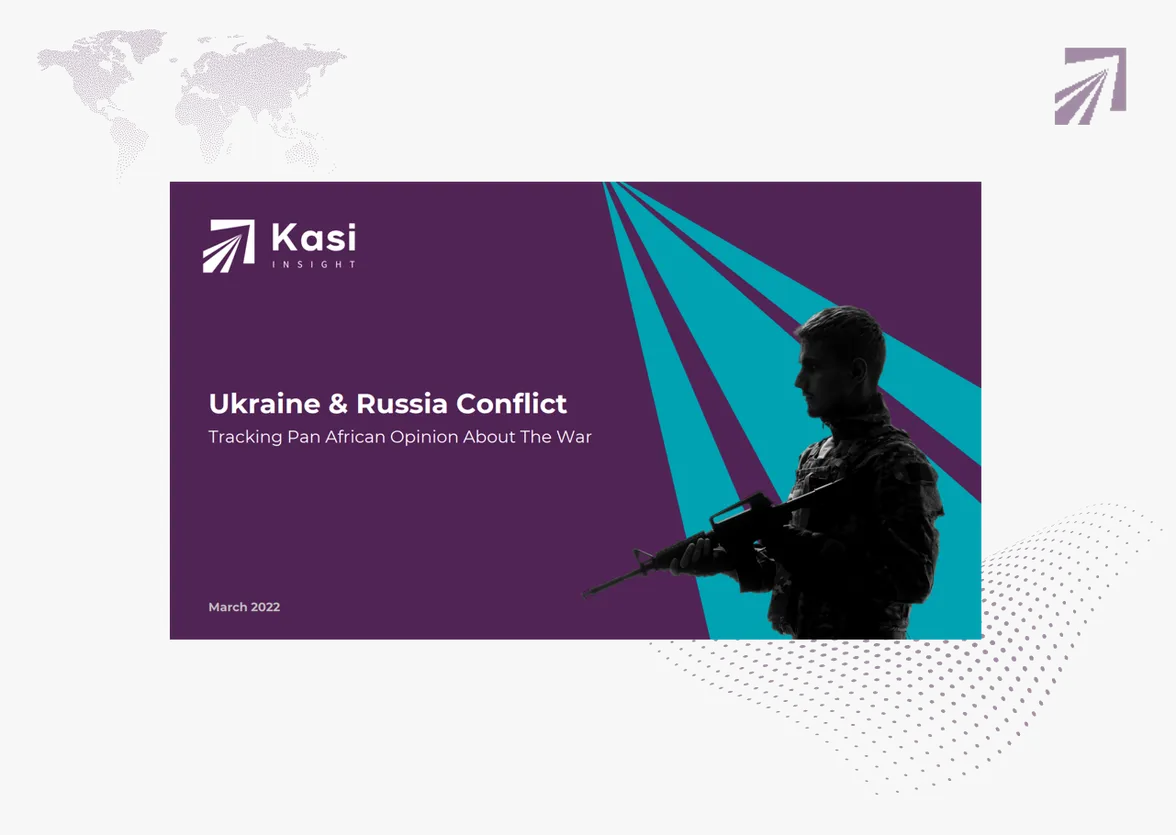
Overview The report titled "Ukraine & Russia Conflict - March 2022: Tracking Pan African Opinion About The War" provides insights into the awareness, opinions, and responses of Africans regarding the conflict between Ukraine and Russia.…
Overview The "State of Sustainability" report for January 2022 provides a comprehensive understanding of consumer perspectives on sustainability in Africa. The report delves into climate awareness, sustainability as a purchase driver, and the overall sustainability…
Overview The "Africa Is Rising or Is It?" report, authored by Yannick Lefang, Founder of Kasi Insight, delves into the dynamics of the African marketplace, exploring the factors driving and hindering its growth. Published in…
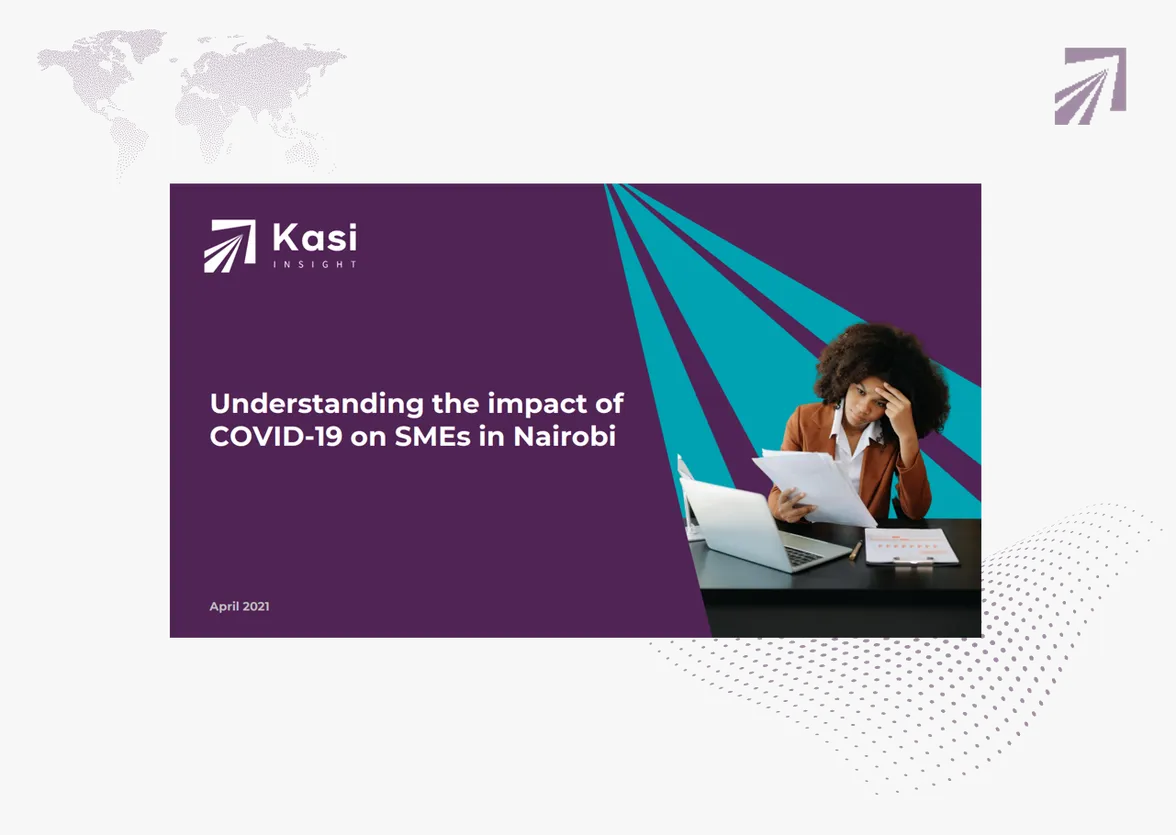
Overview The report, "Understanding the Impact of COVID-19 on SMEs in Nairobi," conducted in April 2021, delves into the economic repercussions of the pandemic on Small and Medium Enterprises (SMEs) in the Nairobi region. The…
Overview The Kasi COVID-19 Webinar Report, conducted in April 2020, delves into the impact of the pandemic on African attitudes and behaviors. Kasi Insight, as Africa's leading Decision Intelligence company, utilized a comprehensive approach, combining…
Overview The Kasi COVID-19 Webinar II, conducted in April 2020, delves into the profound impact of the pandemic on daily routines and shopping habits in Africa. Kasi Insight, as Africa's leading Decision Intelligence company, employs…
Overview The Kasi COVID-19 Webinar I, conducted in April 2020, delves into the profound changes in daily routines and shopping habits in Africa due to the COVID-19 pandemic. The research draws on high-frequency primary data…
Overview The Kasi Health and Wellness Index (FiT Score) for Nigeria, conducted in October 2017, is a semi-annual report aiming to assess Non-Communicable Disease (NCD)-related risk factors in African urban cities. The study focuses on…
Overview The Kasi Health and Wellness Index (FiT Score) for Ghana, conducted in September 2017, provides a comprehensive snapshot of non-communicable disease (NCD)-related risk factors in urban African cities. The semi-annual report focuses on Ghanaians'…
Overview The report titled "How Africans Perceive the US Presidential Elections" delves into the sentiments and opinions of Africans in Cameroon, Ivory Coast, Ghana, Kenya, Nigeria, and South Africa regarding the 2016 US presidential elections.…
Overview: "The State of Financial Freedom in Africa" report highlights the critical importance of sound financial markets in building prosperity. Despite Africa having over 600 banks, many Africans lack access to essential financial services. This…
The "2016 Top Priorities of the Emerging Class in Kenya, Ghana, and Cameroon" report, compiled by Yannick Lefang, offers valuable insights into the economic, political, and social conditions in these three African countries. The report,…
Tell us what your business needs to understand, and we'll recommend the appropriate approach.