Health & Wellness
Hygiene has the demand, skin care, hair care and beauty have the momentum
Personal Hygiene remains the strongest demand pool in Personal Care. But Skin Care, Hair Care and Beauty are gaining ground.
Read the articleAnalysis from Kasi analysts, built on Kasi's own consumer data and the wider economic picture.
Personal Hygiene remains the strongest demand pool in Personal Care. But Skin Care, Hair Care and Beauty are gaining ground.
Read the articleMost businesses will enter 2027 with a brand tracker in one hand, sales history in the other, and a set of assumptions about what happens next. The real risk is not making those assumptions. It is failing to monitor whether they are still true.
Most African countries still rely more on external partners, leaving regional demand and production capacity largely untapped. Stronger regional supply chains can reduce exposure to global shocks while unlocking new growth.
For decades, marketers have been taught that brand loyalty is the ultimate measure of success. Companies invest millions of dollars building awareness, strengthening brand equity and increasing customer loyalty, believing that consumers who love a…
Consumer sentiment in Africa improved in May, supported by stronger household income, spending, and job prospects. However, a dip in future expectations signals ongoing uncertainty.
Cameroonian households are experiencing mixed relief on daily expenses but remain under intense pressure when it comes to savings, housing, and healthier food. Borrowing has become a widespread coping mechanism.
Inflation is reshaping how South Africans live, spend, and cope, with stress levels rising across all income groups. Consumers are cutting back on essentials and rethinking everyday choices, creating a critical moment for brands to show empathy and value.
Consumer sentiment in Africa improved slightly in April, driven by stronger future expectations and rising confidence in income and personal finances. However, household spending and job outlooks remained bleak.
Consumer sentiment in Africa declined again in March, driven by falling confidence in current conditions and rising financial stress. Most household indices worsened, with discretionary spending and job prospects hit hardest.
Ghanaians are adapting to rising living costs by cutting spending, seeking discounts, and relying on community support. Millennials and lower-income groups are most affected, creating opportunities for brands to offer affordable, value-driven solutions.
In February, consumer confidence in Africa fell by 3 points, ending three months of stability. While current conditions improved, there was a drop in future expectations and weaker household finances kept spending cautious.
Trudeau’s resignation marks a major political shift in Canada, raising questions about the future of Black economic empowerment and Canada-Africa relations. With an election ahead, will his policies be strengthened or scrapped?
Inflation is driving South Africans to cut back on beauty, food, and entertainment, with younger and middle-income consumers feeling the most pressure. Brands must adapt by offering affordable, value-driven solutions to meet changing consumer needs.
In January, consumer confidence in Africa held steady at 16 points, maintaining the stability of previous months. Job prospects and personal finances improved, but these gains were overshadowed by sharp declines in household and discretionary spending.
Rising inflation in South Africa continues to impact households, with many still relying on borrowing to meet daily expenses. While financial strain has eased for some, it remains widespread reshaping spending habits and financial stability.
Rising prices are making it harder for nearly half of Nigerians to afford essentials, with low-income households and younger generations feeling the most strain. As inflation worsens, borrowing has become a survival strategy, especially among Millennials.
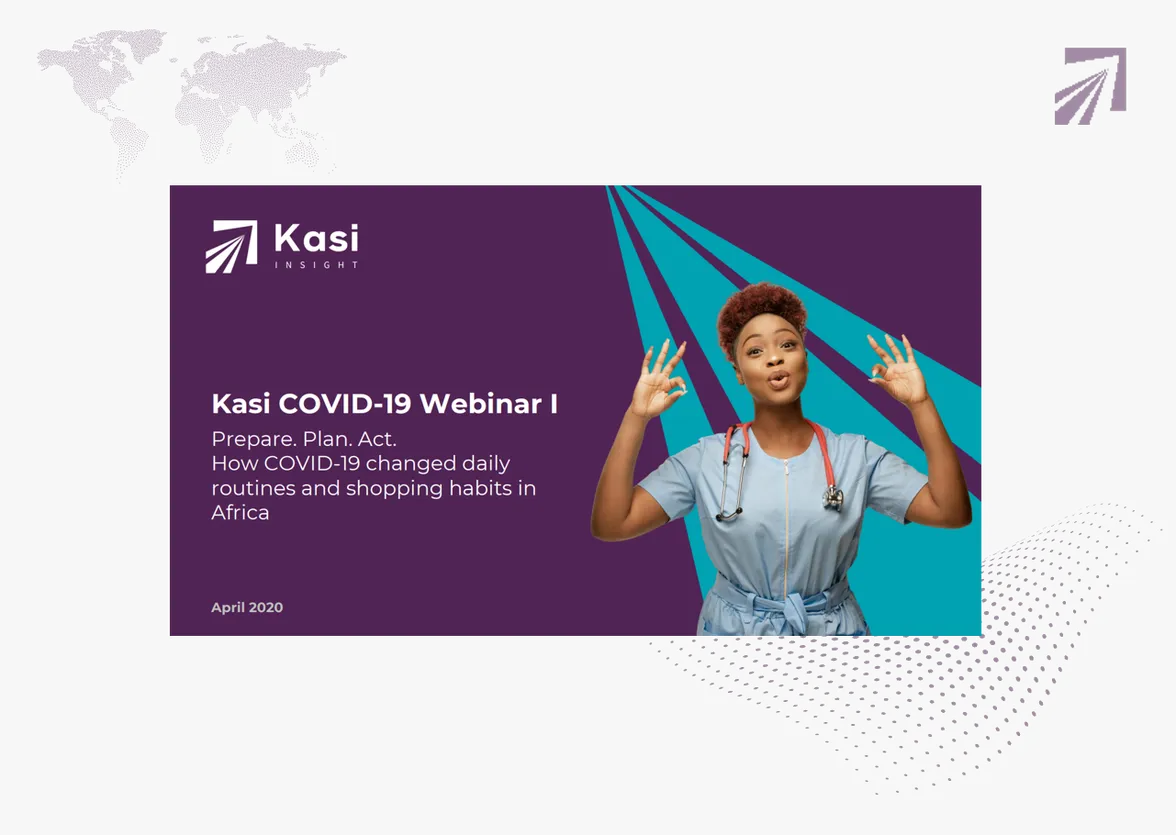
Overview The Kasi COVID-19 Webinar I, conducted in April 2020, delves into the profound changes in daily routines and shopping habits in Africa due to the COVID-19 pandemic. The research draws on high-frequency primary data…
Overview The Kasi Health and Wellness Index (FiT Score) for Nigeria, conducted in October 2017, is a semi-annual report aiming to assess Non-Communicable Disease (NCD)-related risk factors in African urban cities. The study focuses on…
Overview The Kasi Health and Wellness Index (FiT Score) for Ghana, conducted in September 2017, provides a comprehensive snapshot of non-communicable disease (NCD)-related risk factors in urban African cities. The semi-annual report focuses on Ghanaians'…
Overview The report titled "How Africans Perceive the US Presidential Elections" delves into the sentiments and opinions of Africans in Cameroon, Ivory Coast, Ghana, Kenya, Nigeria, and South Africa regarding the 2016 US presidential elections.…
Overview: "The State of Financial Freedom in Africa" report highlights the critical importance of sound financial markets in building prosperity. Despite Africa having over 600 banks, many Africans lack access to essential financial services. This…
The "2016 Top Priorities of the Emerging Class in Kenya, Ghana, and Cameroon" report, compiled by Yannick Lefang, offers valuable insights into the economic, political, and social conditions in these three African countries. The report,…
Overview The Informal Lending Habits Study by Kasi Insight delves into the dynamics of informal lending practices in Kenya, Ghana, and Cameroon. Conducted via an online survey, the report focuses on consumer behavior and attitudes…
Overview The "Media Consumption Consumer Habits Study" conducted by Kasi Insight in October 2015 focused on understanding media consumption patterns and preferences among the target audience of News/Marketing Executives in Ghana and Kenya. The research…
Overview The "Informal Lending Habits Study" conducted by Kasi Insight explores consumer behavior and attitudes toward money lending in Kenya, Ghana, and Cameroon. The study focuses on informal lending practices, payment options, and the dynamics…
Overview The Media Consumption – Consumer Habit Study conducted by Kasi Insight in Kenya aimed to address the dearth of local market data, particularly in media consumption and retail performance, as identified by marketers in…
Overview The "Mobile Banking Consumer Habits Study" by Kasi Insight delves into the consumer behavior and attitudes towards mobile banking services in Ghana and Kenya. Focused on the banking and telecom industries, this study, conducted…
Overview Kasi Insight's report, "From SOKO to Kasi Insight: 1000 Questions and Counting," provides a retrospective journey from the company's inception to its current transformative state in 2020. The report not only reflects on the…
Tell us what your business needs to understand, and we'll recommend the appropriate approach.