Paul Cheloti Mulongo
November 1, 2024
Share article



In May and September 2024, Kasi Insight conducted a Share of Wallet survey across 21 diverse African markets, revealing valuable insights into various aspects of consumer spending, including income generation, expenditure patterns, monthly consumer-facing product purchases, and key purchasing factors. In South Africa, the data showed significant growth in home internet and mobile phone services throughout 2024, indicating strong consumer interest in essential connectivity tools. In May, 85% of surveyed South Africans reported using home internet services; by September, this number had risen to 95%. Mobile phone services also saw a substantial increase, climbing from 68% in May to 86% in September.
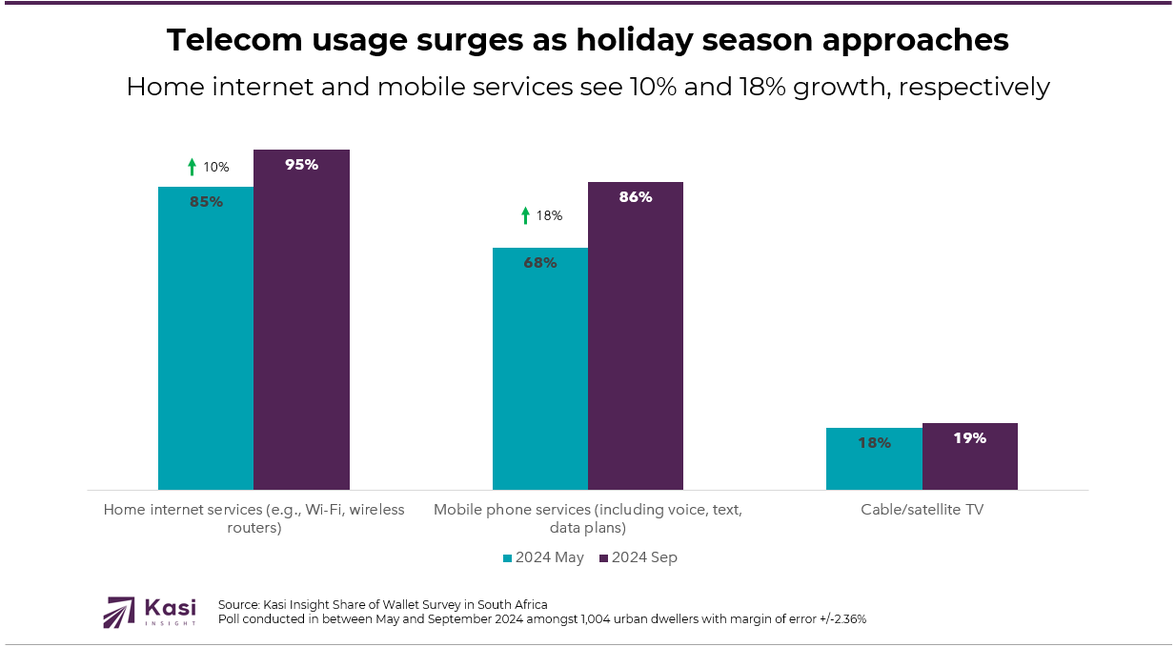
In contrast, cable and satellite TV usage remained relatively low, with only a slight increase from 18% to 19%. This growth in core telecom services underscores consumers' preference for reliable and versatile connectivity options, as the year-end holiday season approaches.
Looking at monthly spending patterns for home internet and mobile phone services in September 2024, over half of each demographic group reported spending within the R205-370 range. This trend is most prominent among Gen X consumers, with 59% spending within this bracket.
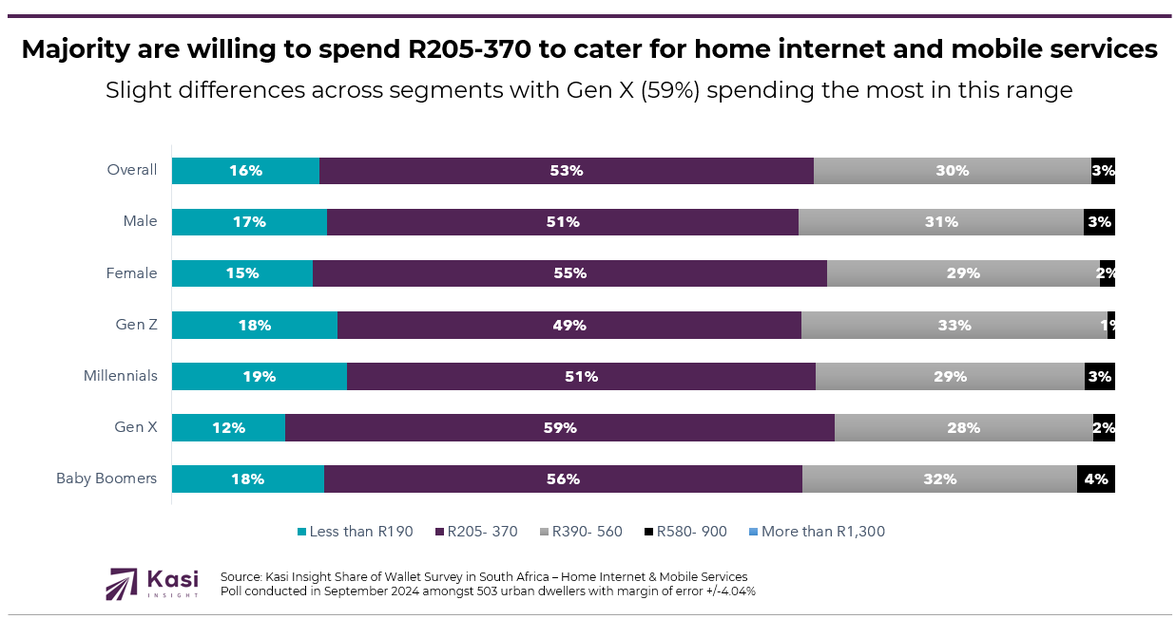
Across genders, 55% of females and 51% of males also report spending R205-370 monthly. Approximately 30% fell within the R390-560 range while 16% spent less than R190. Only 3% of respondents reported spending over R580, indicating a prevalent preference for moderate costs that balance quality and affordability.
When choosing telecom products, consumers prioritize network reliability, internet speed, and affordability. These factors rank consistently as the top three, reflecting widespread demand for quality and performance. Network reliability ranks highest across all segments, while internet speed comes in second and is particularly important to Gen Z and Baby Boomers, who rank it above other factors.
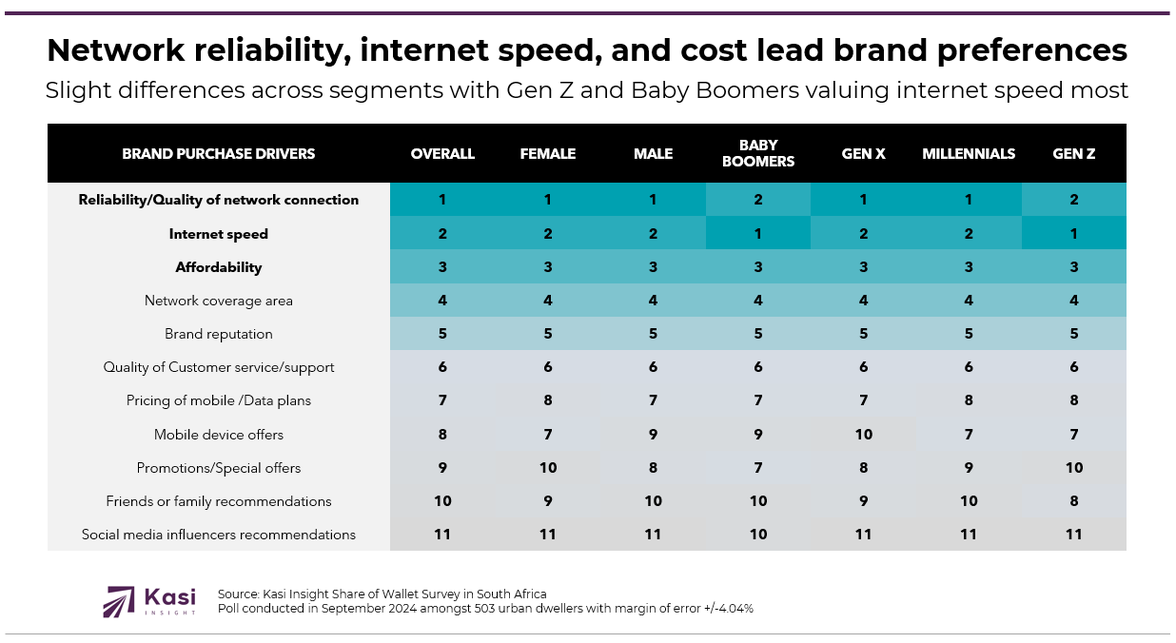
Affordability ranks third across segments. Other factors like network coverage area, brand reputation, and customer service rank lower in priority. Meanwhile, mobile device offers, promotions, and recommendations from family, friends, or social influencers have less influence on purchasing decisions. This pattern indicates that consumers prefer core service attributes over additional features or promotional offers when selecting telecom services.
With consumers prioritizing network reliability and speed, highlighting these qualities in holiday offers can resonate well across demographics, especially during peak demand periods. With affordability being a major factor, brands could introduce flexible, budget-friendly plans to appeal to cost-conscious consumers while maintaining quality.
Demographic insights suggest targeted marketing can further enhance engagement. Millennials and Gen X are likely to respond well to promotions focused on network reliability, while Baby Boomers and Gen Z may be more influenced by campaigns that emphasize stable fast internet speed. Building trust through strong customer support can be a key differentiator, especially for older consumers who may prioritize a brand’s reputation and customer service experience. Strengthening support channels and providing consistent, reliable service can help solidify loyalty across consumer segments.
Share on socials using this caption: 📈 South Africa’s demand for reliable, affordable internet and mobile services is surging, especially as we approach the holiday season! Brands can capture consumer loyalty by aligning offers with what matters most: quality, speed, and value. 🌍#TelecomTrends #SouthAfrica #ConsumerSpending #Connectivity #DataDemand #MarketInsights
2968 views
Share article
Kenya’s H1 2025 telecom wallet reshuffle reveals new spending logic and growing pressure on brand loyalty
Starlink’s Global Outage Reveals Fragility in Africa’s Connectivity Progress
Mobile money outpaces fintech in Ghana’s digital finance