
How Consumer Sentiment Is Becoming a Retail Growth Engine in 2026

Consumer sentiment is more than a measure of whether consumers feel optimistic or pessimistic about the economy. For retailers, it provides a window into the conditions shaping how consumers make decisions.

A fall in confidence may lead consumers to trade down, reduce basket sizes, switch brands or delay purchases. Improving sentiment may create room for premiumization, discretionary spending and exploration. The opportunity for retailers is to move beyond measuring sentiment and use it to anticipate what consumers are likely to do next.

A change in sentiment can influence what consumers are willing to pay, which categories they continue to prioritize, how much they buy, which brands they switch to, which channels they trust, and what kind of message is most likely to convert. That is where sentiment becomes commercially valuable.

Pressure does not eliminate demand, it changes the conditions under which consumers are willing to express it.

A consumer may be under financial pressure while remaining aspirational. They may compare prices more aggressively, change pack sizes, shop across multiple channels or rely more heavily on trusted relationships without abandoning consumption altogether. Declining confidence does not necessarily eliminate demand. It changes the way demand is expressed. This distinction is becoming increasingly important as retailers operate in markets where consumers are navigating financial pressure, changing digital habits and increasingly complex definitions of value.

For some consumers, value means the lowest price; for others, it means durability, convenience, quality or trust. A smaller pack, a longer-lasting premium product or a trusted retailer can each represent value in different ways. The better question is: What kind of value does this consumer need right now?

Sentiment shapes behavior through a complex chain of pressure, adaptation and trust

Africa's retail environment makes the connection between sentiment and behavior particularly complex. Consumers are navigating financial pressure, rapidly changing digital habits, informal retail structures and strong reliance on trust and personal relationships.

A consumer may discover a product through social media but buy it from a physical retailer. They may use digital tools to research a purchase but still prefer the reassurance of a known seller. They may be willing to switch brands for a better price but remain loyal to a salesperson who makes the buying process easier. For retailers, this means that a single sentiment score is rarely enough. The opportunity lies in understanding the chain:

How consumers feel → what pressure they experience → how they adapt → what they ultimately buy.

The Iran war pressure redirected spending, it didn't remove it

The escalation that followed Iran's closure of the Strait of Hormuz in early 2026 is a cleaner test of the same idea at global scale. The disruption pushed fuel and transport costs sharply higher across African markets, feeding into food prices, weakening currencies and squeezing household purchasing power. For consumers, the result was not an end to spending. It was a change in priorities: essentials became more important, discretionary purchases faced greater scrutiny, and value was judged more carefully.

Picture2

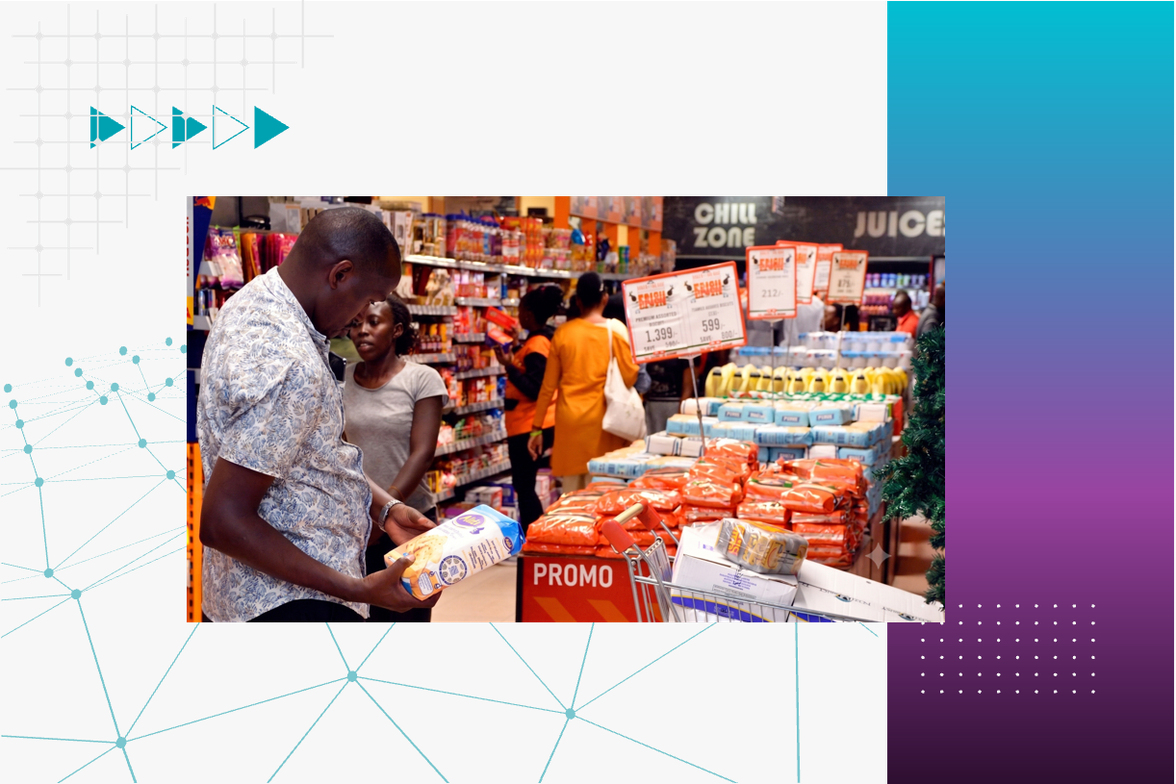
Naivas, Kenya's largest supermarket chain, offers a clear example of how a retailer can be positioned for this environment. Even as the war increased fuel and import costs through 2026, the retailer continued expanding from 114 stores towards a target of 200, on annual revenue that has more than doubled since 2020 to KES 114 billion. Its model provides some protection against external cost shocks: roughly 80% of what Naivas sells is sourced, produced or developed within Kenya, reducing its exposure to the import and shipping pressures that feed into shelf prices.

Carrefour Supermarket Kenya's parent, Majid Al Futtaim, shows the cost of facing the same consumer environment with greater exposure to these pressures. Across three of the last four reporting periods, its retail division recorded revenue declines of 4–11%, with the company repeatedly citing currency devaluation and shifts in consumer sentiment linked to regional geopolitical conflict. The contrast is revealing; the same shock can compress consumer spending without eliminating it; the retailers best positioned to meet the new conditions are the ones more likely to capture what remains.

The future of retail intelligence is in understanding what consumers will protect, sacrifice and prioritize when they do.

The retailers that win in 2026 will be the ones that can connect changing consumer sentiment to decisions quickly. When confidence falls, they will know which categories to protect. When price sensitivity rises, they will know whether consumers need lower prices, smaller packs or stronger value communication. When digital interest grows but trust remains weak, they will know that discovery and fulfilment may need to happen through different channels. When loyalty weakens, they will know whether the answer is a discount, better service or a more meaningful relationship.

Consumer sentiment is no longer just a measure of confidence. It is becoming a guide to demand. At Kasi Insight, we help African businesses turn consumer intelligence into confident decisions, tracking how sentiment shifts, understanding what drives it and identifying what it means for brands, categories and markets.

Sources

  • World Socialist Web Site, Iran War Wreaks Havoc in Africa (continental fuel price increases, Nigeria petrol, Somalia, Sudan)
  • African Energy Chamber, Africa & the Iran War: What the Oil Price Shock and Shipping Disruptions Mean for Economies
  • IFPRI, How African Economies Are Absorbing the 2026 Oil Price Shock (So Far) (Nigeria food inflation 9%→17%)
  • Al Jazeera, Africa Sees Winners and Losers as Iran War Pushes Up Oil Prices (Kenya diesel price rise)
  • Dropsite News, In the Wake of Iran War, African Nations Struggle to Cope with Rising Fuel Costs (Kenya petrol 186→220 KSh, VAT cut, protests)
  • AllAfrica, Africa: Iran War Drives Fuel Shock Across Africa as Govts Scramble to Respond
  • Associated Press / Yahoo Finance, Iran War Sends Shockwaves Through African Fuel Market and Economies
  • CNBC Africa, Naivas Supermarkets Ramps Up Expansion Drive (Naivas revenue, store count, local-sourcing strategy)
  • Business Daily Africa, Carrefour Sales Drop to Sh38bn on Weak Shilling (MAF/Kenya currency-devaluation mechanism)
  • Construction Week Online / AGBI / Gulf News / Gulf Business, Majid Al Futtaim financial results coverage, FY2023, H1 2024, FY2024, H1 2025, FY2025 (retail revenue declines and company statements on currency devaluation and geopolitical impact on consumer sentiment)
  • AGBI, Majid Al Futtaim Profit Up With Revenue Nearing $10bn (Maire Morris/Morris Global Consulting quote on Iran war's expected retail impact, March 2026)

About Kasi Insight

Kasi Insight is Africa's leading decision intelligence firm specializing in high-frequency consumer and economic data across Africa. Through its proprietary survey infrastructure and analytics platform, Kasi provides real-time insights that help organizations anticipate economic shifts, understand consumer behavior, and make better strategic decisions.

We welcome collaboration with:

  • Banks and financial institutions
  • Asset managers and investors
  • Policymakers and development organizations
  • Academic researchers
  • FMCG and consumer goods companies
  • Media, advertising, and communications agencies
  • Healthcare and pharmaceutical organizations
  • Multinational corporations and regional businesses seeking market intelligence

Organizations interested in exploring partnerships or accessing Kasi datasets are invited to contact our research team.

📧 yannick@kasiinsight.com


Recent posts

See all

Alison Okatch

Africa’s Consumer Sentiment Returns to Positive Territory at 4.8 in June as Consumers Move from Geopolitical Shock to Adaptation

Yannick Lefang, Eng

A new era of geo-political risk; Why decision-makers need faster signals in an age of geopolitical volatility

Alison Okatch

Africa's Consumer Confidence Slips Back Into Negative Territory in May

Subscribe to our free newsletter