Sandra Beldine Otieno, MSc
June 12, 2025
Share article



The latest wave of Kasi Insight Health and Wellness Tracker shows a meaningful shift in how Kenyan consumers define and pursue wellbeing. Even as economic pressure intensifies, people are investing more in mental resilience, personal health routines, and social connection. Wellness is no longer tied to financial comfort alone. It is being actively redefined through consistent actions that support stability, clarity, and control in everyday life.
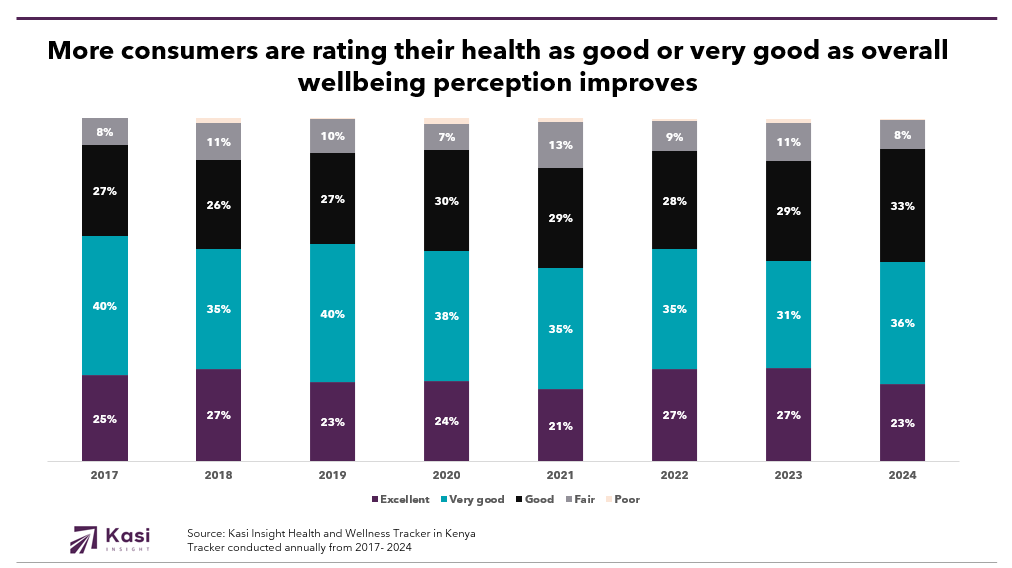
This change is reflected in how Kenyans rate their overall health. A total of 91% now say their health is good, very good, or excellent. Notably, the proportion describing their health as very good has jumped to 36% from just 31% the previous year. Although excellent ratings dipped slightly to 23%, the broader trend is positive. This suggests that Kenyans are feeling healthier overall and may be returning to pre-pandemic levels of confidence in their physical wellbeing. These perceptions are not abstract. They reflect real behavioral shifts happening across homes and communities.
The gap between emotional and financial wellness in Kenya continues to widen. While only 20% of consumers reported an improvement in their financial wellbeing, 36% said their mental health had improved and 35% felt stronger in their social relationships. These are the highest figures recorded in recent years and show a growing ability among consumers to protect their internal wellbeing even when external pressures mount.
This suggests that more Kenyans are grounding their wellness in personal agency rather than external circumstances. Emotional clarity, stable relationships, and resilience are now essential parts of how people measure their quality of life. These softer dimensions of wellbeing are proving to be more accessible and more durable than financial gains. The result is a wellness model that is less dependent on economic outcomes and more focused on mindset and relationships.
This mindset is also shaping how Kenyans consume. Beauty demand has rebounded strongly, rising from a low of 16 in July to 31 in December. At the same time, alcohol demand has remained subdued and has not returned to earlier highs. This shift suggests a growing preference for wellness routines that promote physical care, confidence, and self-presentation rather than escapism. Consumers are leaning into what makes them feel in control.
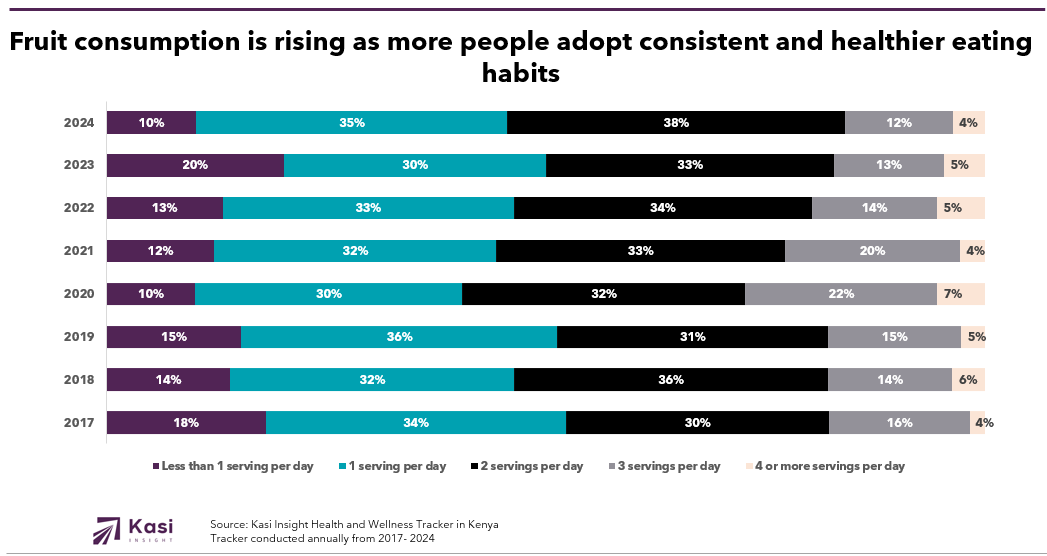
Nutritional behavior is also improving. The number of people consuming more than two servings of fruit per day increased to 55%, up from 50% the previous year. The share of respondents eating less than one serving dropped sharply from 20% to just 10%. These movements show that Kenyans are adopting healthier habits, often with minimal cost. In a climate of uncertainty, these daily choices are not only practical but empowering.
The evolving landscape of health and wellness in Kenya reflects a larger cultural shift. Consumers are no longer waiting for better incomes or formal systems to improve their wellbeing. They are building personal wellness routines from the ground up. From emotional clarity to healthier meals and more purposeful purchases, the focus has moved toward the attainable rather than the ideal. In doing so, Kenyans are developing a more sustainable model of health that can hold steady even in periods of economic stress.
This is a critical moment for brands, public institutions, and health systems to realign with how people are truly living. Services and products that support mental balance, consistent routines, and social connectivity will hold greater relevance than those that only speak to financial status. The future of wellness in Kenya will not be defined by how much one can spend but by how much one can sustain. Supporting people in their everyday realities is no longer optional. It is central to earning trust, loyalty, and long-term impact.
Share on socials using this caption: Kenyans are shifting how they stay well choosing emotional strength 🧠 strong relationships 🤝 and small daily habits 🍊 over financial comfort 💰 this is a powerful reset in how wellness is lived and defined #KenyaWellness #ConsumerShift #EmotionalHealth #WellbeingRedefined #InsightsThatMatter #HealthAndHabits
1454 views
Share article
A Strategic Material for Development Sustainable Roads in Africa
Foresight Is No Longer Optional: Why Africa’s Decision Makers Must Move From Insight to Intelligence
Africa’s Data Dilemma: Waiting for the Porsche While Refusing the Bicycle