Sandra Beldine Otieno, MSc
August 9, 2024
Share article


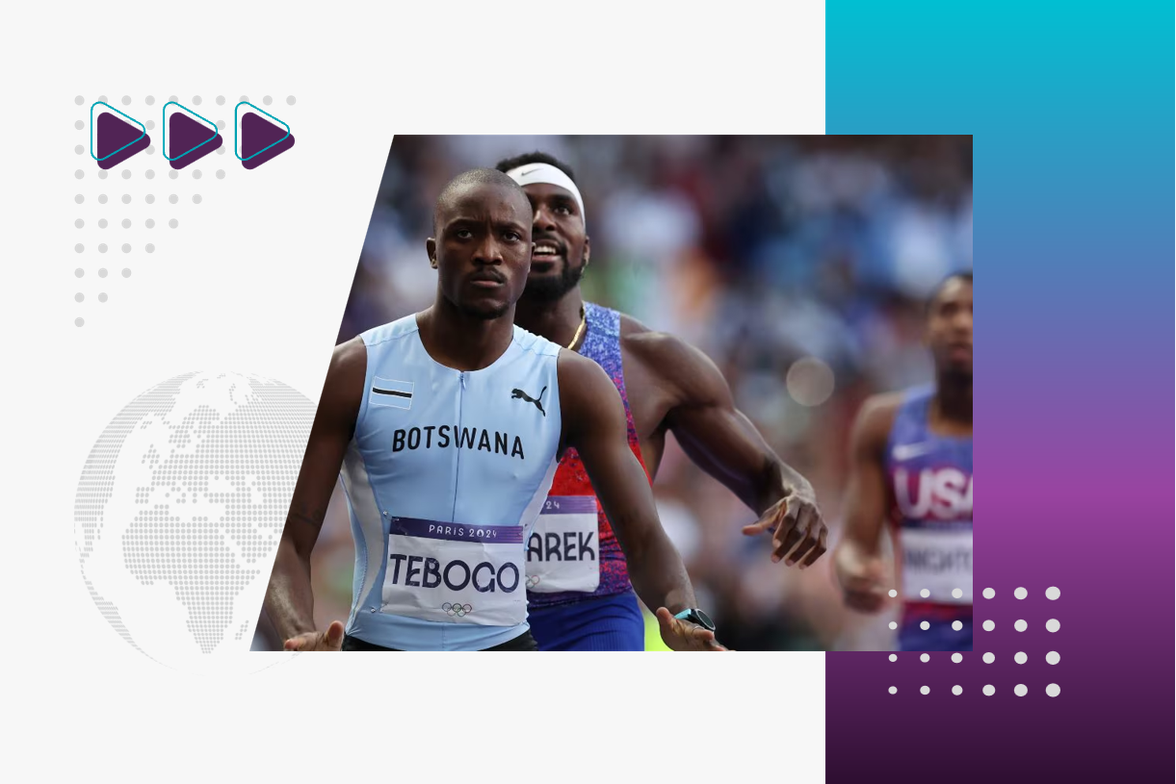
On August 8, 2024, a defining moment unfolded at the Olympics as Letsile Tebogo dashed across the finish line to claim the gold medal in the men's 200m final. His impressive finish, clocked at 19.46 seconds, not only secured his victory but also captivated the hearts of spectators worldwide. While many had anticipated a showdown favoring American stars Kenneth Bednarek or Noah Lyles, it was Tebogo who emerged victorious, sending a wave of excitement through the stadium. The Botswanan flag fluttered high as Tebogo’s face, marked by both shock and elation, mirrored the electric atmosphere in the crowd. His emotional response, tears streaming down his cheeks, highlighted the depth of his accomplishment, signaling not merely a personal triumph but the beginning of a transformative era for African athletes on the global sprinting stage.
The men’s 200m race, a highlight of the Olympics since its inception at the 1900 Paris Games, has always been a stage for iconic athletes, including Jesse Owens, Carl Lewis, and Usain Bolt, whose world record of 19.19 seconds set in 2009 still stands. This event epitomizes the ultimate test of speed and athleticism, captivating audiences around the globe. Yet, despite its prestige, African athletes have historically faced numerous obstacles, from inadequate training facilities to economic limitations, which have impeded their ability to compete at the highest levels. Tebogo's groundbreaking victory challenges these historical disparities, showcasing the immense talent within Africa and rewriting the narrative of dominance in this sprinting discipline.
Letsile Tebogo’s Olympic triumph transcends the confines of a traditional sports victory. It is a beacon of hope and a massive source of inspiration for young athletes across Africa and around the globe. His success demonstrates the possibilities that can emerge from determination and rigorous training, suggesting a potential acceleration in the development of sports infrastructure and training programs across his home continent. This monumental win underlines the importance of nurturing emerging talent and providing robust support systems to mold the future generation of world-class athletes.
Additionally, Tebogo's achievements serve as a powerful catalyst for change in the broader sports landscape. By breaking long-standing stereotypes and demonstrating the high capabilities of African sprinters, his victory advocates for greater inclusivity and fairness in the world of sports. It proves that athletic success knows no geographical or socioeconomic boundaries, showcasing the boundless potential of athletes worldwide. This pivotal moment reminds us of sports' role as a unifying force and a platform for social change, pushing for a more inclusive and equitable sporting environment.
The repercussions of Letsile Tebogo’s historic win at the Olympics are expected to be far-reaching and long-lasting. This landmark event does more than add to his list of accolades; it serves as a source of motivation for a new generation of athletes in Africa and beyond. It highlights the transformative power of sports to effect positive change, drive societal progress, and inspire significant investments in nurturing and developing athletic talent. Reflecting on Tebogo’s monumental victory, we are reminded of the profound impact such achievements can have on breaking down barriers and shaping a future where all athletes can succeed and excel on the world stage. As the celebrations continue, the legacy of this moment is likely to stimulate further growth and passion for sports across Africa, demonstrating that the spirit of competition truly knows no bounds.
Share on socials using this caption: 🥇🌍 Breaking barriers and records! Letsile Tebogo sprints to victory in the men's 200m, bringing home gold and igniting hope across Africa. His triumph redefines the track for future generations. 🏃💫 #Olympics2024 #TebogoTriumph #BreakingBarriers
2197 views
Share article
A Strategic Material for Development Sustainable Roads in Africa
Foresight Is No Longer Optional: Why Africa’s Decision Makers Must Move From Insight to Intelligence
Africa’s Data Dilemma: Waiting for the Porsche While Refusing the Bicycle