Sandra Beldine Otieno, MSc
July 12, 2024
Share article



Kasi Insight's quarterly Cost of Living Tracker, which spans 20 African markets, provides essential insights into the economic challenges consumers are experiencing under inflationary pressures. The survey results from Uganda, reported in Q1 2024, indicate a positive shift in consumer behavior, with improved management of inflation and a recovery in spending on essentials.
Kasi Insight’s Household Spending on Essentials in Uganda traces a complex economic trajectory from January 2023 to May 2024. The early part of 2023 saw a notable rise in economizing behaviors, climaxing in May when 67% of consumers reduced their spending, likely in response to economic pressures or escalating costs. This conserving trend sharply reversed by July 2023, when only 10% were spending less and a notable 35% increased their expenditures, suggesting an economic rebound or effective adaptation to changing market dynamics.
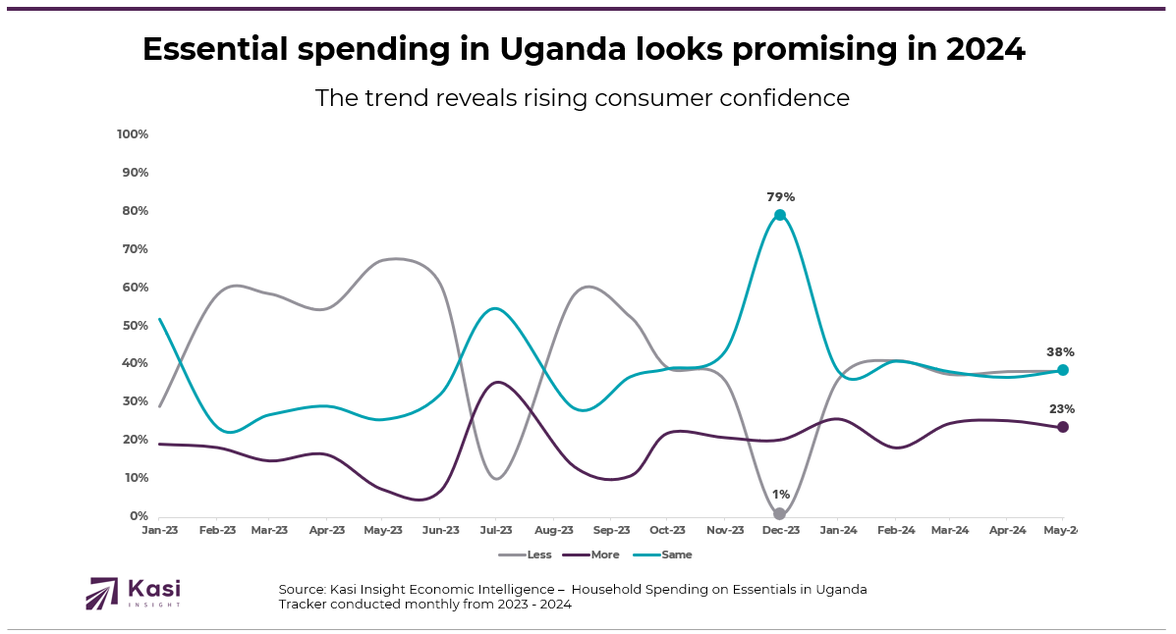
By December 2023, the data shows a high level of spending stability, with 79% of consumers maintaining their expenditure levels, indicating that many had adjusted to the economic environment. Moving into 2024, the spending data evens out, with consumers distributing almost equally across spending more, less, or the same. This equilibrium points to a resilient consumer base and offers an optimistic glimpse into the ongoing economic stabilization.
Among respondents surveyed in Q1 2024, 71% reported experiencing higher prices when shopping for food and beverages, highlighting a broad increase in costs within this sector. Only a small fraction, 7%, witnessed price decreases, and 22% saw stable prices, indicating that only a few market segments have avoided the upward pressure on prices.
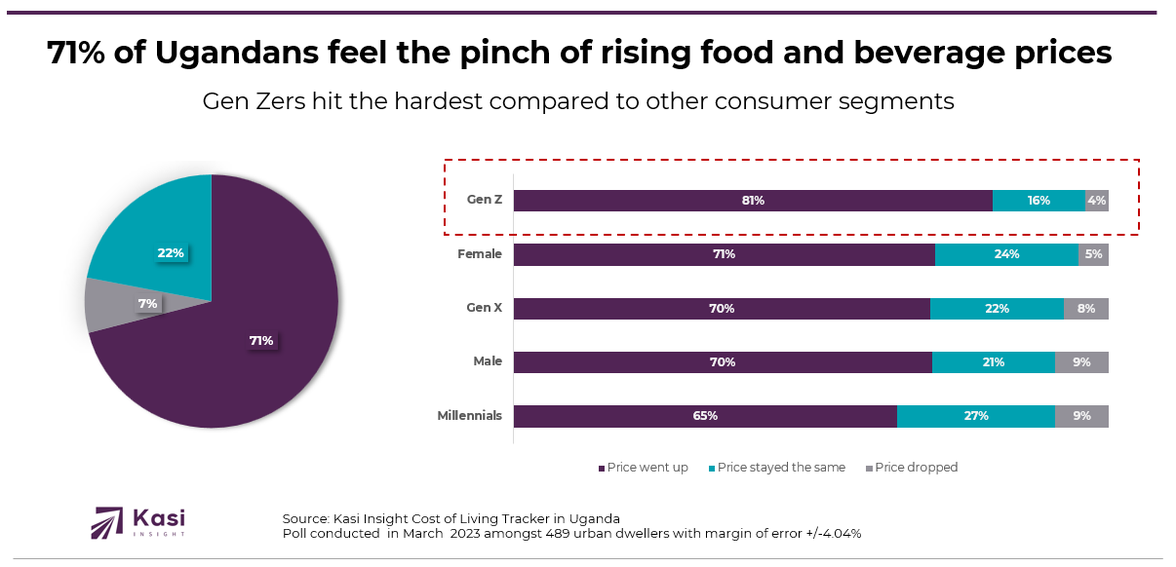
Further segmentation shows that all groups are feeling the pinch, but Gen Z consumers are disproportionately impacted, with 81% noting price increases. This compares to 65% of Millennials and 70% of Gen X. Gen Z's heightened vulnerability to price hikes underscores a worrying trend for the economic stability of younger consumers, who may face greater challenges in managing rising costs for daily essentials.
When it comes to managing inflationary pressures, Ugandans primarily opt for purchasing cheaper alternatives, a top-ranked strategy across all demographics, indicating a universal shift towards more economical choices in response to rising prices. Changes in purchasing habits show variability: this strategy ranks second for both Gen X and Millennials, highlighting their notable adjustment in buying behaviors. However, it ranks lower for males and Gen Z, at fifth and fourth respectively, suggesting these groups prioritize other strategies.
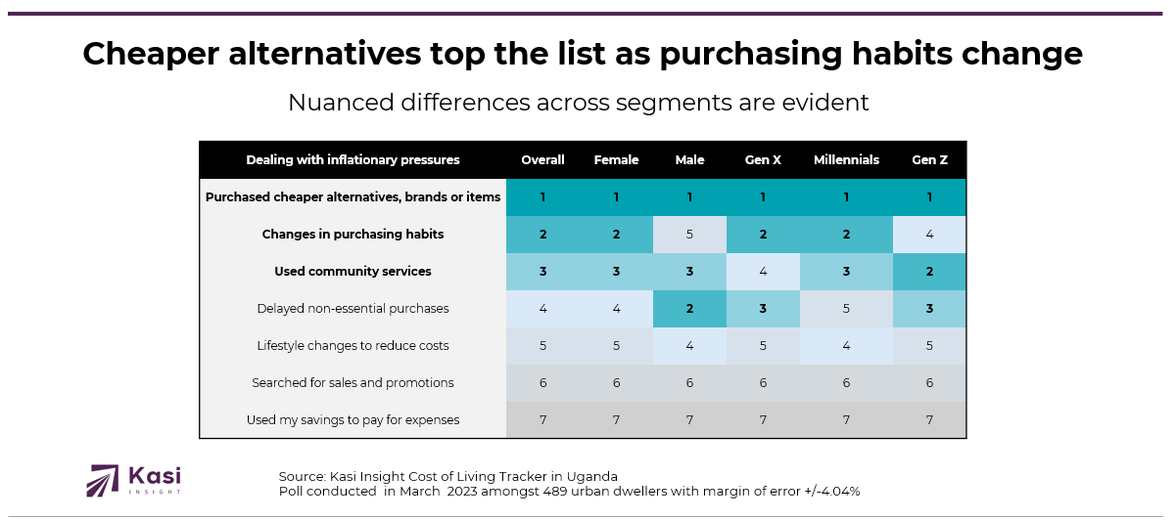
Using community services, ranked third overall, is more favored by Gen Zers, who rank it second, reflecting their greater reliance on or access to these resources. Gen X, however, places it fourth, showing less emphasis. Delaying non-essential purchases ranks second for males and third for both Gen Z and Gen X, indicating a strong inclination to reduce discretionary spending, whereas Millennials rank it fifth, indicating a lower tendency to postpone such purchases.
For FMCGs in Uganda, the primary challenge is adapting to volatile consumer spending patterns, which are heavily influenced by economic conditions. Consumers respond quickly to economic shifts, requiring FMCGs to stay alert and responsive in adjusting their product offerings and pricing strategies accordingly. Addressing consumer price sensitivity is particularly crucial among Gen Z, who are acutely impacted by price hikes. FMCGs need to balance pricing to retain appeal without compromising quality—essential for keeping price-sensitive customers. Furthermore, different demographics like Gen Z and Millennials have unique purchasing habits, necessitating tailored marketing and product strategies.
Understanding these diverse consumer behaviors allows FMCGs to maintain sales volumes by strategically adjusting pricing and promotions. For instance, price promotions may be particularly appealing for Gen Z under economic pressure. Introducing budget-friendly options or smaller pack sizes can also meet the widespread preference for more affordable products. Effectively responding to economic changes can significantly enhance customer loyalty through not only pricing adjustments but also improvements in product quality and service innovations. Recognizing specific behaviors, such as delaying non-essential purchases or using community services, helps FMCGs refine their product positioning and promotional strategies, enabling them to better navigate economic challenges and strengthen customer relationships.
Share on socials using this caption: 📊 Kasi Insight's tracker shows a positive shift in Uganda’s economy. Despite price hikes, consumer spending on essentials has stabilized in 2024, offering opportunities for FMCGs. Gen Z feels the pinch the most, but overall resilience and frugal measures provide strategic avenues for growth. 🌍📈 #FMCG #ConsumerSpending #EconomicTrends #Inflation #MarketOpportunities #KasiInsight
1751 views
Share article
Nigeria’s alcoholic beverages market shows resilience in beer but steep H1 declines in premium categories
Fresh staples stay strong as Nigeria’s food market splits between value seekers and quality spenders
Ugandans are loyal to beer but wine captures the biggest spend