Paul Cheloti
May 13, 2024
Share article



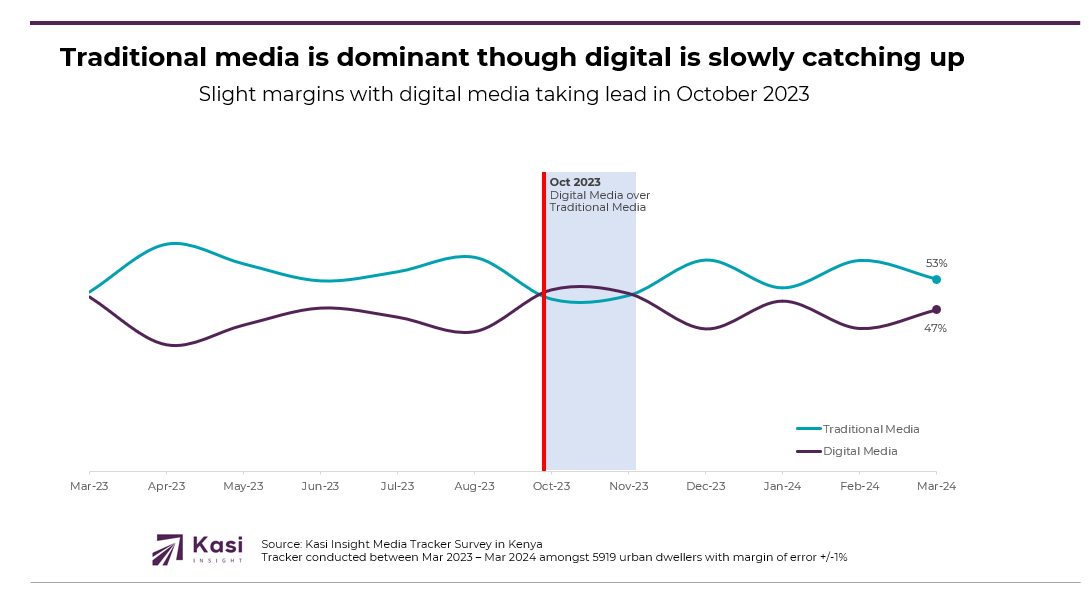
Kasi Insight’s Media Tracker Survey tracks consumer preferences for sources of information regarding new products and brands monthly in 20 African markets. In Kenya, the tracker’s findings from March 2023 to March 2024 unveiled a balanced media landscape in terms of the most trusted source of information.
Throughout the year, both traditional and digital media maintained a relatively balanced level of trust among the respondents. For instance, in March 2023, both traditional and digital media were equally trusted at 50%. By April 2023, trust in traditional media rose to 59%, while digital media was at 41%. However, by October 2023, digital media slightly surpassed traditional media with a trust level of 51% compared to 49% for traditional media. This oscillation suggests that Kenyan consumers are versatile in their trust and consumption of media, leveraging both traditional and digital sources to stay informed about new products and brands.
As of March 2024, TV and online sources consistently ranked as the top two sources of brand information, underscoring their lasting influence and wide reach. These channels were popular among both females and males, demonstrating their broad appeal to a diverse audience. Furthermore, friends and family recommendations remained a significant source, particularly among Gen X, emphasizing the vital role of personal networks in guiding consumer decisions.
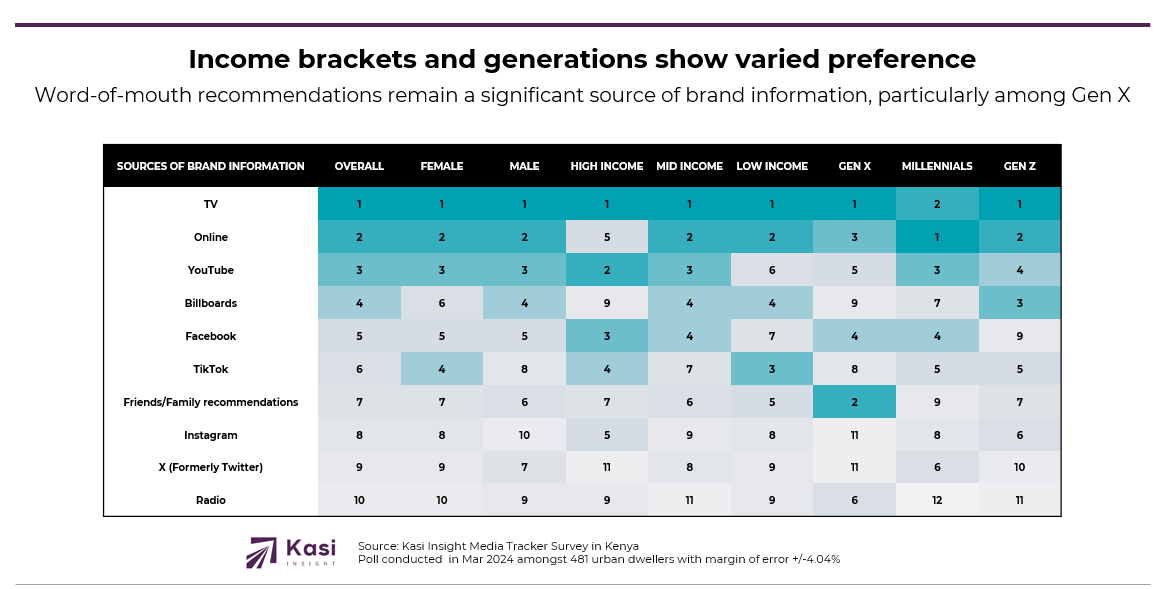
Additionally, TikTok was a popular source among low-income individuals, emphasizing the substantial impact of this platform on their information consumption. Millennials struck a balance, valuing both TV and online sources, while still placing importance on YouTube. In contrast, Generation Z, as digital natives, prominently prioritized TV, and billboards, recognizing the substantial role these platforms played in shaping their perceptions of brands. These findings provided a snapshot of how different media channels have become integral components of the media landscape, significantly influencing the preferences of various consumer segments in Kenya.
Brands need to reach a wide audience and engage consumers who rely on various channels for information and shopping. While TV advertising, with its broad reach and ability to deliver compelling visual narratives, is an essential part of a balanced marketing strategy, it’s not the only way to reach a wide audience. The growing influence of digital media, especially among younger demographics, is undeniable. Platforms like TikTok and online sources have become integral components of the media landscape in Kenya, significantly influencing various consumer segments. Digital marketing allows for precise targeting, ensuring that marketing efforts reach the most relevant audience. These strategies can be a cost-effective alternative, especially for businesses with limited budgets.
Recognizing the unique preferences of various consumer segments is crucial. Brands must adapt their marketing strategies, accordingly, creating tailored messages and campaigns. This targeted approach guarantees more effective and impactful marketing endeavors.
Share on socials using this caption: 📈 Discovering Kenya’s Media Landscape Evolution! From traditional to digital, find out how consumer preferences and influencer marketing are reshaping the way we access information and make choices. 🌐💼 #MediaTransformation #InfluencerImpact #KenyanTrends
2494 views
Share article
Nigeria’s media preferences shift toward digital trust and audience-specific engagement
Ivorians blend digital and traditional media for accurate, trusted information
Kenyans blend traditional and digital media for holiday purchase decisions