Paul Cheloti Mulongo
February 5, 2025
Share article


Kasi Insight’s Media Consumption Tracker, monitors media consumption trends across 21 African countries, offering valuable insights into consumer trust and preferences. In January 2024, 60% of consumers trusted digital media as their primary source of information, peaking at 69% in February. However, trust proved volatile, dropping as low as 45% in July.
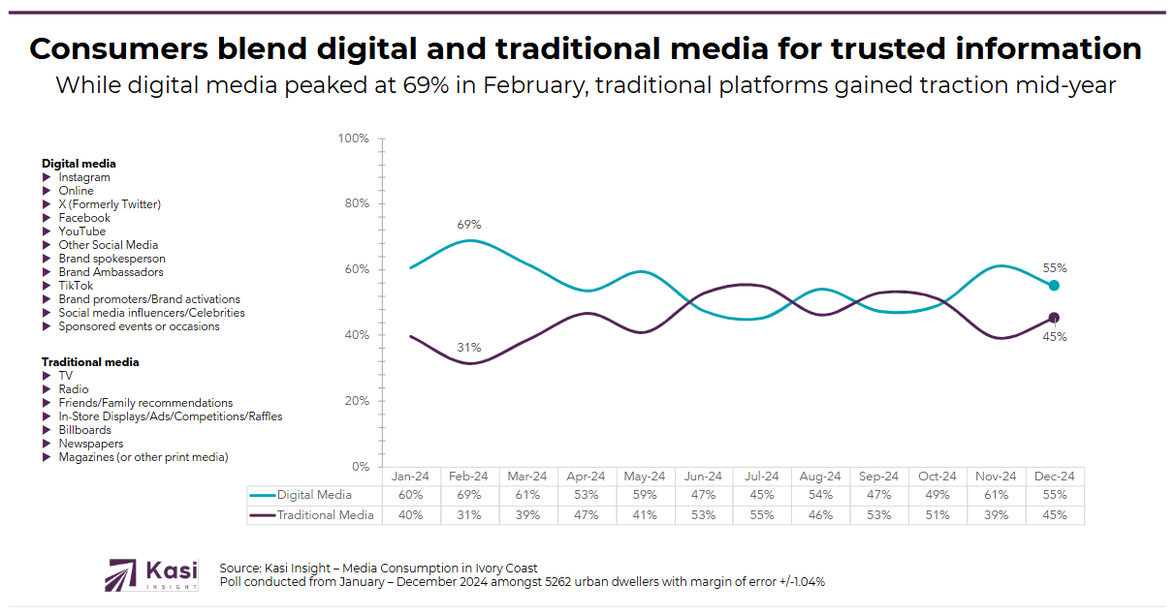
Traditional media, on the other hand, gained ground mid-year, surpassing digital trust levels in June (53%) and July (55%). By December, digital media regained some trust, ending the year at 55% compared to traditional media’s 45%. This shift underscores the ongoing competition between digital and traditional channels, with trust levels influenced by factors such as content credibility, accessibility, and current events.
When it comes to brand communication, Ivorian consumers rely on a mix of traditional and digital platforms. TV and online sources lead at 76%, appealing to Millennials (78%), Gen X (77%), and women (77%).
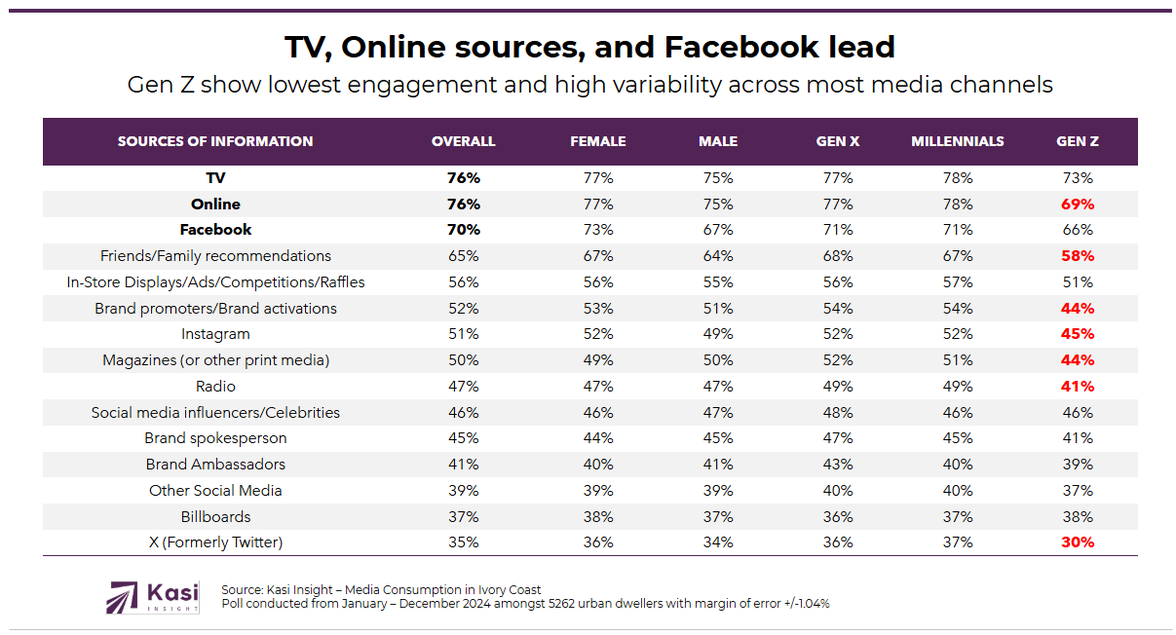
Facebook follows closely at 70%, cementing its role as a primary social media touchpoint especially among women (73%), Gen X and Millennials (71%). In contrast, men (67%) and Gen Z (66%) show slightly lower engagement. Word-of-mouth (65%) and in-store promotions (56%) continue to play a critical role, particularly among older consumers who favor interpersonal recommendations.
To effectively navigate shifting consumer trust, brands must adopt a multi-channel strategy that balances the dominance of digital media with the credibility of traditional platforms. While TV and online sources remain the most influential brand communication channels, maintaining a presence in traditional media is essential, particularly for Gen X and Millennials, who continue to engage with TV, radio, and print. Word-of-mouth and in-store promotions also play a significant role, especially in older demographics, reinforcing the importance of an integrated marketing approach. Additionally, brands should prioritize high-quality, verifiable content to maintain trust in digital spaces, where misinformation can quickly erode consumer confidence.
The changes in trust levels between digital and traditional media means brands must remain agile and data driven. By continuously monitoring media consumption trends, brands can adjust their strategies in real time to maximize engagement and return on investment. Localized engagement will be critical in tailoring campaigns to regional and cultural preferences, ensuring relevance and effectiveness. A diversified media mix across TV, online sources, social media, and in-store promotions will help brands reach consumers regardless of shifting trust levels, ultimately strengthening brand credibility and loyalty.
Share on socials using this caption: 📊 Navigating media trends in Ivory Coast? Our latest insights reveal how digital and traditional media trust fluctuates—and which channels brands should prioritize. 💡 Want to maximize engagement? Learn how TV, Facebook, and online sources shape consumer decisions. #MediaTrends #ConsumerInsights #MarketingStrategy
1660 views
Share article
Nigeria’s media preferences shift toward digital trust and audience-specific engagement
Kenyans blend traditional and digital media for holiday purchase decisions
South Africans turn to social media and authentic reviews for holiday shopping decisions