
Alison Okatch
June 18, 2026
For years, discussions about Kenya's banking sector have focused on market share, digital innovation, branch networks and profitability. Yet beneath these metrics lies a different story, one centered not on banks, but on consumers.
The Kasi Banking in Africa - Brand Intelligence dataset provides overview of consumer awareness and preferences regarding banks. Survey conducted yearly from March 2021 to date. It facilitates detailed analysis by region and demographic, offering insights that can inform strategic decisions for businesses and policymakers in the banking sector. While the study covered customers across more than 50 banking institutions in Kenya and 1,000 more across Africa, the country's largest and most visible banks, Cooperative, Equity and Kenya Commercial Bank, provide useful illustrations.[YI1]
Study suggests that banking growth is increasingly shaped by how consumers progress through different stages of their financial lives. While institutions often compete for new customers, the larger opportunity may lie in helping existing customers move from basic financial participation toward greater financial stability and, ultimately, financial advancement.
Financial Participation → Financial Stability → Financial Advancement
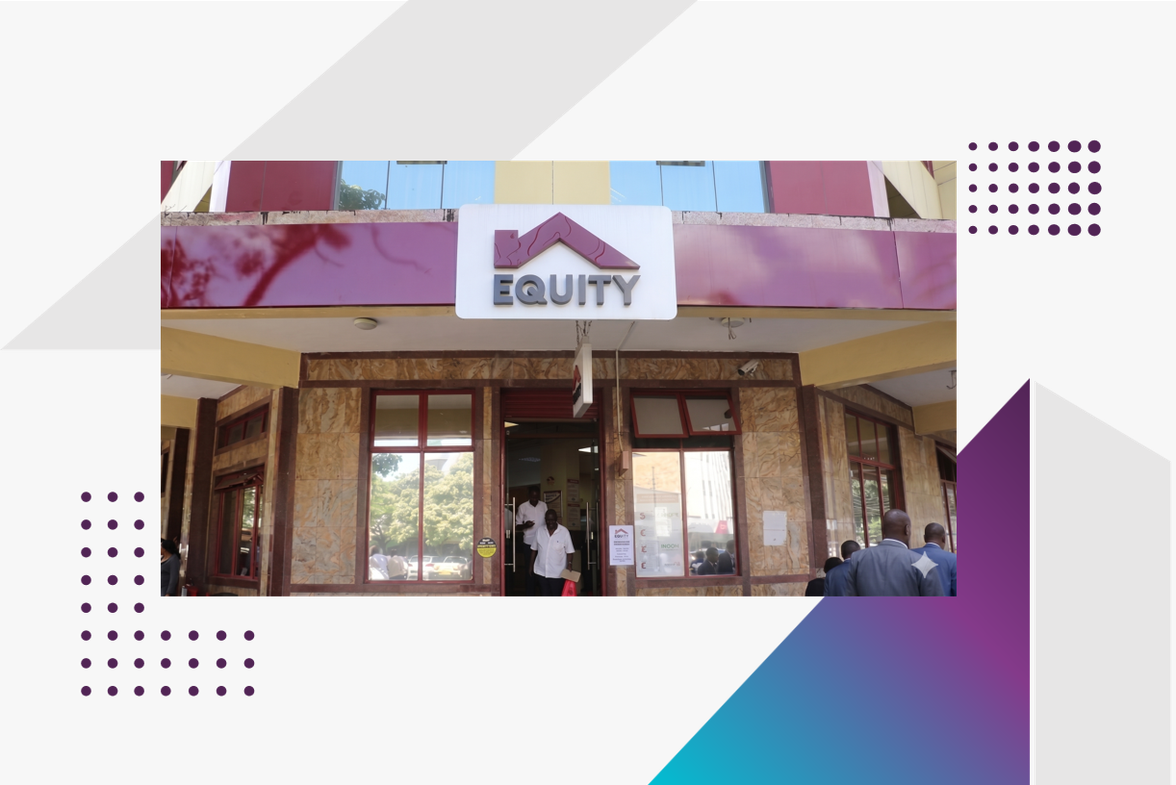
With the highest awareness, usage and customer preference levels in the market, Equity has already established itself as one of Kenya's most embedded financial institutions. The question is no longer how the bank attracts customers. The question is how it grows alongside them.

Stage One: Financial Participation
Equity's leadership is rooted in participation, successfully capturing consumers at the point where financial services become part of everyday life.
Financial progression begins with participation, and this is where Equity has built its strongest competitive position. The bank's customer base over-indexes among lower-income consumers (36% versus 32% market average), younger adults and customers whose financial priorities remain focused on managing everyday life. These consumers are highly engaged with the financial system, using mobile money, banking apps and traditional banking services at rates that meet or exceed market norms.

Equity customers are still active users of formal financial services. What distinguishes them is that their financial relationship remains centered on income management, payments, transfers and maintaining day-to-day resilience.
This positioning has been a major source of Equity's growth. By building products and channels that reduce barriers to access, the bank has become one of the primary entry points into formal finance for millions of Kenyans.
Stage Two: Financial Stability
The opportunity for Equity is not customer acquisition but helping its customers progress from managing daily financial pressures to building long-term financial security.
While Equity is often associated with financial participation, the data reveals something more significant. Most of its customers have already moved beyond purely individual financial needs. 55% are married, while 69% have children living at home. These figures closely mirror the national banking market.

This suggests that a large share of Equity's customer base is already navigating the realities of financial stability: school fees, healthcare expenses, family support and long-term household planning.
Yet product ownership patterns indicate that many customers have not fully transitioned into the suite of financial products typically associated with this stage. Insurance ownership, mortgages and long-term protection products remain below broader market averages.
Stage Three: Financial Advancement
In a multi-banked market, competitive advantage is determined more by a bank's ability to remain the primary financial partner as customers build wealth and financial complexity.
The final stage of progression is where financial institutions evolve from service providers into wealth-building partners. At this stage, consumers increasingly seek products that help them accumulate assets, grow wealth and achieve long-term financial goals.

This remains the smallest but potentially most valuable segment of the journey. Among Equity customers, investment account ownership stands at 32%, credit card ownership at 22%, vehicle financing at 16% and mortgage ownership at 16%.
While many customers have successfully entered the financial system and established greater stability, fewer have fully transitioned into wealth-building behaviors. The opportunity is significant.
Equity already owns the relationship with millions of consumers. The next challenge is helping those consumers deepen their engagement as their financial needs become more sophisticated.
The Next Competitive Advantage
The future of banking may lie less in customer acquisition and more in customer progression.
Consumer sentiment data from the Kasi Index of Consumer Sentiment consistently shows that changes in household confidence often precede changes in financial behavior. As consumers become more optimistic, they are more likely to borrow, invest and pursue long-term financial goals. When confidence weakens, those behaviors often reverse long before the impact appears in banking performance metrics.

For Equity, this presents a strategic challenge. The bank has already succeeded in bringing millions of consumers into the formal financial system. Its next phase of growth may depend on how effectively it helps those customers move from participation to stability, and from stability to advancement.
Because in a market where consumers increasingly hold multiple banking relationships, competitive advantage is determined less by customer acquisition and more by a bank's ability to remain the primary financial partner as customers build wealth and financial complexity.
The bigger question for banks is not whether they are winning, but where they are winning. Every institution attracts a different mix of consumers at different stages of their financial journey, creating distinct strengths, vulnerabilities and growth opportunities. While customer-stage analysis reveals where a bank is strongest today, the Kasi Index of Consumer Sentiment provides an early signal of how those customers are likely to evolve tomorrow. Together, these datasets help financial institutions identify not only their current competitive advantage, but the opportunities and risks that will define their next phase of growth. In a market where customer needs are constantly changing, foresight may prove just as valuable as market share.
About Kasi Insight
Kasi Insight is Africa's leading decision intelligence firm specializing in high-frequency consumer and economic data across Africa. Through its proprietary survey infrastructure and analytics platform, Kasi provides real-time insights that help organizations anticipate economic shifts, understand consumer behavior, and make better strategic decisions.
We welcome collaboration with:
Organizations interested in exploring partnerships or accessing Kasi datasets are invited to contact our research team.
📧 yannick@kasiinsight.com
#CreditRisk #BankingInnovation #KasiICS #FinancialIntelligence #NPLs #KenyaBanking #RiskManagement #ConsumerSentiment #EconomicForecasting #DecisionIntelligence
[YI1]this is great, Enos should use the same for his article @Allison Okatch - Kasi Insight
5 views
The Rise of Behavioral Intelligence in African Investing
The Signal Investors Are Missing in African Equity Markets
How Consumer Sentiment Reveals Uganda’s Financial Stress Cycle