
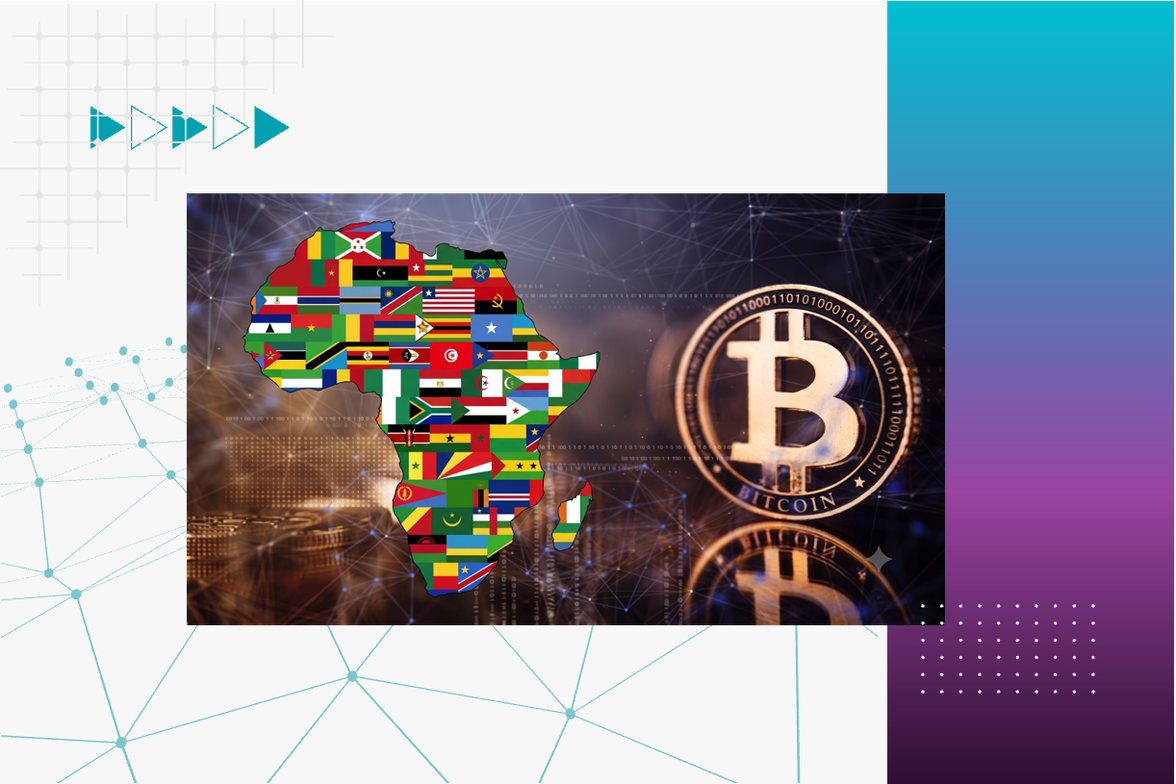
Africa's crypto market is evolving from speculation into financial infrastructure, laying the foundation for long-term adoption

Picture12

Cryptocurrency in Africa is entering a new phase. Long defined by speculation and volatility, the market is now evolving into one of the world's fastest-growing digital financial ecosystems. As institutional investment, regulation and consumer adoption accelerate, the conversation is shifting from whether crypto has a future in Africa to what role it will play in the continent's financial system.

Crypto adoption is being driven by financial necessity

Africa is now the third-fastest growing cryptocurrency region globally, behind only Asia-Pacific and Latin America. Between July 2024 and June 2025, Sub-Saharan Africa processed more than $205 billion in on-chain cryptocurrency value, growing 52% year-on-year, while Nigeria ranked second globally in the 2026 Global Crypto Adoption Index. Ethiopia, Kenya and Ghana also entered the global top 20, underlining the continent's growing role in the digital asset economy.

Unlike many developed markets where crypto adoption has largely been investment-led, Africa's growth has been shaped by practical financial needs. More than 8% of all crypto transfer value comes from retail transactions below $10,000, reflecting a market where digital assets are increasingly being used for everyday financial activity rather than large-scale speculation.

In markets facing persistent inflation and currency volatility, cryptocurrencies have also become an alternative store of value. Bitcoin accounts for 89% of crypto purchases in Nigeria and 74% in South Africa, while stablecoins are increasingly providing access to more stable digital currencies.

The market is moving from informal adoption to institutional maturity

Africa's crypto ecosystem is also becoming more structured. Governments that once viewed cryptocurrency cautiously are now introducing clearer regulatory frameworks designed to support innovation while strengthening consumer protection.

Nigeria has significantly tightened requirements for digital asset exchanges, South Africa has licensed more than 310 crypto asset service providers, and Kenya's Virtual Asset Service Providers framework is creating clearer rules for exchanges, wallet providers and stablecoin issuers. At the same time, 25 African countries are exploring central bank digital currencies, with Nigeria's eNaira remaining the continent's most advanced CBDC. The shift signals a fundamental change: African governments are no longer responding to crypto adoption—they are helping shape the ecosystem in which it develops.

The next chapter of Africa's crypto story is increasingly being written through financial infrastructure rather than retail trading

Africa remains the world's most expensive region for remittances, with transfer fees averaging between 7% and 9%. Blockchain-based payment networks are reducing these costs to as little as 1%–3%, creating opportunities for faster, cheaper cross-border payments. Stablecoins now account for 43% of crypto transaction volume across the region and are increasingly supporting international trade between Africa, the Middle East and Asia.

This shift is changing business strategies. Rather than focusing on retail trading, companies such as Yellow Card are pivoting towards business-to-business stablecoin payment infrastructure, recognising that long-term value may lie in enabling digital commerce rather than facilitating speculation.

Growth will depend on balancing innovation with infrastructure

Rapid expansion also brings new challenges. Ethiopia generated an estimated $220 million from Bitcoin mining before slowing new licenses amid concerns that mining could consume up to one-third of the country's electricity grid. The episode illustrates a broader reality: crypto growth must develop alongside national infrastructure rather than compete with it.

The next phase will be defined by adoption. Africa's crypto ecosystem has moved beyond experimentation. Markets are growing, regulation is maturing and digital financial infrastructure is expanding rapidly.

The next challenge is no longer proving that cryptocurrency has a place in Africa's economy. It is ensuring consumers have the confidence, access and understanding needed to participate. The organisations that succeed will not simply build better technology; they will build the products, education and ecosystems that convert growing interest into sustained adoption.

About Kasi Insight

Kasi Insight is Africa's leading decision intelligence firm specializing in high-frequency consumer and economic data across Africa. Through its proprietary survey infrastructure and analytics platform, Kasi provides real-time insights that help organizations anticipate economic shifts, understand consumer behavior, and make better strategic decisions.

We welcome collaboration with:

  • Banks and financial institutions
  • Asset managers and investors
  • Policymakers and development organizations
  • Academic researchers
  • FMCG and consumer goods companies
  • Media, advertising, and communications agencies
  • Healthcare and pharmaceutical organizations
  • Multinational corporations and regional businesses seeking market intelligence

Organizations interested in exploring partnerships or accessing Kasi datasets are invited to contact our research team.

📧 yannick@kasiinsight.com

Resources


Recent posts

See all

Alison Okatch

Africa's next crypto growth opportunity isn't awareness but consumer confidence

Enos Mulongo

Africa's Crypto Leaders Are Emerging, But Market Dominance Is Far From Uniform

Alison Okatch

Equity leads where financial journeys begin, while the greatest opportunity lies in capturing more value as those journeys mature.

Subscribe to our free newsletter