Sandra Beldine Otieno
August 11, 2022
Share article


With the demand for carbonated soft drinks in the country, there is a growing desire for sustainable and healthy products.
According to MarketResearch.com, the carbonated soft drinks market in Namibia was equal to 30.00 million USD (calculated in retail prices) in 2015. The drinks market in Namibia is expected to reach 102.29 million USD (in retail prices) by 2025, thus increasing at a CAGR (Compound Annual Growth Rate) of 12.41% per annum for the period 2020-2025. Additionally, in 2015, the average consumption per capita in value reached 12.67 USD per capita (in retail prices) growing to 28.28 USD by 2025.
Given that the older generations such as Baby Boomers are driving the demand for carbonated soft drinks in the country, there is a growing desire for sustainable and healthy products. With this trend, more natural products with "clean labels" such as fermented beverages, teas, lower-sugar beverages, and fortified beverages with health benefit claims are now preferred by consumers. With this in mind, big players like Coca Cola have striven to utilize less sugar and expand their offerings to include fortified carbonated soft drinks and zero-calorie beverages to stay competitive.
Currently, Namibia’s leading carbonated soft drink brand is Coca Cola. However the consumption of water is also coming up in the country and with the emphasis on sustainable and healthy products, the demand for water is expected to grow.
A poll conducted by Kasi Insight assessed the types of beverages that 499 Namibian respondents had taken within the last three months.
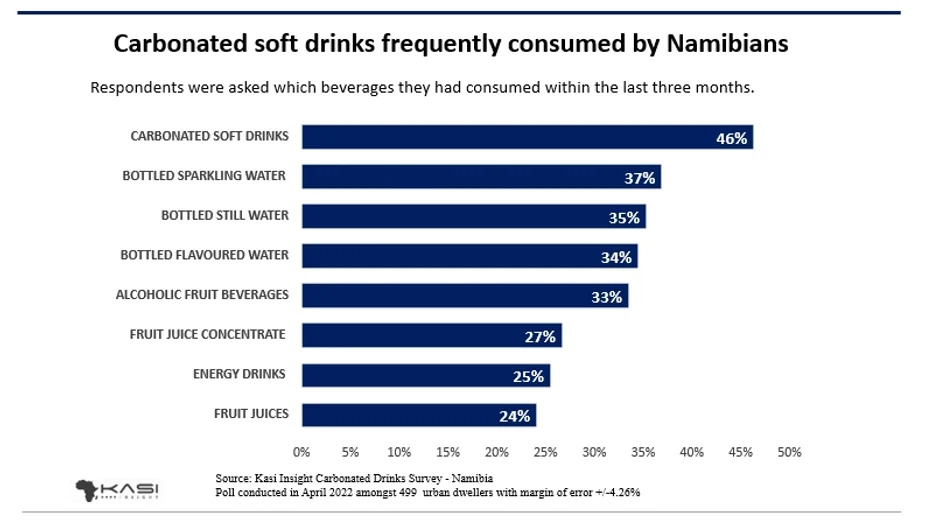
Respondents in Namibia prefer carbonated soft drinks to water. Almost half of the consumers we surveyed prefer carbonated soft drinks while more than a third of the respondents preferred drinking water (either sparkling, still or flavoured). Fruit juices and energy drinks are the least consumed – only a quarter of the consumers take them frequently.
For carbonated soft drink brands, this means that there is an available market for their products but also, they need to look out for water brands that might capture market share from them.
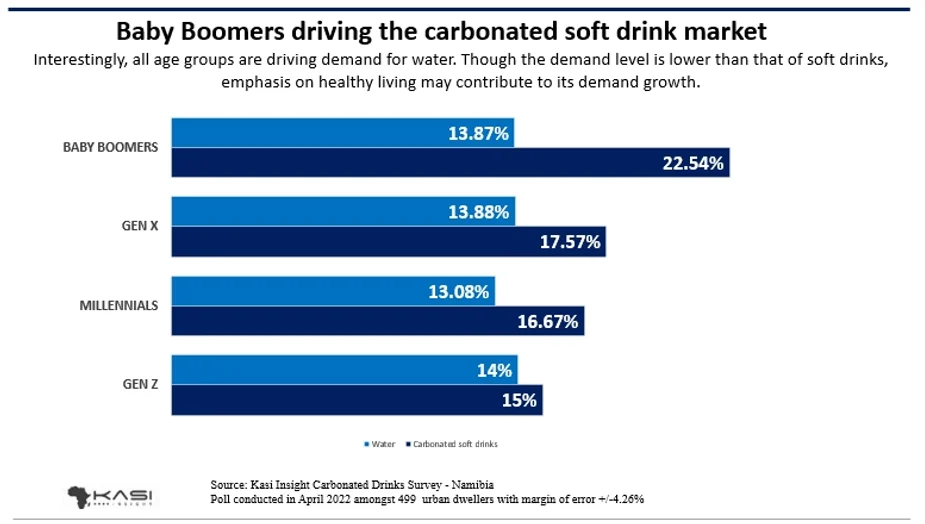
When it comes to consumer segments based on age-groups, Baby Boomers are leading in consumption of carbonated soft drinks followed by Gen Xers and Millennials. When asked when they took these soft drinks, most of Baby Boomers took them with fast food, on special occasions or with other meals. On the other hand, all age-groups are driving water demand. Gen Zers are leading at 14%, followed by Gen Xers and Baby Boomers at 13.9% while Millennials lag at 13%. It is worth noting the demand for water across the consumer segments is not widely different. This is good news for water brands as all consumers equally want water.
Across gender, males and females are equally drinking carbonated soft drinks. When it comes to water, females are slightly taking more water than men. Additionally, when it comes to income; low-income earners prefer taking carbonated soft drinks while high-income earners are driving demand for fruit juices. Soft-drink brands should consider making their products affordable enough for low-income earners as they are the ones driving soft-drink demand.
With 50% of Namibians preferring Coca Cola drinks, rival brands like Pepsi, McKane and KABISA should strive to capture market share from Coca Cola by incorporating strategies around delivery and advertising channels.
Our data intelligence platform can provide more insights to help your business make informed decisions in Namibia and elsewhere in Africa.
Contact our team today to explore how our consumer intelligence and brand intelligence can empower your decision-making process. Win with confidence with Kasi insights https://www.kasiinsight.com/thehub
#Namibia #Water #Carbonatedsoftdrinks #Consumers #Africa #Kasiinsight
1795 views
Share article
Rising leisure spending in Ivory Coast signals a shift in generational priorities and brand expectations
From Procrastination to Planning: Understanding Ugandan shoppers during this festive season
Black Friday Reigns Supreme: Tunisia's Holiday Shopping Trends Exposed