Sandra Beldine Otieno
February 14, 2024
Share article


On February 14th, Zambia's Monetary Policy Committee implemented a 150 basis points increase, bringing the monetary policy rate to 12.5%. This action is part of a consistent upward trend, as seen in recent months: In February 2023, the committee increased the monetary policy rate by 25 basis points to 9.25%. In May 2023, another 25 basis points raise brought the rate to 9.5%. By August 2023, a more substantial move occurred with a 50 basis points increase, raising the Monetary Policy Rate to 10% from 9.5%. November 2023 witnessed a significant step as the committee implemented a 100 basis points increase, pushing the rate to 11%.
This marks the fifth consecutive month of rate hikes, reaching the highest level in almost seven years. The committee attributed this move to the persistent depreciation of the Kwacha against major currencies, coupled with rising food and energy prices that are driving inflation upward. In January, inflation continued its ascent, reaching 13.2%, well above the country's inflation target band of 6-8%.
The Bank of Zambia's decisions revealed a delayed impact on consumer confidence, evident in Kasi Insight's Index of Consumer Sentiment (ICS). After the Monetary Policy Rate increased to 9.25% in February 2023, consumer sentiment saw a surge from 8 to 15. The subsequent hike in May 2023 to 9.5% didn't immediately affect confidence, remaining steady at an index of 21. Further, the August 2023 increase to 10% coincided with a notable spike in sentiment to 28, suggesting consumers viewed the central bank's actions as necessary or confidence-boosting.
The influence of monetary policy on consumer sentiment became more intricate in November 2023 when the Monetary Policy Rate rose to 11%. Due to this hike, consumer sentiment declined to 17, indicating potential concern or caution. This suggests the cumulative impact of successive rate hikes may have started negatively affecting consumer confidence.
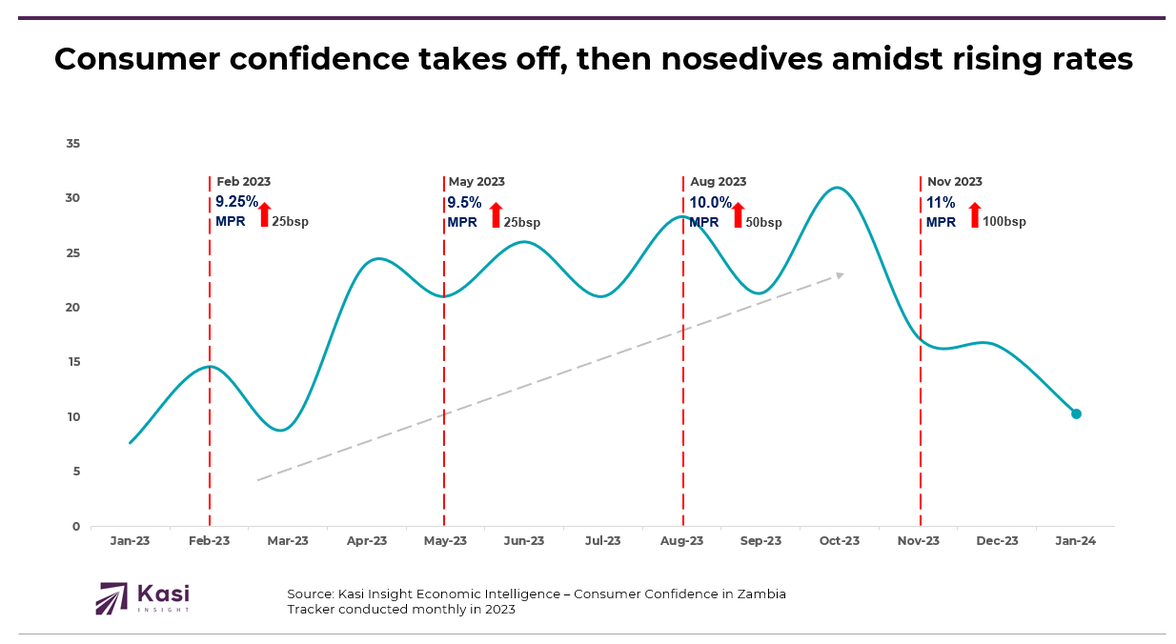
Following the February 2024 announcement, raising the rate for the fifth consecutive time to 12.5%, the subsequent index for January 2024 dropped to 10. This indicates potential sensitivity or apprehension among consumers regarding the ongoing tightening of monetary policy. The continuous upward adjustment of interest rates seems to contribute to a more cautious consumer outlook.
Zambia's recent series of interest rate hikes, culminating in a 12.5% rate, is poised to exert significant and multifaceted impacts on the country's business landscape. One consequence is the escalated cost of borrowing, which could place considerable strain on capital-intensive industries. Businesses reliant on loans for expansion or operational needs may find themselves grappling with higher interest expenses, potentially affecting their overall profitability.
Furthermore, the discernible trend of consumer caution, reflected in declining sentiment indices, is indicative of potential repercussions on spending patterns. Sectors such as retail and hospitality may face a downturn as consumers become more circumspect in their expenditures. The impact is not confined to domestic concerns; businesses engaged in international trade may grapple with challenges stemming from currency depreciation, affecting import costs and revenue generation in foreign currencies.
Additionally, industries heavily dependent on investment for growth, such as real estate and manufacturing, may witness a slowdown as the cost of capital rises. The need for businesses to swiftly adapt to these changing economic dynamics, closely monitor consumer behavior, and stay abreast of regulatory responses becomes paramount in navigating the complexities posed by Zambia's tightening monetary policy.
Zambia's recent series of interest rate hikes, reaching 12.5%, reflects a proactive economic policy response to address currency depreciation and inflationary pressures. While these measures are aimed at maintaining monetary stability, a shift in consumer sentiment towards caution has emerged, potentially impacting sectors reliant on consumer spending. This delicate balance between inflation control and sustaining consumer confidence is pivotal for fostering economic development. Policymakers must navigate this intricate landscape with an adaptable economic policy that not only addresses immediate challenges but also promotes long-term economic resilience. The ongoing dialogue between economic policy, consumer sentiment, and sustainable development underscores the need for a nuanced and forward-thinking approach to ensure economic stability and growth in the face of evolving global and domestic dynamics.
Share on socials using this caption: Zambia's Monetary Policy Committee just raised the stakes! 📈🏦 In the latest move, they implemented a 150 basis points increase, bringing the monetary policy rate to 12.5% - marking the fifth consecutive month of rate hikes! 💸💼 What's the impact on consumer sentiment? Check out the latest stats and insights. 📊 #ZambiaEconomy #MonetaryPolicy #ConsumerSentiment
2111 views
Share article
Trust Is Becoming Economic Infrastructure
Consumer confidence loses momentum in October
Confidence plateaus in September as caution defines household behavior