Alison Okatch
March 4, 2026
Share article


Across Egypt’s urban centers, a quiet trade-off is taking place within the walls of middle-income households. While the narrative often focuses on the aspirations of youth, it is Gen X (aged 45–54)—the "Household Anchors"—who are absorbing the most economic pressure. By analyzing Kasi’s latest consumer data, a clear picture emerges: the middle class is "managing" to stay afloat, but they are doing so by sacrificing their own long-term physical well-being to protect the family budget.
The Illusion of Stability
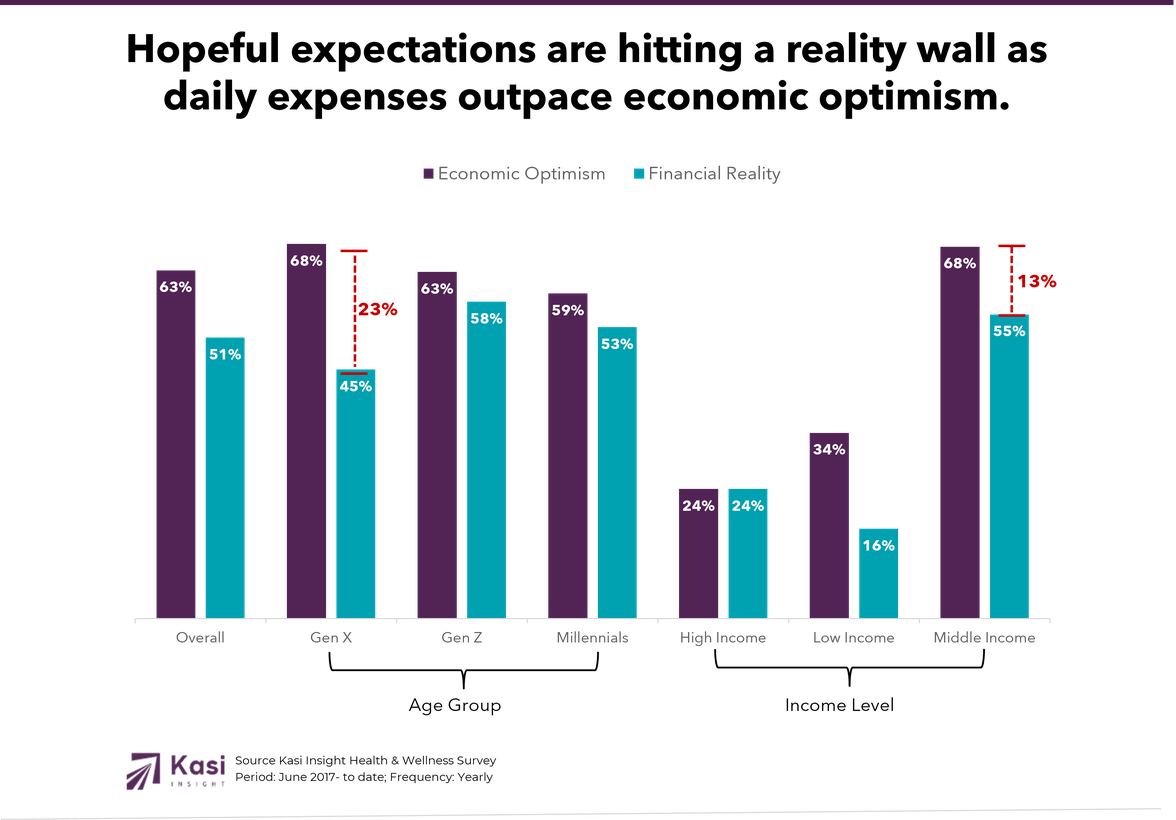
On the surface, Egypt’s middle class appears remarkably resilient. 67.5% of middle-income earners expect economic conditions in their city to improve over the next six months, and over half (55.2%) feel confident they can meet their regular expenses. However, for Gen X, this optimism hits a reality wall. Nearly half (44.4%) of Gen X households are currently uncertain if they can meet their regular expenses, revealing that their "confidence" is often just a high-stakes monthly calculation.
This generation serves as the primary budget decision-maker, and their strategy for survival is aggressive spending retraction. While 60% of middle-income respondents technically believe now is a good time for large purchases like appliances, Gen X is the most cautious, with many remaining "on the fence" as they prioritize liquidity over lifestyle.
Trading Fresh for Financial Flexibility
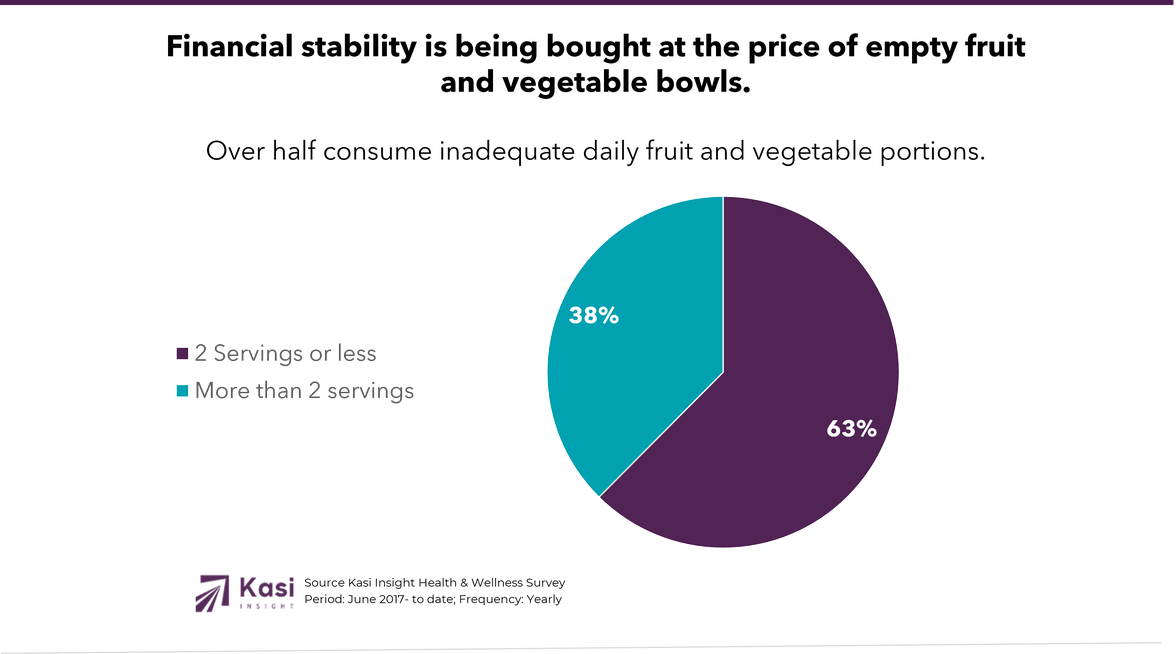
The most alarming trend is found on the dinner table. To maintain financial stability, middle-income Gen X households are making quiet dietary trade-offs. Kasi data shows that less than 5% of middle-income Egyptians consume the recommended four or more servings of fruit per day.
For Gen X specifically, the "Freshness Deficit" is even more pronounced. Only 6.8% of this age group manages a healthy fruit intake, while over 9% are surviving on less than one serving of vegetables per day. As the stewards of the home, Gen X is prioritizing "filling" staples like grains and bread to satisfy larger household sizes, effectively hollowing out their own nutrition to keep the budget balanced.
Stress, Coping, and the Habitual Pivot
The psychological toll of being the family's financial shock absorber is manifesting in heavy stress-related behaviors. Physical activity is a major casualty; only 2.4% of middle-income respondents walk daily, as time and energy are diverted toward work and budget management.
In place of wellness, "vices" have become the primary coping mechanisms. Gen X exhibits the most entrenched smoking habits in the country, with 22.7% of smokers in this age group consuming more than 31 cigarettes per day, the highest intensity surveyed. Furthermore, 28.3% of Gen X smokers admit they should quit but are "not quite ready," suggesting these habits are viewed as non-negotiable stress relievers amidst economic uncertainty. Similarly, 27.9% of middle-income drinkers are consuming alcohol up to three times a week as a way to unwind from the pressure of maintaining their status.
The Opportunity: Affordable Nutrition as a Loyalty Lever
For FMCG and Consumer Finance brands, the middle-income Gen X segment represents a loyal but exhausted consumer. They are not looking for aspirational marketing; they are looking for efficiency and fortification.
The Strategy: Brands can win by designing "Family-Sized Health"—packaging essential nutrients into affordable, high-volume formats.
The Benefit: By solving the "Nutrition Gap" for the household decision-maker, brands move from being a discretionary expense to a non-negotiable staple.
In an era where "managing" is the goal, the brands that help this "Anchor Generation" manage their health as effectively as they manage their money will emerge as the long-term market leaders.
Contact our team today to explore how consumer-led intelligence can help your brand turn budget pressures into loyalty opportunities through affordable, fortified family nutrition solutions. Win with confidence with Kasi Insight. https://www.kasiinsight.com
Share on socials using this caption: 🇪🇬🍎 In Egypt’s middle-income homes, Gen X “Household Anchors” are quietly sacrificing their own health to keep family budgets afloat; trading fresh produce for staples, wellness for vices, and long-term vitality for short-term stability. But this Nutrition Gap is also a massive opportunity: brands that deliver affordable, high-volume fortified nutrition can become non-negotiable household staples and earn lasting loyalty from the most pressured decision-makers. Move from managing survival to enabling healthier futures. #EgyptInsights #ConsumerIntelligence #NutritionGap #MiddleClassAfrica #WinWithConfidence
241 views
Share article
Financial pressure in Ghana is shaping emotional wellbeing differently across income and age groups
Mpox outbreak in Africa exposes critical inequities in global health
Namibia's Health Landscape: From Varied Health Perceptions to Dominant Concerns