Sandra Beldine Otieno
March 4, 2024
Share article



Africa’s youth are at a crossroads of lifestyle choices that could define the continent’s future, according to Kasi Insight’s Health & Wellness tracker spanning from 2017 to 2024. The survey paints a worrying picture of health trends among the urban youth in 21 countries, with the prevalence of unhealthy behaviors, such as high rates of smoking and drinking, particularly among Millennials and Gen Z. These behaviors are juxtaposed against a concerning backdrop of low physical activity and poor dietary choices, setting the stage for a potential health crisis.
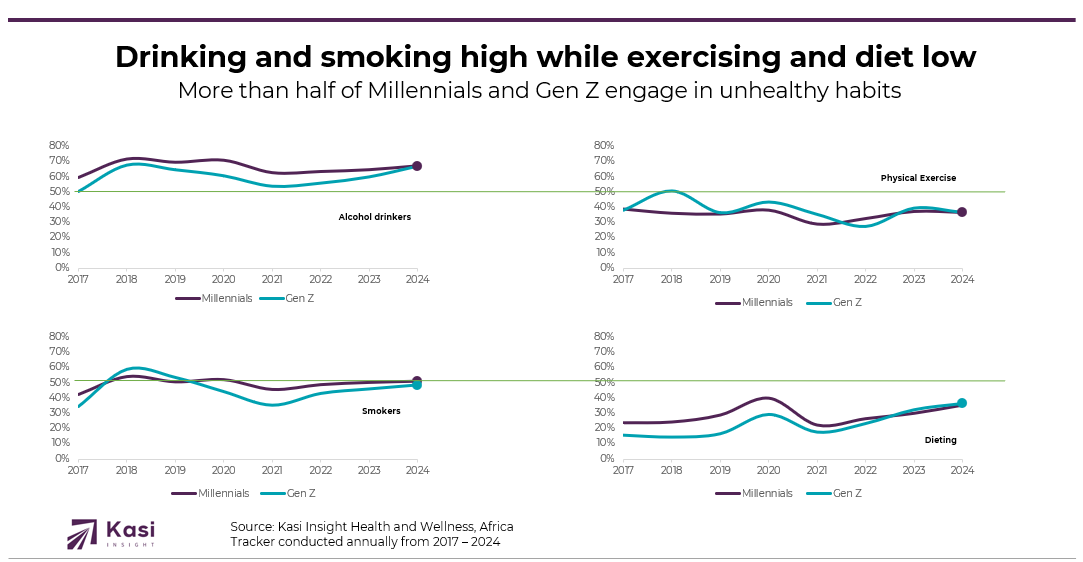
The data reveals that averagely 66% of Millennials and 60% of Gen Zers are categorized as heavy alcohol consumers (drinking more than four alcoholic drinks in a sitting), with 50% of Millennials and 45% of Gen Z also identified as heavy smokers (smoking more than ten cigarettes per day). This sustained engagement in unhealthy habits is alarming, especially as it remains consistently high over the years without a significant decline. On the other hand, the dedication to health-promoting practices, such as diet and exercise, is alarmingly low. Only 37% are engaging in regular physical exercises, and a mere 26% are maintaining a balanced diet.
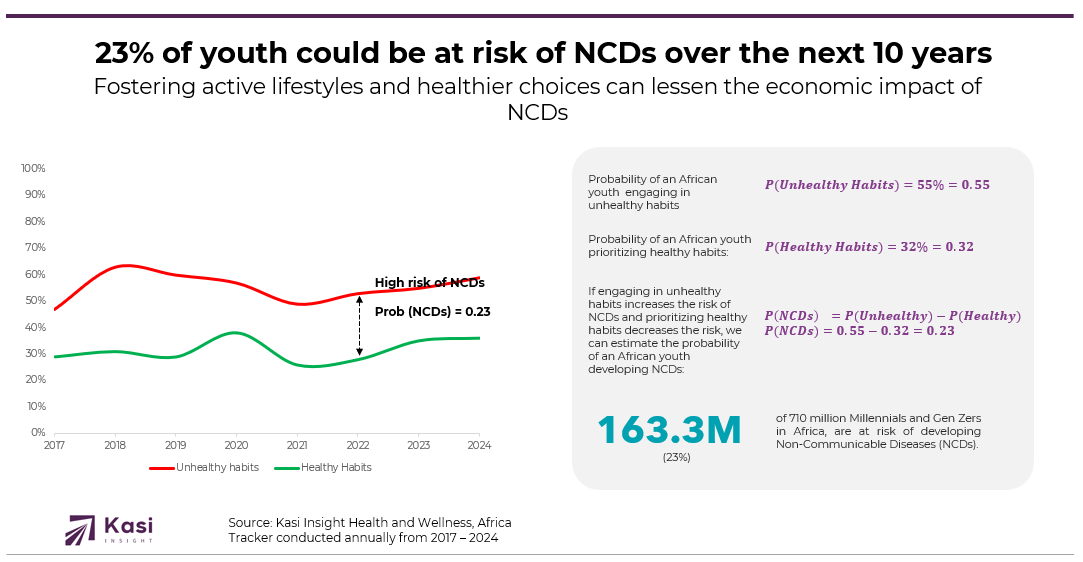
The implications of these lifestyle choices are profound. With an estimated 23% of African youth at risk of developing Non-Communicable Diseases (NCDs) over the next decade, the burden on healthcare systems and the continent's economy could be substantial. Kasi Insight’s analysis further quantifies the risk, with a 55% probability of an African youth engaging in unhealthy habits, contrasted with a 32% probability of prioritizing healthy habits. This stark difference culminates in a 23% probability of developing Non-Communicable Diseases (NCDs) over the next decade, translating to approximately 163.3 million young Africans at risk.
Moreover, the economic implications of these health trends cannot be ignored. The surge in unhealthy behaviors and the potential rise in NCDs could strain Africa’s health budgets, affect patient affordability, and impact overall economic productivity. The responsibility lies not only with individuals and families but also with policymakers, healthcare providers, and community leaders to foster environments that support healthier lifestyles. The challenge is two-fold: while there is a need to curb the rise in unhealthy practices, there is also a crucial need to elevate the importance of healthy living. This could involve creating accessible and affordable opportunities for exercise, improving the availability of nutritious foods, and implementing robust anti-smoking and drinking campaigns that resonate with the youth.
For health brands and NGOs focusing on public health in Africa, the data from Kasi Insight's Health & Wellness tracker signals a crucial call to action. The prominent unhealthy behaviors amongst Millennials and Gen Z underscore the need for targeted interventions, which these organizations can spearhead by developing educational campaigns aimed at raising awareness about the consequences of excessive drinking, smoking, and inactivity. There's an open field for product innovation, particularly in creating accessible and appealing health-conscious products and services that resonate with a younger demographic at risk of NCDs. Partnerships with governments, businesses, and influencers can bolster their efforts, driving policy advocacy and community programs that foster environments conducive to healthy living.
Technology also plays a pivotal role, offering a platform for health brands to engage with the youth through apps and social media, promoting health tracking and education on nutrition and wellness. Additionally, NGOs can offer vital services such as health screenings and preventive clinics, particularly targeting younger populations. Addressing mental health, often intertwined with physical health habits, should also be part of their comprehensive strategy. Ultimately, the challenge for these organizations is not just to initiate change but to sustain it, developing long-term health promotion models that adapt to Africa's evolving socio-economic landscape and ensure a healthier future for its youth.
Share on socials using this caption: 🔎🌍 A concerning trend emerges from Kasi Insight's Health & Wellness Tracker: Africa's youth face a health crossroads, with lifestyle choices today heralding a potential crisis tomorrow. It's time for action – let's empower our youth with healthier habits for a brighter future #HealthTrends #YouthEmpowerment #AfricanWellness
2087 views
Share article
The Future of AI in Africa Lies in Smarter Decisions, Not Just Smarter Models
Africa’s Critical Minerals: From Hidden Resource to Economic Catalyst
Perceptions of climate inaction persist among Ghanaian consumers, driven by income disparities