Sandra Beldine Otieno
March 4, 2024
Share article



Inflation in Nigeria has escalated to a critical point, with the rate soaring to a staggering 29.9% in January 2024 — the highest seen since 1996. This rampant inflation is severely impacting the cost of living, as escalating prices make necessities such as food and transportation increasingly unaffordable for many Nigerians. The inflationary spiral is largely driven by rising costs in food and non-alcoholic beverages, which are climbing at an even more pronounced rate than the general inflation figures suggest.
Compounding these difficulties is the sustained devaluation of the Nigerian naira, which has fallen to N1,524 against the US dollar, reflecting a dramatic 230% depreciation over the past year. This devaluation amplifies inflation's sting by making imported goods significantly more costly, adding to the already intense price pressures within the country. These economic indicators are not just numbers; they represent a complex and distressing reality for Nigerians, highlighting the multifaceted economic hurdles that the nation confronts.
According to Kasi Insight’s Index of Consumer Sentiment (ICS), sentiment in Nigeria fluctuated throughout 2022, but ultimately averaged out to 26 points, suggesting a relatively steady yet cautious consumer optimism. However, the following year marked a significant shift. The average sentiment in 2023 dipped to 21 points, a decline of 5 points from the previous year. This decline was not uniform throughout the year; it was most pronounced during the February to March period when Nigeria underwent its presidential elections. The election of President Bola Ahmed Tinubu corresponded with a sharp decrease in consumer sentiment, dropping to a mere 10 points, half of what it was in January of the same year. This suggests that the political climate had a substantial impact on consumer confidence, possibly due to uncertainties about policy directions under the new administration.
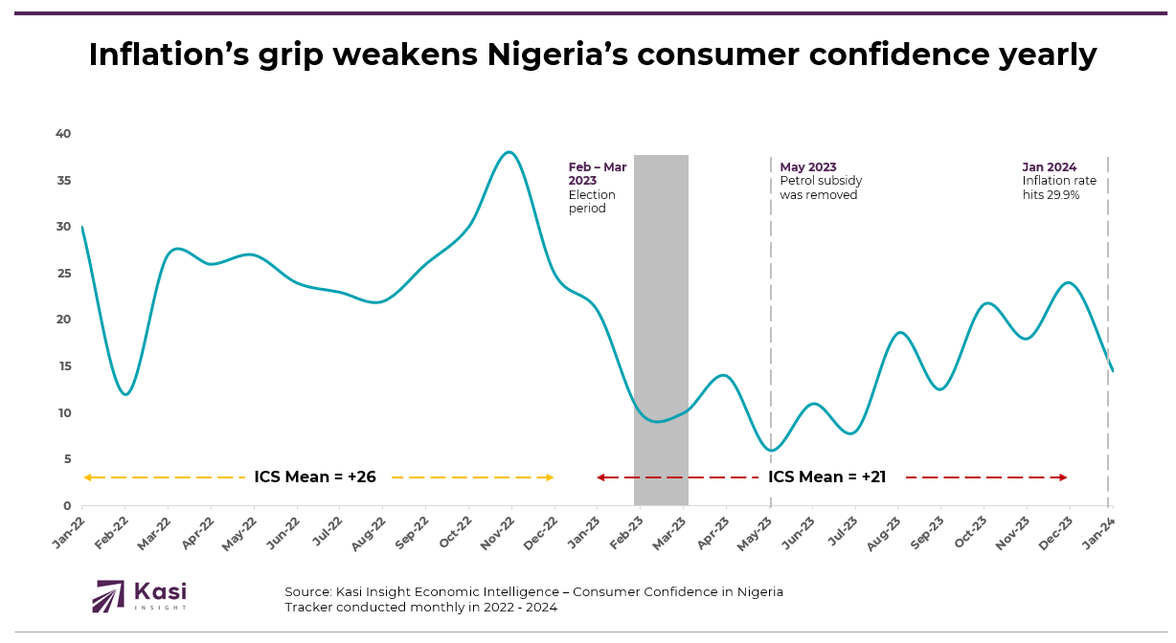
As 2024 began, the country was faced by additional economic challenges. The inflation rate went up to the highest in nearly three decades. This inflationary environment could erode purchasing power and deepen consumer skepticism, likely contributing to the subdued sentiment index of 15 points in January 2024, as reported by Kasi Insight.
Consumers face the stark reality of diminishing purchasing power; the naira in their pocket today buys significantly less than it did just a year prior. The surge in prices across the board, particularly for necessities like food and fuel, translates to a steeper cost of living, straining household budgets. As a result, many are compelled to adjust their spending, often cutting back on non-essential items and grappling with savings that depreciate in real value.
The implications extend to income, where if wages fail to catch up with the accelerating prices, the gap between earnings and expenses widens, potentially triggering a wage-price spiral. The overarching sentiment among consumers is one of caution and concern, as the uncertainty surrounding the economy impacts not only day-to-day budgeting but also long-term financial plans. Those with debts may face increased burdens due to rising interest rates, while fixed-income earners, such as retirees, find their purchasing power particularly eroded. In response, investment strategies are shifting, with a greater focus on assets that can potentially hedge against inflation.
For businesses in Nigeria, the combination of a 29.9% inflation rate and the specific challenges faced in 2023, including the aftermath of petrol subsidy removal in May 2023 and broader economic strains, signifies a period of intense pressure and adaptation. Small enterprises have been particularly hard hit, with about 4 million closures within two months post-subsidy removal, reflecting the acute vulnerability of this sector to fuel price hikes and operational costs. The widespread shutdown of Micro, Small, and Medium Enterprises (MSMEs) further underscores the harsh economic landscape. Larger corporations are not immune, with operational downscaling evident across various sectors due to increased production costs, foreign exchange scarcity, and infrastructural deficiencies.
The situation has led to a significant stockpile of unsold goods, reaching a value of 470 billion naira, as demand dwindles amidst consumer spending power erosion. Major firms like Unilever, GSK, and Sanofi have either scaled back or exited Nigerian operations, citing financial strains and market challenges. The departure of Bolt Food from the Nigerian market highlights the broader trend of businesses reevaluating their presence in response to the challenging macroeconomic conditions. This environment demands strategic resilience from businesses, requiring innovative approaches to cost management, supply chain adjustments, and consumer engagement to navigate the turbulent economic waters of Nigeria.
The soaring cost of living, exacerbated by the naira's significant depreciation, has eroded purchasing power, compelling consumers to adjust their spending habits and financial strategies amidst growing uncertainties. This inflationary pressure, has led to a noticeable decline in consumer confidence, as evidenced by the drop in Kasi Insight's Index of Consumer Sentiment. Businesses, particularly small and medium-sized enterprises, have faced dire challenges, with millions shutting down due to the compounded pressures of high operational costs and dwindling consumer spending. As Nigeria grapples with these challenges, the path forward will require concerted efforts from both the public and private sectors to stabilize the economy and restore confidence among consumers and businesses alike.
Share on socials using this caption: 💥Inflation skyrockets to unprecedented levels in Nigeria, pushing businesses to the brink and testing consumer resilience. Explore the depths of this economic upheaval in our insightful article. Stay informed, stay prepared. #InflationInNigeria #EconomicTurbulence #SurvivingTheStorm
2053 views
Share article
Trust Is Becoming Economic Infrastructure
Consumer confidence loses momentum in October
Confidence plateaus in September as caution defines household behavior