Paul Cheloti Mulongo
July 12, 2024
Share article



Kasi Insight's Cost of Living Tracker, conducted quarterly, provides insights into the economic conditions faced by consumers across 20 African markets amidst inflationary pressures. The March 2024 survey in Tanzania revealed significant findings on consumer financial health, identifying key areas where banks can enhance their lending and product strategies.
The survey indicates that 47% of respondents find it difficult to secure a job, with Generation Z facing the most significant challenges (52%). In contrast, only 31% of respondents report an easier job market, with Baby Boomers displaying the most optimism at 57%. The ability to make money remains a challenge, with 45% of respondents finding it more difficult compared to the last six months. This sentiment is consistent across most demographics. Conversely, 31% find it easier, with Baby Boomers (51%) showing more positivity. Twenty-four percent report no change. This disparity highlights the necessity for tailored support for younger job seekers, who may benefit from specialized employment programs.
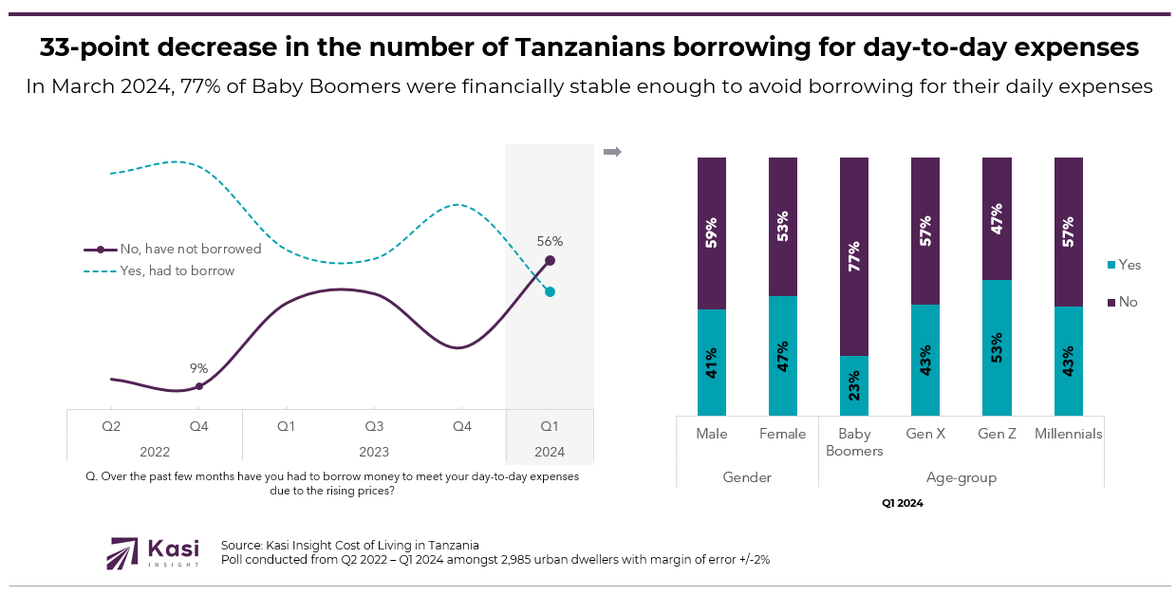
Borrowing to meet day-to-day expenses is a significant concern, with 56% of respondents not having to borrow money recently. However, 30% have borrowed a few times, and 14% have borrowed often, indicating financial strain. Generation Z (36%) and Millennials exhibit higher borrowing needs.
Despite these challenges, there is a surprising level of confidence among respondents regarding their ability to meet regular expenses over the next six months, with 79% expressing optimism. Baby Boomers (87%) exhibit the highest confidence, while Millennials (22%) and high-income groups (27%) express greater uncertainty. Only 3% anticipate being unable to meet their expenses. A positive outlook on household income prevails, with 73% of respondents expecting their income to improve in the next six months. Generation Z (75%) is the most optimistic, while 25% expect their income to remain stable. A mere 3% anticipate a decline in income. This optimistic sentiment provides an opportunity for banks to introduce investment products and financial planning services that cater to those expecting income growth, enhancing their financial resilience and fostering long-term customer relationships.
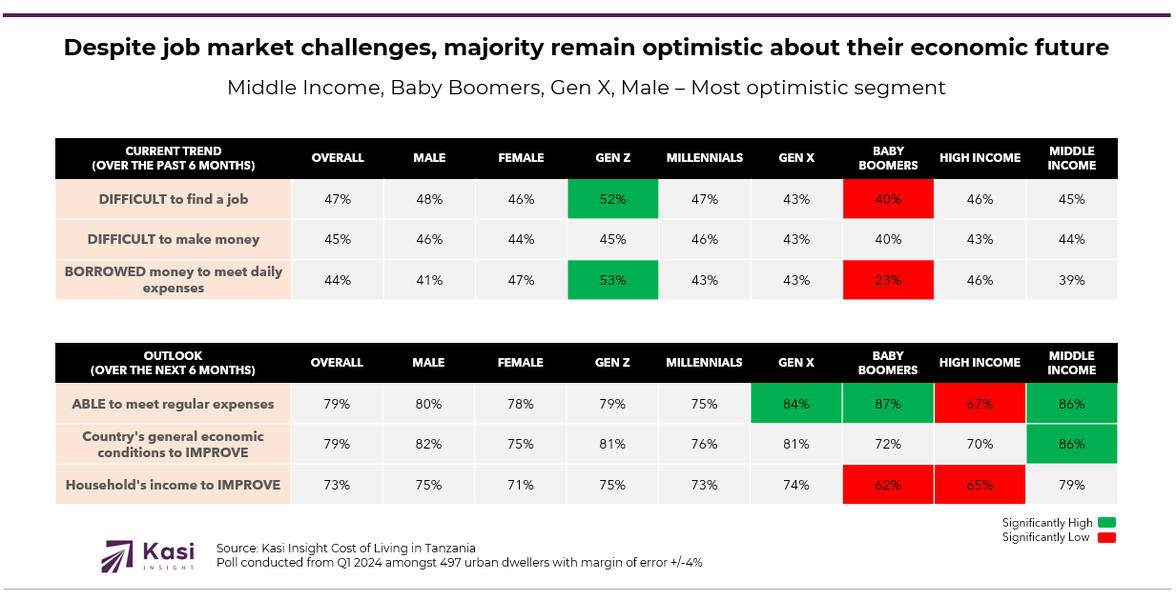
When it comes to general economic conditions, 79% of respondents expect improvement, with only 3% expecting a decline. Middle-income individuals (86%) and males (82%) are the most optimistic. These expectations suggest a favorable environment for launching new financial products and services aimed at capitalizing on economic growth.
To mitigate credit risk, banks should implement enhanced credit screening, particularly for Millennials and Generation Z, who display higher financial uncertainty and borrowing needs. Offering credit counseling services can also help customers manage their finances better and reduce the likelihood of default. Customized financial products are essential for retaining customers. Flexible loan repayment plans, and targeted savings programs can address the specific needs of younger demographics and those with higher borrowing needs. Additionally, aligning promotions and incentives with positive economic expectations can encourage investment and savings behaviors.
Banks can play a pivotal role in supporting customers during employment transitions by partnering with job placement agencies to offer job market programs. Unemployment insurance products can also provide a financial safety net during periods of joblessness. Financial literacy is crucial for empowering customers. Banks should conduct workshops and seminars focused on budgeting, saving, and investing. Developing accessible digital resources and tools can further enhance financial education across all income groups. Continuous monitoring of consumer sentiment and financial health through regular surveys allows banks to adjust their strategies promptly. Leveraging data analytics can help predict customer behavior and customize offerings, accordingly, ensuring that financial solutions remain relevant and effective.
Share on socials using this caption: 💰📊 Navigating Tanzania's Financial Landscape: Insights from Kasi Insight's Latest Survey! Discover how rising costs and economic optimism shape consumer behavior and what it means for banks. 🚀
2233 views
Share article
How Consumer Sentiment Predicts South Africa’s Credit Cycles
How Consumer Sentiment Predicts Kenya’s Credit Cycles
Kenya’s financial sector gains momentum as demand climbs in July 2025