Sandra Beldine Otieno, MSc
December 13, 2024
Share article


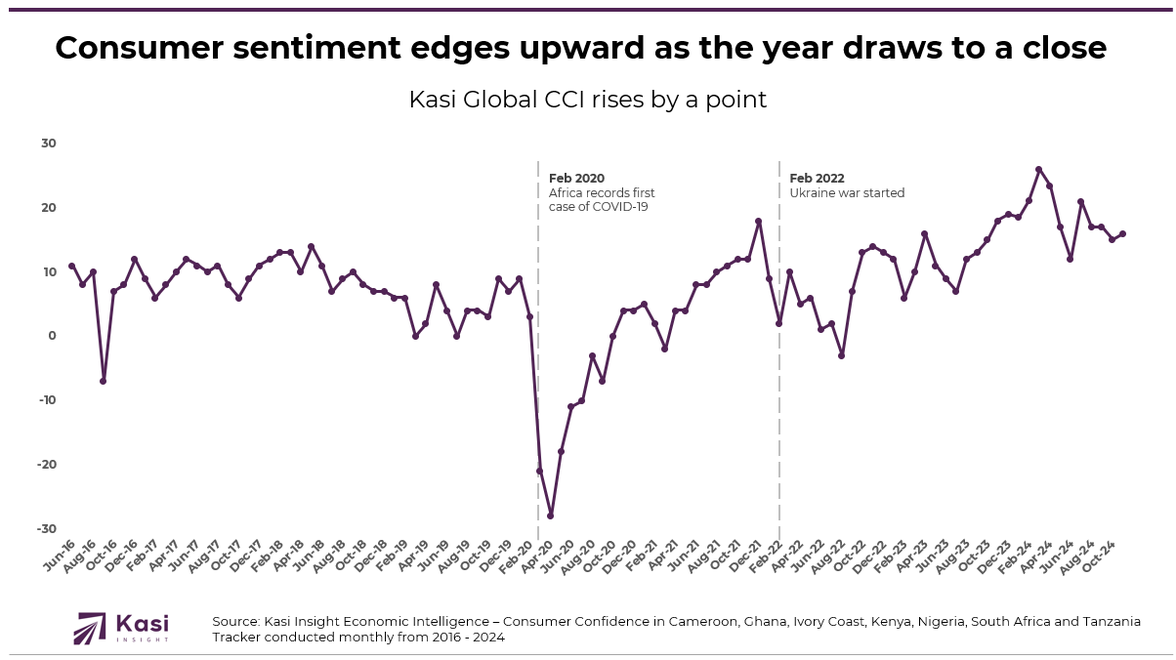
In November, consumer confidence in Africa edged up by one point, signaling a slight improvement in sentiment. This increase was supported by a notable 7-point rise in the current conditions index, which outweighed a 2-point decline in the future expectations index. The overall sentiment suggests a cautious shift toward optimism, as consumers balance improving conditions with persistent uncertainties across the region.
In November, household indices displayed a combination of significant gains and persistent financial challenges, reflecting a cautious consumer sentiment. The discretionary spending index jumped by 9 points, indicating increased confidence in non-essential spending, while the household spending index recorded a notable rise of 12 points, pointing to improved overall expenditure. Similarly, the job prospects index climbed by 6 points, suggesting growing optimism about employment opportunities.
Despite these improvements, financial pressures remained a major concern. Household income dropped sharply by 6 points, and the personal finance index declined by 4 points, signaling continued strain on individual financial stability. Broader economic confidence also weakened, with the general country economic conditions index falling by 5 points and the general city economic conditions index decreasing by 4 points. This mixed performance underscores the fragile balance between optimism in spending and employment and the persistent challenges of financial and economic uncertainty.
With the holiday season underway and the year ending, November’s slight improvement in consumer confidence provides a mixed outlook for brands. Discretionary spending rose by 9 points, and household spending saw a significant 12-point increase, signaling a willingness among consumers to indulge in festive purchases despite ongoing challenges. However, the drop in household income by 6 points and a 4-point decline in the personal finance index highlight the continued financial strain many households face. To capture consumer attention, brands must balance festive appeal with practicality by offering value-driven promotions, highlighting affordability, and addressing consumers’ cautious spending habits. Campaigns that focus on bundled deals, cost savings, and practical solutions will resonate most with shoppers who are navigating financial pressures.
Regional sentiment shifts further underscore the need for targeted strategies as the year ends. In markets like Ivory Coast and Cameroon, where consumer confidence has improved, brands have an opportunity to lean into optimism with festive, aspirational campaigns that evoke joy and celebration. These regions provide a platform for more indulgent and experience-focused messaging. Conversely, markets like South Africa and Nigeria, where sentiment has declined, require a more grounded approach. Brands should prioritize affordability, reliability, and address immediate consumer needs in these markets, positioning themselves as trusted allies in managing holiday expenses. Building trust through empathetic messaging and practical offers can help brands forge deeper connections with consumers facing economic challenges.
Amid persistent financial pressures, reflected in declines in national and city economic conditions indices, brands must remain agile, and data driven. Tracking spending patterns and regional trends will be crucial for refining strategies and maintaining relevance as the year draws to a close. Messaging that combines trust, affordability, and festive spirit can help brands stand out. By aligning with the realities of cautious optimism while delivering value and reliability, brands can successfully close out the year and position themselves for continued success into the next.
Share on socials using this caption: 📈 Consumer confidence in Africa edges up by 1 point in November! Gains in spending and job prospects are tempered by declines in personal finance and household income. As the year ends, brands must focus on affordability, trust, and tailoring strategies to regional dynamics. 🌍💡 #ConsumerConfidence #AfricaEconomy #HolidaySeason #BrandStrategy
2063 views
Share article
Trust Is Becoming Economic Infrastructure
Consumer confidence loses momentum in October
Confidence plateaus in September as caution defines household behavior