Sandra Beldine Otieno, MSc
October 3, 2024
Share article


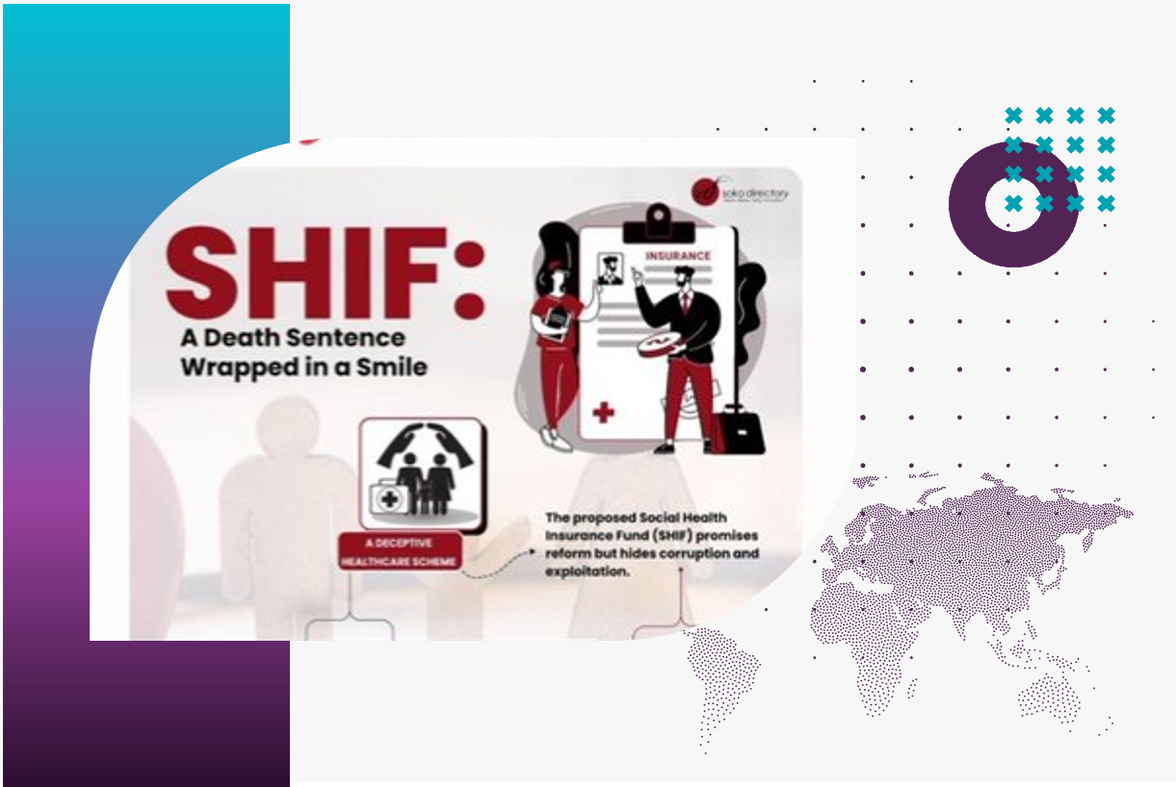
On October 1, 2024, Kenya officially launched the Social Health Insurance Fund (SHIF), an ambitious initiative meant to replace the National Hospital Insurance Fund (NHIF) as part of the government’s strategy to achieve Universal Health Coverage (UHC). Announced by Health Cabinet Secretary Dr. Deborah M. Barasa on September 18, 2024, during a media briefing, SHIF is positioned as a transformative solution to providing affordable healthcare for all Kenyans. However, what was meant to be a bold step forward has sparked intense public backlash and legal challenges, leaving the future of SHIF uncertain.
The government’s allocation of KSh 6.1 billion to SHIF represents only 4% of the KSh 168 billion required for full implementation. To fund SHIF, the government has introduced a mandatory contribution model that affects both salaried workers and those in the informal sector. The financial burden, coupled with concerns about the program’s transparency and efficiency, has led many Kenyans to oppose SHIF, viewing it as a system that will increase financial hardships without significantly improving healthcare access.
Amid public unrest, legal challenges are also threatening to delay SHIF’s rollout. A court hearing is scheduled for October 9, 2024, to address the constitutionality of SHIF, and the outcome could determine whether the program proceeds or is halted.
Public opposition to SHIF is fierce, with the new fund being branded by many as a “deceptive healthcare scheme” that will only exacerbate the country’s healthcare challenges. Unlike NHIF, which had a fixed contribution model, SHIF mandates a 2.75% deduction from all salaried workers' gross income. For example, a Kenyan earning KSh 50,000 per month will now contribute KSh 1,375 under SHIF, compared to the KSh 1,200 they were paying under NHIF. This increase has raised concerns, particularly among middle- and lower-income workers, about the financial strain SHIF will impose.
Even more contentious is the impact on informal sector workers, who were previously not required to contribute to NHIF. Under SHIF, they must now contribute a minimum of KSh 300 per month, regardless of their income level. Many Kenyans in the informal sector—market traders, boda boda riders, and small-scale farmers—are protesting this compulsory contribution, arguing that it will severely impact their already tight budgets, especially with the current high cost of living.
Moreover, citizens fear that the increased contributions will not translate into improved healthcare services. Criticisms have emerged over SHIF’s bureaucracy, with concerns that the system will introduce more red tape, causing delays in reimbursements, restricted access to vital treatments, and inefficiencies in delivering care. Public distrust is fueled by claims that SHIF is simply a scheme to collect more funds without addressing the structural issues in the healthcare system. With only 4% of the required funding in place, many are asking how the government plans to bridge the remaining gap and whether SHIF can truly deliver better services.
Alongside financial concerns, transparency issues are a major factor driving opposition to SHIF. The award of a KSh 104.8 billion contract to Safaricom for the development of the Integrated Healthcare Information Technology System (IHTS) has been criticized for lacking transparency. The procurement process, which saw the contract awarded just days after the request for proposals was issued, has led to allegations of corruption and favoritism. Many Kenyans are questioning why such a significant contract was awarded so quickly and without broader public participation, raising fears that SHIF will be marred by the same corruption issues that have plagued other government projects.
Busia Senator Okiya Omtatah and other petitioners have taken legal action, arguing that SHIF was rolled out without the required legislative framework to support it. They claim that the absence of subsidiary legislation under the Social Health Insurance Act undermines the legality of SHIF. The upcoming October 9 court hearing will focus on whether SHIF’s implementation violated constitutional requirements, and the outcome could potentially derail the entire program.
Public sentiments are now shifting from skepticism to outright rejection, with many Kenyans fearing that SHIF will be a breeding ground for corruption. Protests and online campaigns have emerged, calling for the rejection of SHIF until these issues are addressed. The system’s critics argue that SHIF is more about generating funds for select groups than it is about improving healthcare. The lack of clear oversight mechanisms and the rushed rollout have done little to allay these fears.
As SHIF moves forward, its future remains precarious. For the government, the fund is a key component of its Universal Health Coverage (UHC) plan, designed to alleviate the financial burden on households and reduce out-of-pocket expenses. Dr. Barasa and other health officials have emphasized the long-term benefits of SHIF, including broader coverage for emergency and chronic care, as well as the promise of reduced healthcare costs over time. However, the mounting opposition from the public, combined with the looming legal battles, places SHIF at a critical crossroads.
The October 9 court ruling will be pivotal in determining the next steps for SHIF. If the court sides with the petitioners, the government could be forced to halt the program, rewrite legislation, or delay the rollout until proper structures are in place. On the other hand, if the court rules in favor of the government, SHIF will proceed, though it will still face the immense challenge of gaining public trust and ensuring that the system can deliver on its promises.
For now, Kenya’s ambitious healthcare reform stands at the edge of uncertainty. The debate over SHIF’s viability—whether it can truly provide affordable, efficient healthcare or whether it is destined to be another costly and ineffective government program—continues. While some hope that SHIF will be the answer to Kenya’s long-standing healthcare problems, many others are wary, fearing that the new system will only deepen the country’s healthcare crisis.
Share on socials using this caption: 🚨 Kenya’s healthcare overhaul! 🚨SHA is live, replacing NHIF for Universal Health Coverage 🏥 But with legal battles and funding concerns, will it deliver? Stay tuned for the October 9 court decision 🏛️ #SHA #SHIF #UniversalHealthCoverage #KenyaHealth #HealthcareReform
1921 views
Share article
The Future of AI in Africa Lies in Smarter Decisions, Not Just Smarter Models
Africa’s Critical Minerals: From Hidden Resource to Economic Catalyst
Perceptions of climate inaction persist among Ghanaian consumers, driven by income disparities