Reports
April 4, 2022
Overview
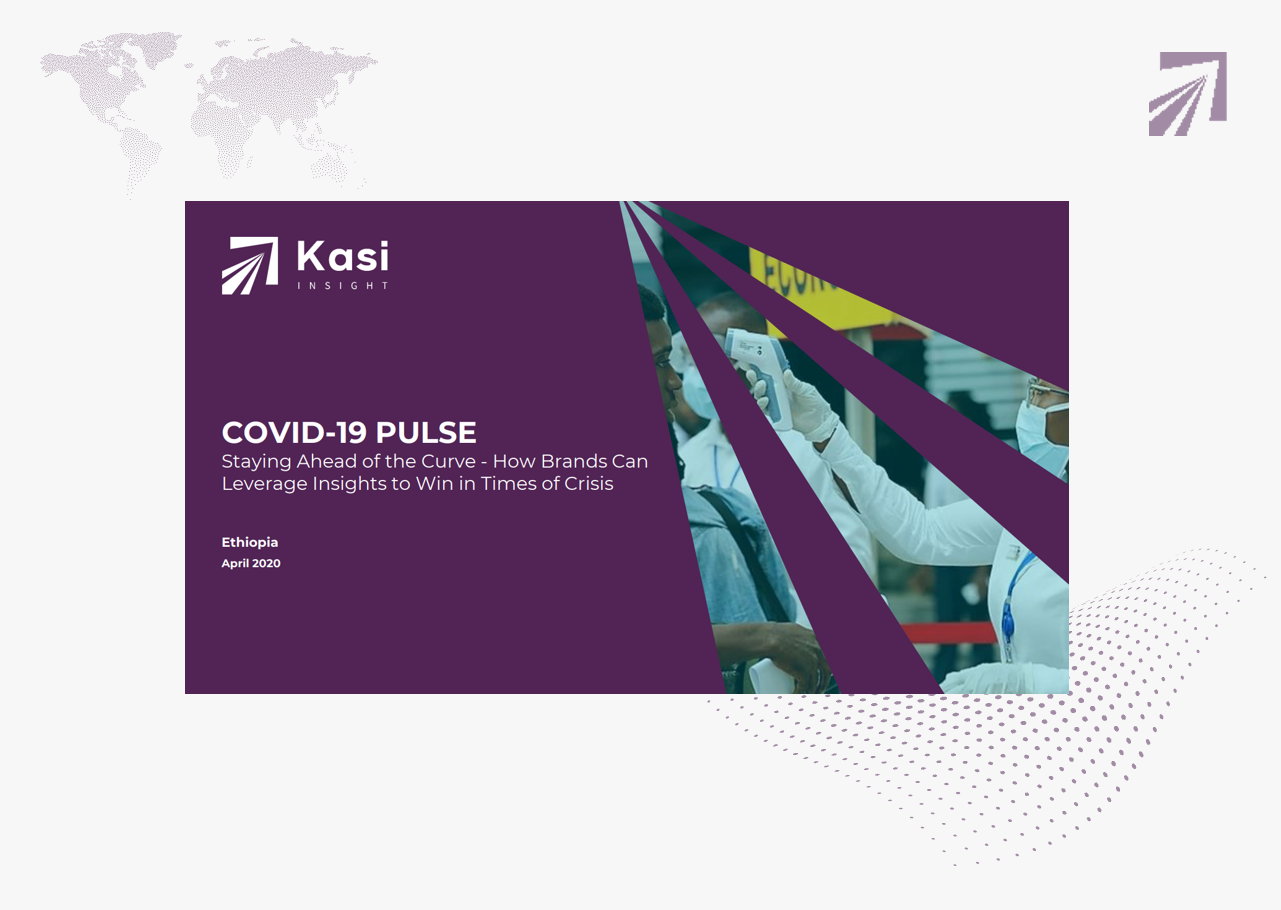
The report, titled "COVID-19 PULSE: Staying Ahead of the Curve - How Brands Can Leverage Insights to Win in Times of Crisis," focuses on tracking the impact of COVID-19 on African consumers' attitudes and behaviors. Conducted by Kasi Insight, the study spans eight African countries, including South Africa, Nigeria, Ghana, Tanzania, Kenya, Ivory Coast, Ethiopia, and Cameroon.
Key Takeaways
Survey Scope: Kasi's COVID-19 Pulse, initiated in February 2020, involves monthly interviews across the aforementioned African countries, encompassing 3,700+ participants. Findings are shared in a free monthly report available on the Kasi consumer portal.
Ethiopian Context: Despite early containment efforts, COVID-19 has spread across Africa, impacting consumer and business confidence. The report specifically delves into the Ethiopian market, highlighting the low confidence levels, economic challenges, and fear index.
Consumer Behavior Changes: The pandemic has significantly altered Ethiopians' lifestyles, with a shift towards online shopping for essentials and changes in social activities. Despite restrictions, in-person shopping remains prevalent, with an emphasis on essentials during off-peak hours.
Media Consumption: Traditional media, particularly TV and radio, serves as the primary source of COVID-19 information in Ethiopia. Brands are advised to communicate innovative solutions rather than focusing solely on sales or promotions.
Consumer Confidence Index: Consumer confidence in Africa, including Ethiopia, is at an all-time low. Ethiopians express concerns about the economy, job prospects, and the overall impact of the pandemic on their lives.
Methodology
The research draws data from the Kasi COVID-19 Survey, involving 425 participants in Ethiopia. Conducted through Computer-Assisted Personal Interviews (CAPI) from April 20 to May 2, 2020, the survey covers adults aged 18 and above. The methodology ensures representation based on key demographics, allowing weighted data analysis.
The report concludes by emphasizing the unprecedented and multifaceted nature of the COVID-19 threat. It underscores Ethiopians' concerns about health, job security, and financial stability. Brands are encouraged to shift priorities from short-term gains to long-term brand equity growth by offering support and empathy during these challenging times. The study also highlights the role of brands in adapting strategies to entrench consumers during the crisis and position themselves favorably in the post-crisis period.
Overall, the report provides valuable insights into the dynamics of the Ethiopian market amid the COVID-19 pandemic, offering strategic guidance for brands looking to navigate and succeed in challenging times.