Maps & Infographics
May 22, 2025
Share


Africa is not short of DFIs - but it lacks institutions that are truly African-led and aligned with the continent’s own development priorities. This infographic attempts to spark a much-needed conversation about a basic, but fundamental, issue | Who really finances Africa's growth and development, and on what terms?
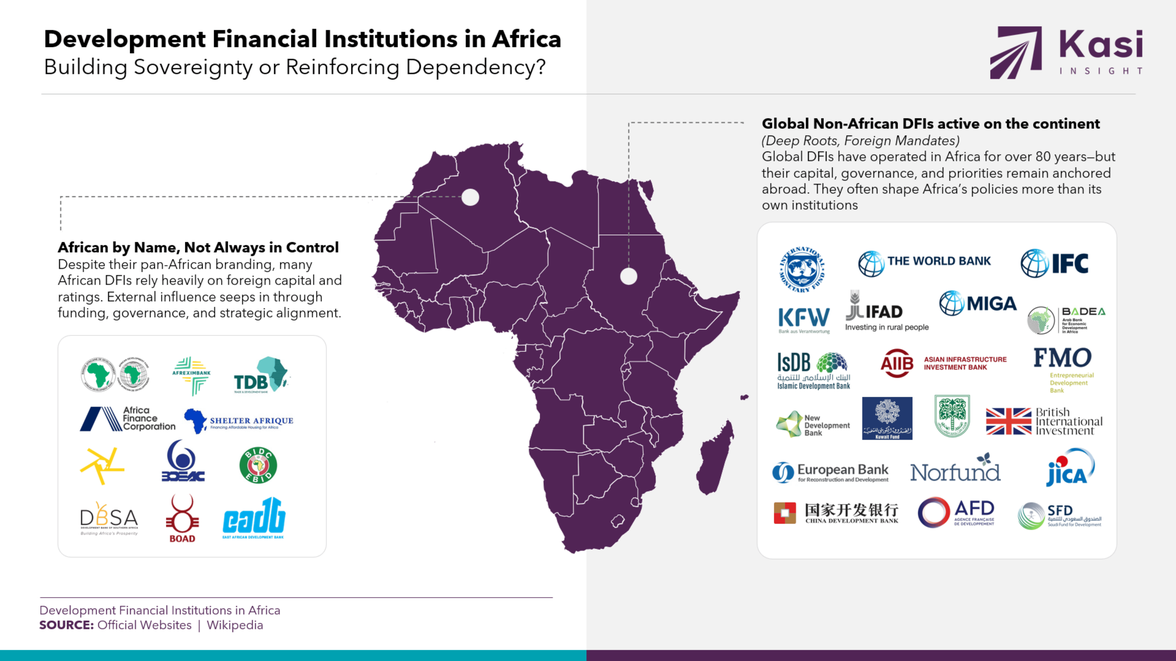
While DFIs are often seen as neutral agents of progress, their ownership and decision-making reveal a more intricate story - one that challenges Africa’s financial sovereignty. Despite decades of striving for independence, the continent still finds itself shaped by external forces operating through bilateral aid programs and multilateral institutions. Even as African leaders promote intra-African trade and “Africa First” policies, the development financing model remains largely unchanged - with donor countries and multilaterals often setting the agenda through the very institutions meant to serve African interests.
This is not just about counting institutions - it’s about asserting agency, defining priorities, and building systems that serve African realities, not external mandates.
Africa’s development is still largely financed from outside the continent - Of the 31 major DFIs operating extensively in Africa, only 11 are African-owned or pan-African - approximately a third.
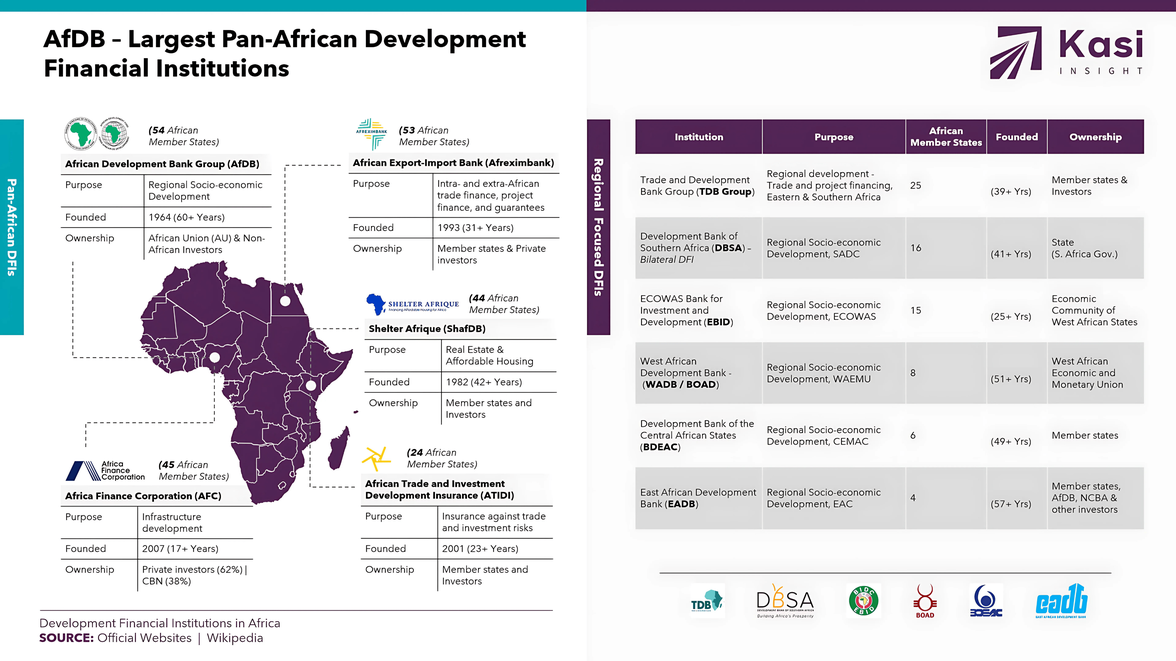
Pan-African finance remains fragmented—both institutionally and regionally - Most African DFIs operate within specific blocs like ECOWAS, SADC, EAC, and CEMAC, with institutions like DBSA (16 members), EADB (4 members), and BDEAC (6 members) focused on subregions. Only AfDB, Afreximbank, and AFC hold continent-wide mandates.
Top African DFIs are niche focused - from housing (Shelter Afrique) to trade finance (Afreximbank, TDB), to insurance (ATIDI). In contrast, many global DFIs offer broad-brush support, with mandates shaped by donor interests or multilateral politics.
Even "African Owned" DFIs carry foreign influence – While institutions like the African Development Bank (AfDB) are pan-African in name and mission, their governance reflects a more complex reality. Non-African countries collectively hold over 40% of voting power at AfDB, giving donor countries significant sway over lending priorities, board decisions, and policy direction. This highlights a deeper issue: even African institutions can serve external interests if their capital base and voting structure remain externally anchored.
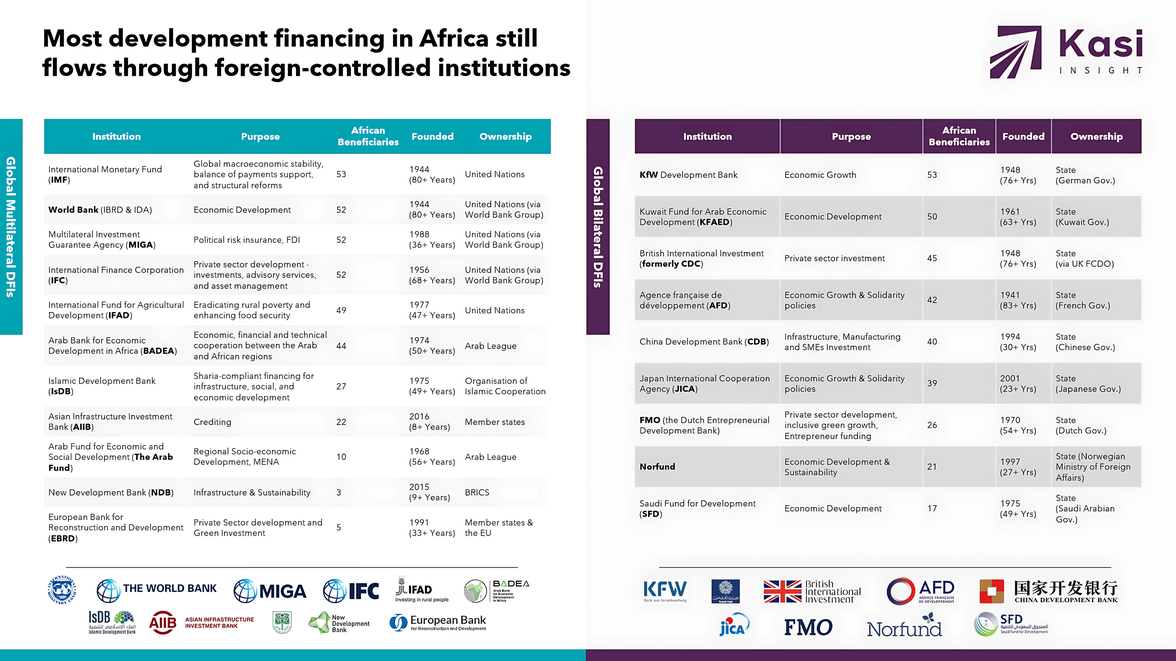
Non-African DFIs are entrenched and influential - Dominant players like the IMF (80+ years), World Bank (80+ years), and KfW (76+ years) have shaped Africa’s fiscal policies for decades. In contrast, most African DFIs are younger, with only the AfDB (60+ years) rivalling global counterparts in maturity.
African countries are members but not always in control - Many African nations hold shares in global multilateral institutions such as the IMF, World Bank, IFC, and AFD, or engage in bilateral partnerships with donor nations. However, governance structures, lending criteria, and strategic priorities are often externally set, limiting Africa’s influence even when it has a seat at the table.
Africa’s development cannot be sustainably charted through borrowed blueprints. The current dominance of foreign DFIs means African priorities are often filtered through external performance metrics, global policy goals, or donor-country interests. If Africa is to define and fund its own future, financial sovereignty must become a non-negotiable priority.
This begins with strengthening and scaling African-owned DFIs - ensuring they have the capital, mandates, and governance structures to lead. It also requires African countries to align under a cohesive investment protocol, consolidating capital, reducing duplication, and increasing bargaining power on the global stage.
Redefining partnerships with global DFIs - not to reject collaboration, but to rebalance it. That includes:
Ultimately, Africa must confront a pivotal question - Who decides what development looks like? If the answer continues to be global multilateral institutions and bilateral donors with deeper pockets, then true independence (economic, political, and strategic) remains out of reach.
Only by owning the banks that write the cheques can Africa truly own its development agenda.