
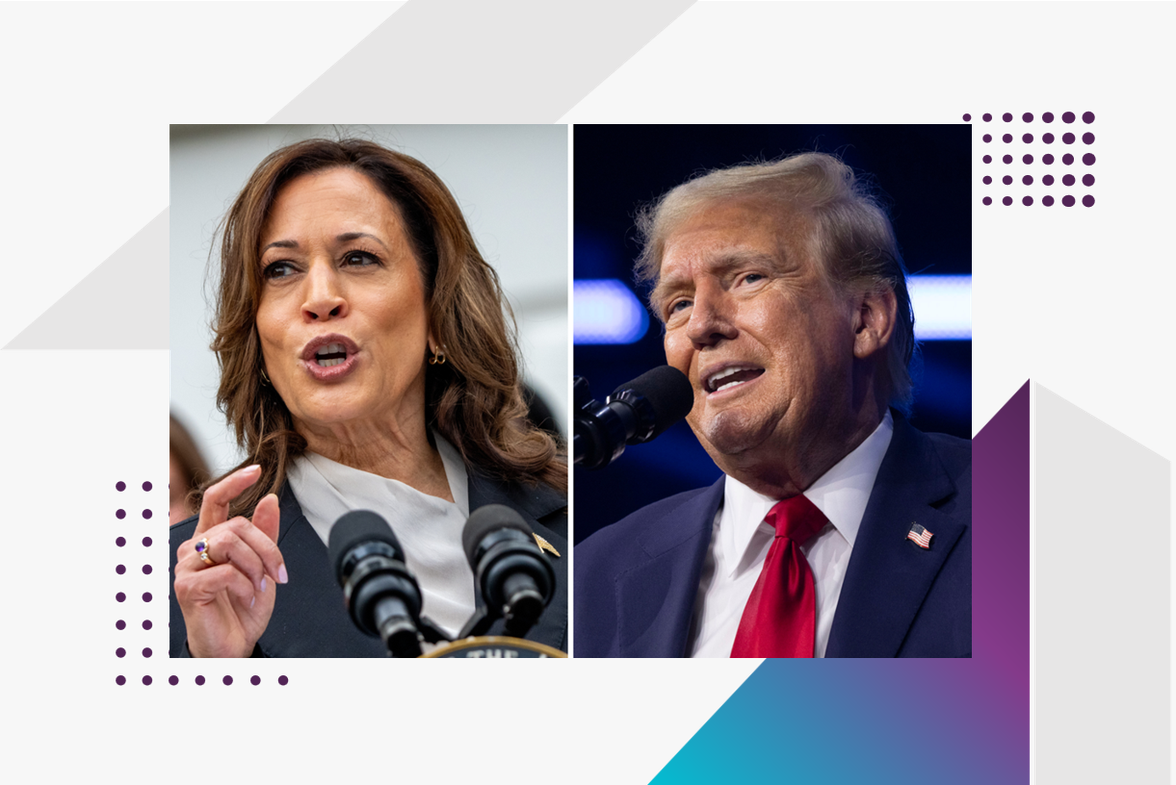
Kamala emerges as Africa’s favored choice for U.S. president, with Trump’s enduring appeal still resonating

USele

As the United States heads into the 2024 presidential election, its global influence is felt far beyond its borders. Across Africa, there is a keen awareness of how U.S. leadership affects international relations, trade, and foreign aid. Kasi Insight’s US Election Perception Study, conducted every four years, captures these perspectives, offering a unique view into African opinions on American politics. In 2020, the study accurately forecast Joe Biden’s victory, with 41% of respondents supporting Biden over Donald Trump’s 34%. Now, in 2024, the landscape shows a new set of perspectives, with Kamala Harris and Donald Trump emerging as preferred candidates, each representing a distinct vision of American leadership.

Harris symbolizes a hope for global partnership, while Trump stands as a symbol of strength

With 43% of African respondents favoring Kamala Harris as the likely winner of the 2024 U.S. election, the current Vice President has become a beacon of hope for those who value inclusivity and progressive leadership. As the first woman, Black, and South Asian to hold the vice presidency, Harris embodies a transformative American story that resonates deeply in Africa. Her platform, grounded in social justice, multiculturalism, and international cooperation, aligns closely with African aspirations for a globally connected and culturally sensitive America. To her supporters, Harris represents an opportunity for the U.S. to take a fresh approach—one that promotes mutual respect, strengthens diplomatic ties, and brings a culturally inclusive perspective to global governance. For these respondents, Harris is not just a candidate; she is a chance to reset and rebuild U.S.-Africa relations on a foundation of understanding and shared values.

USele1

In contrast, Donald Trump continues to be a powerful figure, with 36% of African respondents still seeing him as a strong contender for a second term. Known for his “America First” stance, Trump’s assertive, business-focused style appeals to those who value direct and decisive leadership. His focus on economic independence and self-reliance projects an image of stability and strength that resonates with many Africans, especially in regions where resilience and independence are prized traits. Although his policies on immigration and foreign aid have drawn criticism, Trump’s appeal in Africa underscores respect for leaders who exude confidence and prioritize clear, immediate goals. For his supporters, Trump represents continuity, strength, and a willingness to make bold decisions—qualities that, to many, offer reassurance in an increasingly uncertain world.

This divide—43% for Harris and 36% for Trump—reveals a nuanced perspective among Africans on American leadership. Harris is seen as a leader who could bring inclusivity and international diplomacy to the forefront, while Trump appeals to those who value strong, unwavering leadership. Together, these preferences capture a dual hope for American leadership that balances compassion with assertiveness, and inclusivity with resilience.

Alternatives suggest a curiosity for fresh perspectives in U.S. politics

While Harris and Trump command the largest shares of support, 21% of African respondents are looking to “other” candidates, indicating an openness to alternative leadership styles. Among these alternatives are candidates like Cornel West, Chase Oliver, and Jill Stein, who bring unique approaches that could resonate with African interests. West, known for his advocacy of social justice, Oliver with his libertarian values, and Stein with her environmental focus represent distinctive priorities that some Africans may view as essential. Their platforms touch on issues such as human rights, personal freedoms, and environmental sustainability—all relevant to Africa’s own challenges and aspirations for a just, self-sufficient, and eco-conscious future.

Although these candidates lack the visibility of Harris or Trump, their presence on the ballot reflects the diversity of American political thought. For Africans intrigued by these contenders, the appeal lies in the possibility of change through unconventional approaches to governance, especially when these approaches align with pressing global issues. Their voices, though less prominent, contribute to a broader dialogue about the future of U.S. leadership and its potential to address global challenges from multiple angles.

African perspectives reveal high stakes in the 2024 U.S. election

Kasi Insight’s findings indicate that African perspectives on the 2024 U.S. election are deeply rooted in a desire for American leadership that recognizes the interconnectedness of today’s global landscape. For many Africans, the choice of president in the U.S. is not only a matter of national policy but a question of international cooperation and shared responsibility. The strong support for Kamala Harris reflects a hope for a U.S. administration that values empathy and fosters collaboration on global issues, seeing America as a partner rather than a distant superpower. Conversely, Donald Trump’s enduring appeal underscores a respect for leaders who project strength, confidence, and a commitment to firm decision-making—qualities that some Africans find reassuring amid geopolitical uncertainties.

These findings demonstrate that Africans are not simply spectators watching events unfold from afar; they are engaged participants in the global conversation about U.S. leadership. The decisions made by American voters tomorrow will reverberate far beyond U.S. borders, influencing economic frameworks, security policies, and diplomatic relations across the world. For many Africans, the U.S. election is not merely an American affair; it is a decision that holds profound implications for their own futures, shaping the trajectory of international relations, development priorities, and global stability.

Share on socials using this caption: 🌍 As Americans head to the polls tomorrow, Africans are watching closely! Kamala Harris leads as the favored candidate for inclusivity, while Trump’s strong leadership still resonates across the continent. 🗳️ Africa’s hopes for the 2024 U.S. election reflect a desire for balanced global leadership. 🌐 #ElectionDay #USElections2024 #AfricaViews #KamalaHarris #DonaldTrump


Recent posts

See all

Yannick Lefang, Eng.

The Future of AI in Africa Lies in Smarter Decisions, Not Just Smarter Models

Yannick Lefang, Eng.

Africa’s Critical Minerals: From Hidden Resource to Economic Catalyst

Segun Sunmonu

Perceptions of climate inaction persist among Ghanaian consumers, driven by income disparities

Subscribe to our free newsletter