Paul Cheloti Mulongo
April 7, 2025
Share article



Kasi Insight’s Human Connection Survey provides a deep understanding of how relationships evolve, from where people meet to their beliefs about love, communication, financial responsibilities, gender roles, conflict resolution, and perceptions of gender-based violence.
In Ivory Coast, generational attitudes toward financial fairness reveal a stark divide. While 33% of respondents believe financial responsibilities are shared equally in their relationships, deeper analysis shows notable generational differences. Gen X (41%) reports the highest satisfaction with financial fairness, likely due to established financial stability or alignment with traditional roles that clearly define duties.
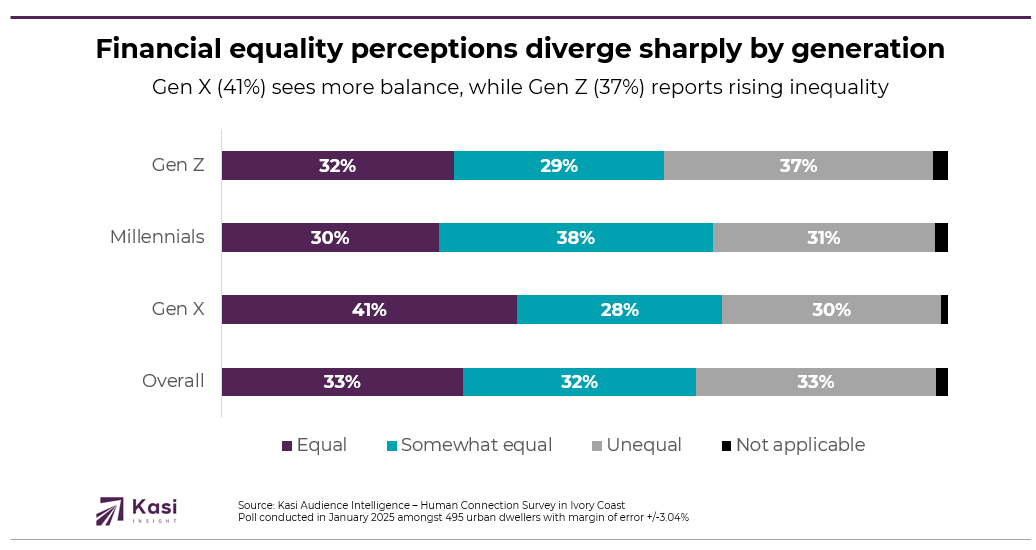
In contrast, Millennials (30%) and Gen Z (32%) report lower satisfaction, with Gen Z standing out as the most dissatisfied. Nearly 37% of Gen Z respondents describe financial sharing as “unequal,” signaling frustration over economic pressures or mismatched expectations in younger relationships. Meanwhile, Millennials (38%) are the most likely to perceive financial contributions as “somewhat equal,” suggesting that while both partners contribute, one still feels a heavier burden.
Despite societal shifts, traditional gender roles continue to influence how financial and domestic tasks are divided. Overall, 64% of respondents say gender norms—such as men as breadwinners and women as caregivers—still shape their relationships. The impact is strongest among Gen X (70%) and Millennials (65%), reflecting long-standing societal expectations around marriage and family roles.
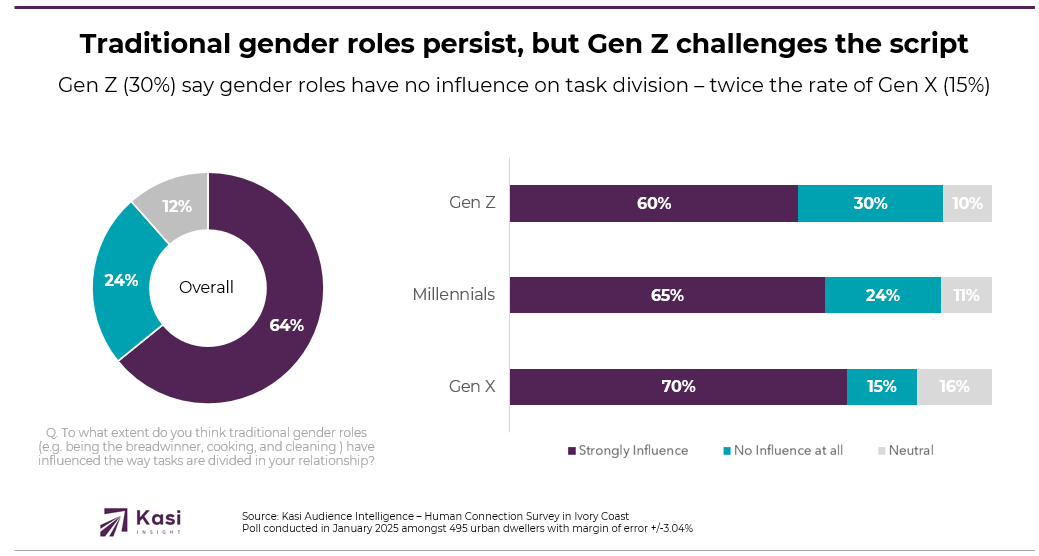
However, Gen Z is driving change. Thirty percent say gender roles have no influence on their relationships—twice the rate of Gen X (15%). This suggests a growing preference for egalitarian partnerships where financial and domestic responsibilities are shared more equitably. As Gen Z enters long-term relationships, brands and institutions must adapt to this evolving mindset by offering products and messaging that align with modern relationship dynamics.
The generational divide in financial fairness and gender roles presents a significant opportunity for brands, financial institutions, and policymakers to address key pain points with targeted solutions. Financial literacy programs tailored to different generational needs can help Gen Z navigate financial responsibilities in relationships while fostering a more balanced approach to money management.
At the same time, banking and fintech solutions can develop products that support younger consumers seeking financial independence, such as joint budgeting tools or savings plans designed for couples who prefer equal financial contributions. Insurance providers, too, can rethink financial planning products that accommodate evolving household dynamics, ensuring both partners are financially secure regardless of traditional roles.
Beyond finance, brands in the household and lifestyle sectors can tap into changing gender perceptions. With Gen Z showing the highest resistance to traditional norms, marketing strategies that emphasize shared responsibilities—both financial and domestic—can resonate deeply with this audience. Brands that normalize men contributing to household tasks or women taking a leading role in financial decisions will be better positioned to engage the next generation of consumers. By aligning with these shifting expectations, businesses can foster brand loyalty while driving meaningful conversations around financial cooperation and equality in relationships.
Share on socials using this caption: Gen Z in Ivory Coast is challenging tradition and calling for more equality in love, money, and gender roles. The future of relationships is changing — are brands ready? 💬💰🧠 #GenZVoices #IvoryCoast #GenderEquality #FinancialFairness #RelationshipGoals
1366 views
Share article
The Future of AI in Africa Lies in Smarter Decisions, Not Just Smarter Models
Africa’s Critical Minerals: From Hidden Resource to Economic Catalyst
Perceptions of climate inaction persist among Ghanaian consumers, driven by income disparities