Claudine Linda Wa Nciko
May 29, 2025
Share article



Inflation is no longer just an economic issue. It is now a lived experience shaping how South Africans feel, spend, and survive. Kasi Insight’s Cost of Living Tracker, based on quarterly research across 20 African markets, reveals that by the first quarter of 2025, 60% of South Africans described most of their recent days as quite stressful due to rising prices and mounting financial pressure. Women report slightly higher stress at 61%, but the difference between men and women is minimal, indicating a widespread and shared burden.
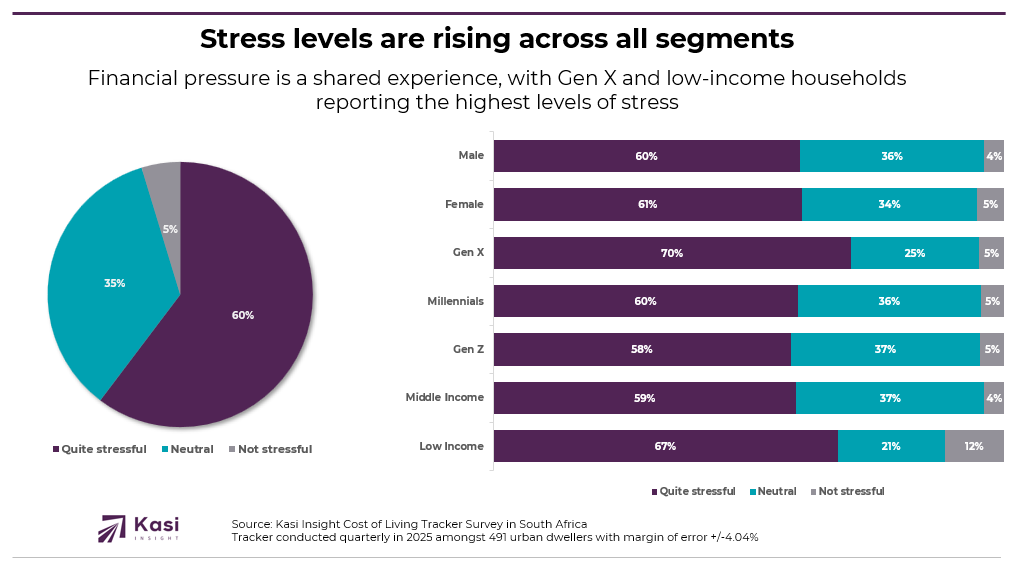
Stress levels vary more sharply across generations and income brackets. Gen X emerges as the most affected, with 70% reporting elevated stress levels. Millennials follow at 60%, while 58% of Gen Z respondents also feel the strain. Income disparities deepen the emotional toll. Among low-income households, 67% say their days are filled with stress, compared to 59% of middle-income earners. Only 5% of respondents across the population report feeling no stress at all, confirming that financial anxiety has become a near-universal experience.
The pressure of inflation is pushing households to rethink and readjust how they manage basic needs. Among low-income earners, 56% are cutting back on fresh produce, while 51% are reducing their consumption of meat. These changes reflect not just constrained budgets but a broader rebalancing of daily habits in response to economic hardship.
South Africans across all income groups are adopting different strategies to maintain dignity and control. About 38% of consumers say they are buying more affordable local or organic food options. This behavior is especially common among women and middle-income households, where the figure rises to 40%. Spending on personal care has also declined, with 38% of the population cutting back on beauty products and treatments. This shift is slightly more pronounced among women at 39%, compared to 37% of men.
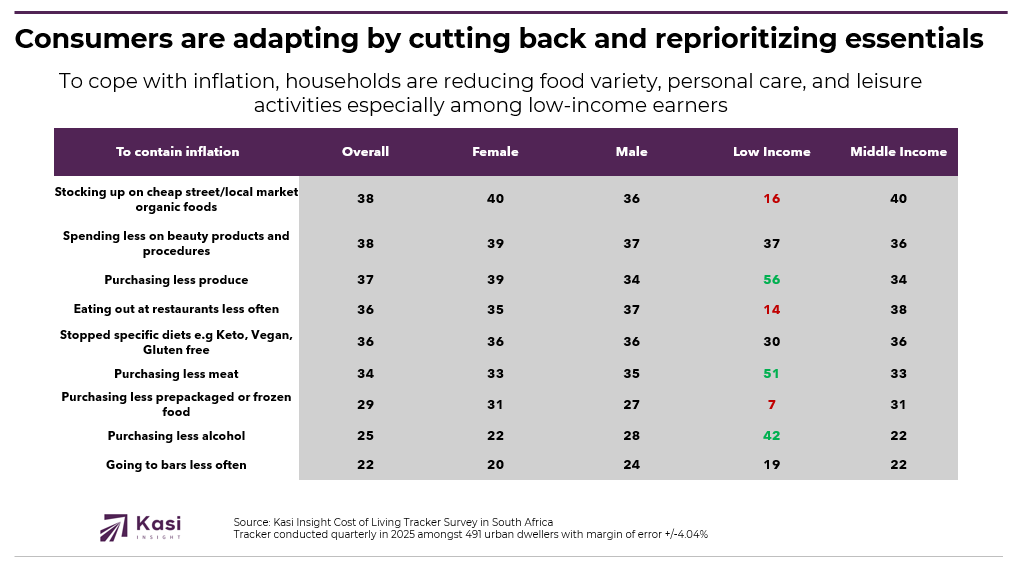
Dining habits are changing too. A total of 36% of respondents have reduced how often they eat out. Another 36% have stopped following specific diets like Keto or Vegan, opting instead for simpler, more affordable meals. Alcohol consumption and bar visits are also declining. Among men, 28% report drinking less or avoiding bars altogether, while 42% of low-income respondents are doing the same. These changes point to a broader adjustment in how people engage with food, wellness, and recreation.
As consumers adapt with care and creativity, brands have a critical opportunity to meet them with solutions that are timely and relevant. People are not only spending less, they are prioritizing differently. They want products that offer good value, flexibility, and emotional comfort. This is a moment for brands to move beyond transactional selling and become trusted partners in people’s lives.
Supporting consumers could mean offering bulk discounts on essential goods, affordable alternatives in beauty and wellness, or creating simplified meal solutions that fit within shrinking household budgets. Brand communication should reflect a deep understanding of the emotional and financial stress consumers are under. Practical pricing strategies, loyalty incentives, and clear, empathetic messaging can help build lasting trust.
From Gen X households managing high stress to low-income families making hard trade-offs each week, relevance is no longer about aspiration. It is about alignment with reality. Brands that respond with care and respect will not only stand out in a difficult period but will be remembered when the pressure eventually lifts.
Share on socials using this caption: 💡 Rising prices are changing how South Africans eat, shop, and live 67% of low-income households are feeling the pressure 🛒💰 Now’s the time for brands to step up with real value, flexible options, and care that connects #ConsumerTrends #SouthAfrica #InflationImpact #BrandStrategy
1568 views
Share article
Trust Is Becoming Economic Infrastructure
Consumer confidence loses momentum in October
Confidence plateaus in September as caution defines household behavior