Sandra Beldine Otieno
August 25, 2023
Share article



In July, the downward streak in consumer sentiment showed no signs of abating, recording an additional drop of two points. This decline was spurred by a dip in both the index of future expectations and the index of current conditions, registering respective drops of one and four points.
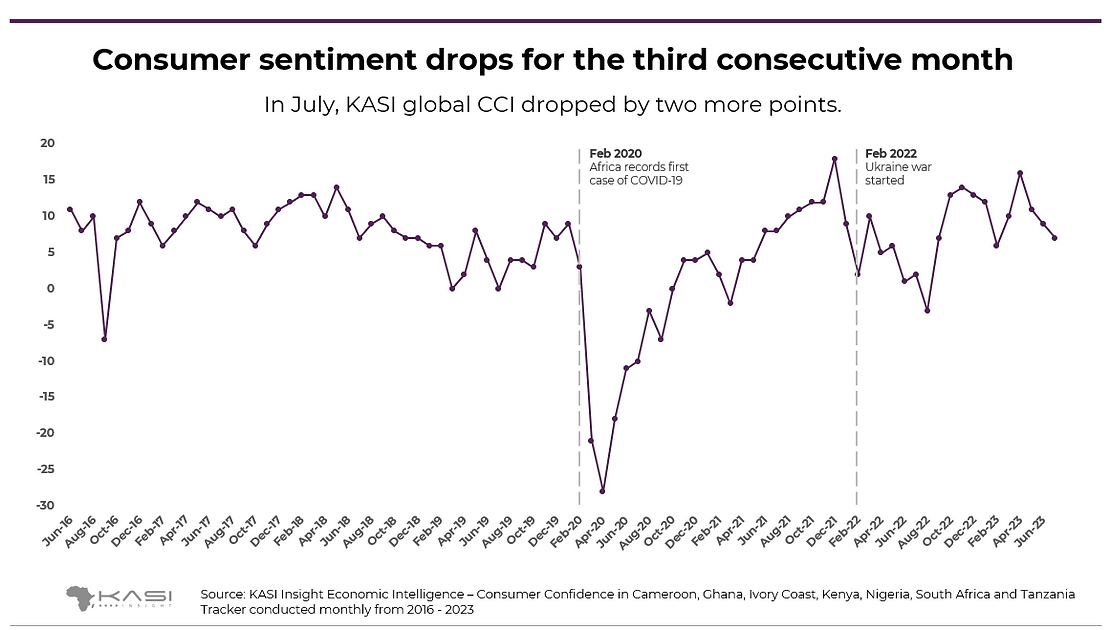
In the countries monitored, Kenya experienced a 6-point surge in consumer sentiment, reflecting optimism. In contrast, Cameroon witnessed a substantial decline of 9 points, indicating a decline in consumer confidence. Moreover, the index has experienced significant drops in the past two months.
In Kenya, consumer sentiment saw a surge, attributed to rises in both the country and city economic conditions indices, which improved by 14 and 11 points, respectively. The Kenya National Bureau of Statistics reported that the annual inflation rate dropped to 7.3% in July 2023, marking the lowest figure since May 2022. This decline was accompanied by a shift towards single-digit food inflation and a moderation in prices for housing, water, electricity, gas, and other fuel. On the flip side, a substantial increase in transportation prices was observed due to the government’s decision to raise the VAT on petroleum products from 8% to 16% starting July 1st.
Cameroon witnessed a substantial deterioration in consumer sentiment, characterized by a significant 17-point plummet in its index of current conditions. The Cameroonian franc (CFA) depreciated against the US dollar by 1.98% in July 2023.This made imports more expensive for Cameroonian consumers, who had to pay more for goods and services. The depreciation also eroded the purchasing power of Cameroonian consumers. This means that they could afford to buy less goods and services with the same amount of CFA francs. This depreciation of the CFA franc is a result of a number of factors, including the global economic slowdown, the ongoing conflict in the Anglophone regions, and the rise in oil prices.
For value brands, the persisting economic hardships and prevalent high living costs have led to a nuanced environment that requires strategic adaptation to maintain their relevance and attractiveness. The increased sensitivity to prices among consumers positions value brands favorably. Their affordability and budget-friendly offerings resonate well with cost-conscious consumers seeking practical and economical solutions for their everyday needs. Furthermore, the economic difficulties have prompted a noticeable shift in consumer behavior, channeling spending preferences towards value-oriented choices. The change in consumer behavior towards value-conscious expenditure also underscores an intensified competitive landscape among value brands. To thrive, successful brands must distinguish themselves not merely through competitive pricing but also by consistently delivering on quality and value that align with the expectations of their customer base.
On the other hand, premium brands face a different set of considerations within this economic backdrop. The economic challenges have prompted a reconsideration of spending priorities among consumers, leading to a heightened level of scrutiny and apprehension regarding luxury or high-end purchases. In this scenario, premium brands must navigate the terrain carefully by offering clear and tangible justifications for their premium pricing. This entails effective communication of the exceptional quality, innovation, and unique features that set them apart and validate the premium value they represent. Moreover, as premium brands strive to remain relevant, they may need to concentrate their marketing endeavors on market segments that are relatively less affected by economic difficulties.
1422 views
Share article
Trust Is Becoming Economic Infrastructure
Consumer confidence loses momentum in October
Confidence plateaus in September as caution defines household behavior