Sandra Beldine Otieno, MSc
July 4, 2024
Share article


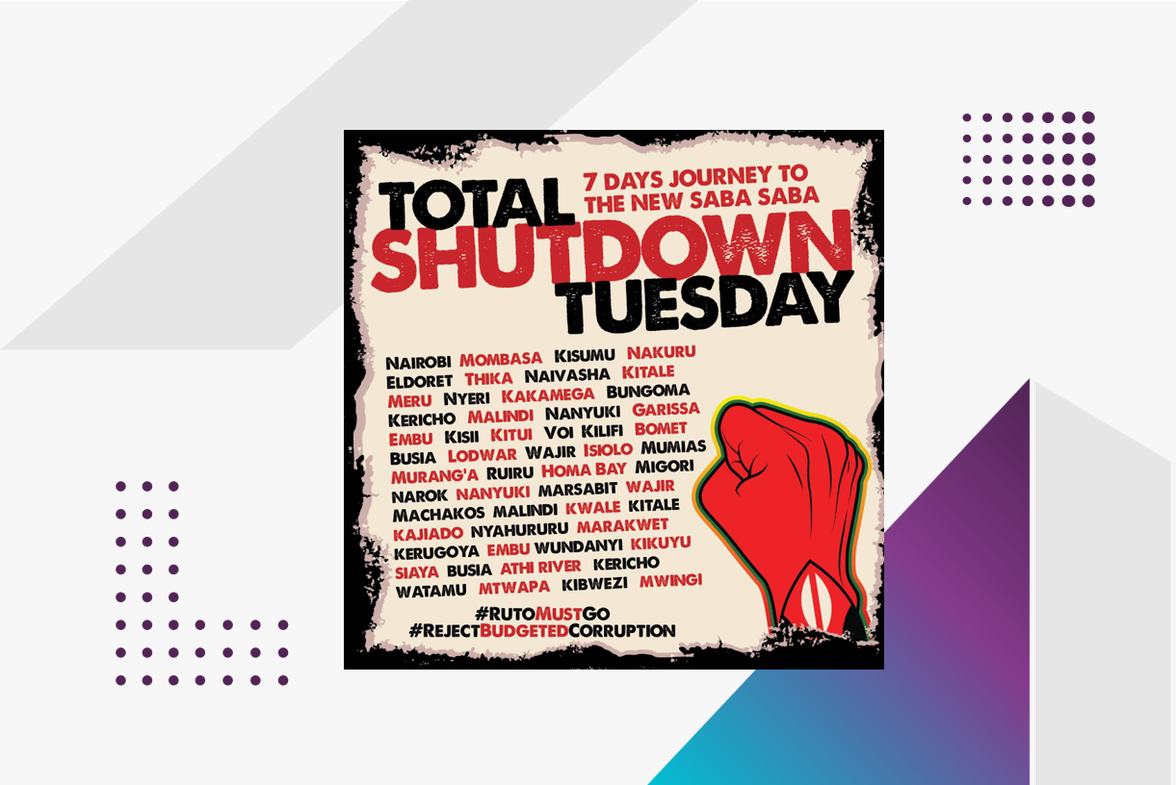
Recently, Kenya has witnessed a surge of protests, the ‘Occupy Parliament’ and ‘Reject Finance Bill’ movements. These demonstrations stand out for their organization through social media channels, effectively mobilizing thousands of protesters.
The protests began as expressions of anger on X formerly Twitter over a controversial finance bill, quickly evolving into a large-scale revolt without any political party involvement. This grassroots movement demonstrated the power of digital platforms in uniting a vast number of Kenyans beyond ethnic and party lines. President William Ruto's government inadvertently fostered a sense of national solidarity among protesters, primarily Gen Zs, who turned out in droves, determined to ensure their discontent extended beyond hashtags and memes.
Equipped with smartphones, protesters live-streamed intense confrontations with officers during the anti-tax marches. Hashtags such as “#OccupyParliament” and “#RejectFinanceBill2024” were used to pressure Members of Parliament (MPs) and rally supporters. Twitter Spaces provided a platform for real-time discussions and debates, allowing protesters to share their experiences and thoughts openly and interactively. Social media influencers further amplified the protesters' voices, increasing the reach and impact of the demonstrations.
These platforms not only facilitated the organization and mobilization of protests but also served as vital tools for education and advocacy. Protesters used TikTok, Twitter, and other social media to inform and engage fellow citizens, transforming digital spaces into hubs of activism. This approach enabled a decentralized yet cohesive movement, making it difficult for authorities to suppress.
Despite the government's attempts to thwart the protests using tear gas and water cannons, the demonstrators remained undeterred. They continued to use social media to spread awareness and visibility beyond the physical locations of the protests. A day after President William Ruto rejected the tax bill and stated that he would refuse to sign it, security across Nairobi remained heavy. Despite Ruto's U-turn on the tax law, more protests erupted across Kenya.
Riot police fired tear gas grenades and charged at stone-throwing protesters in downtown Nairobi and across Kenya in the most widespread unrest since at least forty protesters died in clashes a week ago. The nationwide demonstrations signaled that President Ruto had failed to appease the spontaneous youth protest movement, despite abandoning plans for tax increases that triggered the unrest.
These protests underscore the power and persistence of Kenya’s youth-led movements, driven by social media’s organizational prowess. The role of social media in these protests was not just limited to organization and mobilization; it also served as a platform for expressing grievances and demands. One young protester highlighted how TikTok is used not only to mobilize young people but also to educate them on the reasons behind their protests.
Digital media is revolutionizing the world, offering a new arena for activism and political engagement. It allows for instant communication, real-time updates, and broad reach, enabling movements to gain momentum and visibility quickly. The events in Kenya are a testament to the transformative power of digital activism, demonstrating how social media can unite and mobilize people for a common cause, challenge traditional power structures, and drive significant social change.
Share on socials using this caption: Kenya's digital revolution: 📱 social media and digital media prove digital activism works, uniting and empowering citizens for impactful change. 💪✨ #OccupyParliament #RejectFinanceBill2024 #DigitalActivis
2635 views
Share article
A Strategic Material for Development Sustainable Roads in Africa
Foresight Is No Longer Optional: Why Africa’s Decision Makers Must Move From Insight to Intelligence
Africa’s Data Dilemma: Waiting for the Porsche While Refusing the Bicycle