Segun Sunmonu
July 2, 2025
Share article



Kasi Insight’s Financial Freedom Tracker is an annual tracker that explores how African consumers define financial freedom and reveals insights that can help create better products and services. In Uganda, the 2025 data reveals that a large share of consumers still feel they lack the skills to manage their finances with confidence. Overall, 31% of Ugandans report having only “basic knowledge” of key personal finance topics such as budgeting, saving, investing, wills, retirement planning, and emergency funds. Another 62% say their knowledge is “intermediate,”. Just 6% describe their understanding as “advanced,” and only 1% identify as financial experts.
The data reveals clear differences in self-assessed knowledge across generations and income levels. Gen Z reports the highest share of intermediate knowledge, with 72% placing themselves in this category. Millennials follow at 60%, while Gen X trails at 43%. Interestingly, Gen Z also reports the lowest level of basic knowledge at 24%, suggesting that confidence does not always match experience. In contrast, nearly 48% of Gen X consumers say they have only basic knowledge.
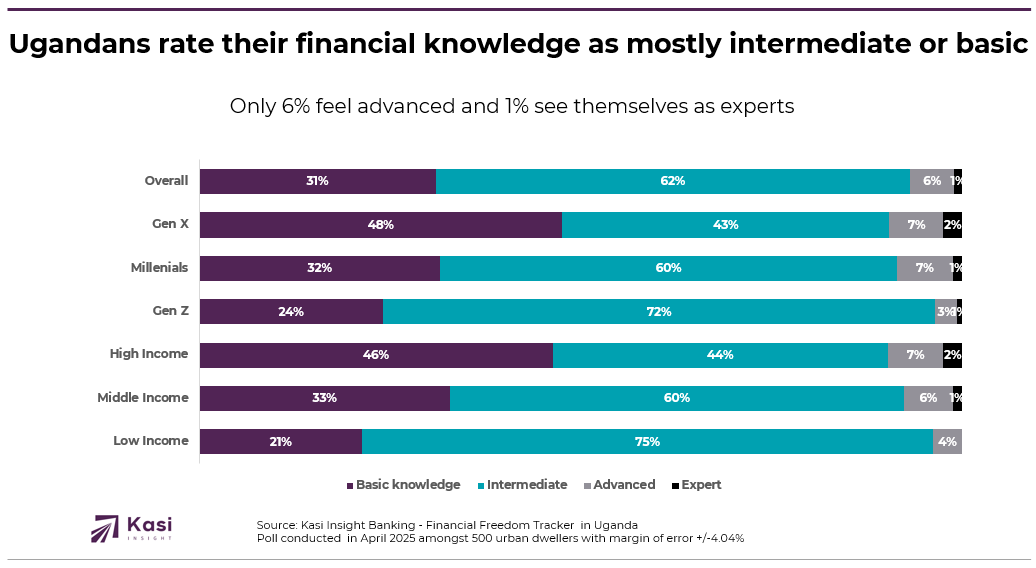
Income patterns further illustrate these gaps. Among low-income earners, 75% consider their knowledge intermediate, yet 0% identify as experts and only 4% rate themselves as advanced. Among higher-income respondents, 46% report having basic knowledge, while 7% consider themselves advanced and just 2% say they are experts. These differences point to both optimism among younger consumers and persistent gaps in practical experience across income levels.
Beyond perceived knowledge, many consumers lack confidence in managing daily financial responsibilities. The findings show that 45% of Ugandans say they are not in control of their monthly expenses, cash flow, and budgeting. While 55% report feeling confident, this leaves nearly half of all consumers exposed to financial shocks and challenges in planning for the future.
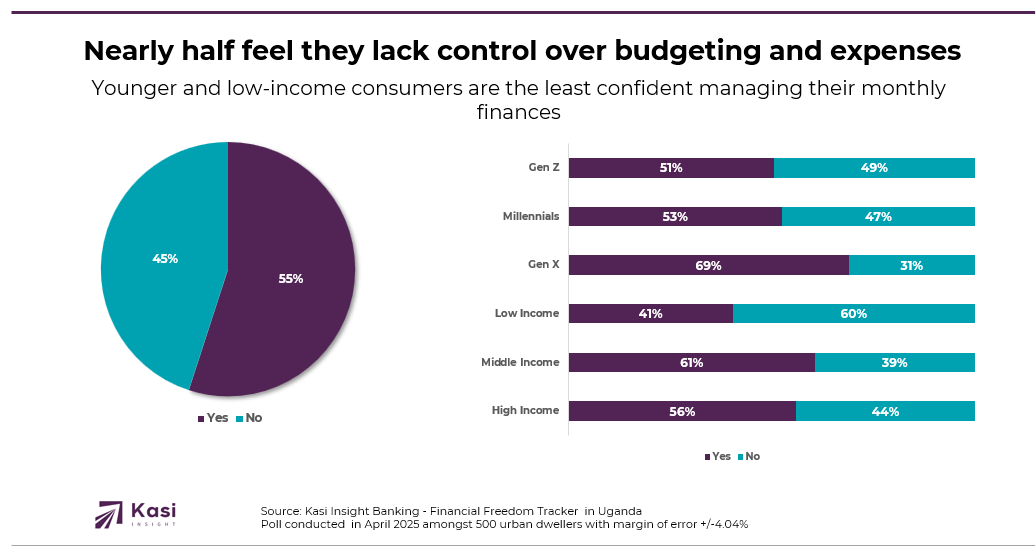
The struggle is most acute among young consumers. Almost 49% of Gen Z respondents and 47% of Millennials say they find budgeting and cash-flow control difficult, compared to only 31% of Gen X. Income also shapes financial confidence. Among low-income earners, 60% report lacking control over their finances, the highest of any group. This figure drops to 44% among high-income earners and 39% for middle-income consumers. These trends highlight a widespread need for better tools and support systems to help more Ugandans gain confidence and stability.
The disconnect between perceived knowledge and daily financial control presents both a challenge and an opportunity. Many young Ugandans, especially Gen Z and Millennials, rate their understanding as intermediate, yet nearly half struggle with basic tasks such as budgeting and saving. To close this gap, retail banks and fintech platforms will need to design solutions and learning experiences that match how younger consumers engage with money.
For Gen Z, who are tech-savvy but sometimes overconfident, gamified budgeting apps, real-time spending alerts, and peer-led savings challenges can help build healthier habits. Digital channels such as TikTok and Instagram also offer powerful platforms for delivering short, relatable financial lessons through local influencers. Millennials, who often focus on building stability but still lack confidence, can benefit from structured goal-based savings plans, user-friendly investment tools, and credit products paired with personalized coaching. Embedding these supports into intuitive, mobile-first experiences is essential. By meeting young consumers where they are digitally and culturally, banks and fintech companies can help transform financial awareness into lasting empowerment.
Share on socials using this caption: Ugandan consumers feel moderately informed about money but 45% still struggle to manage expenses 💡 Gen Z and Millennials are eager to improve their skills 📲 Tailored tools and digital education can turn awareness into real empowerment #FinancialFreedom #Uganda #SmartFinance
1412 views
Share article
Uganda Banking Sector 2025: Growth with Discipline, What Marketing Signals Reveal About Balance Sheets
Kenya Banking Sector 2025: Reading the Balance Sheet Through Marketing Signals
How Consumer Sentiment Predicts South Africa’s Credit Cycles