Sandra Beldine Otieno, MSc
October 21, 2024
Share article



In September, consumer confidence in Africa remained unchanged at 17 points, after maintaining the same level as the previous month. This stability was driven by a 5-point increase in the current conditions index, offset by a 2-point decline in the future expectations index. The overall steadiness reflects a balanced sentiment among consumers, with some signs of optimism tempered by lingering caution across the region.
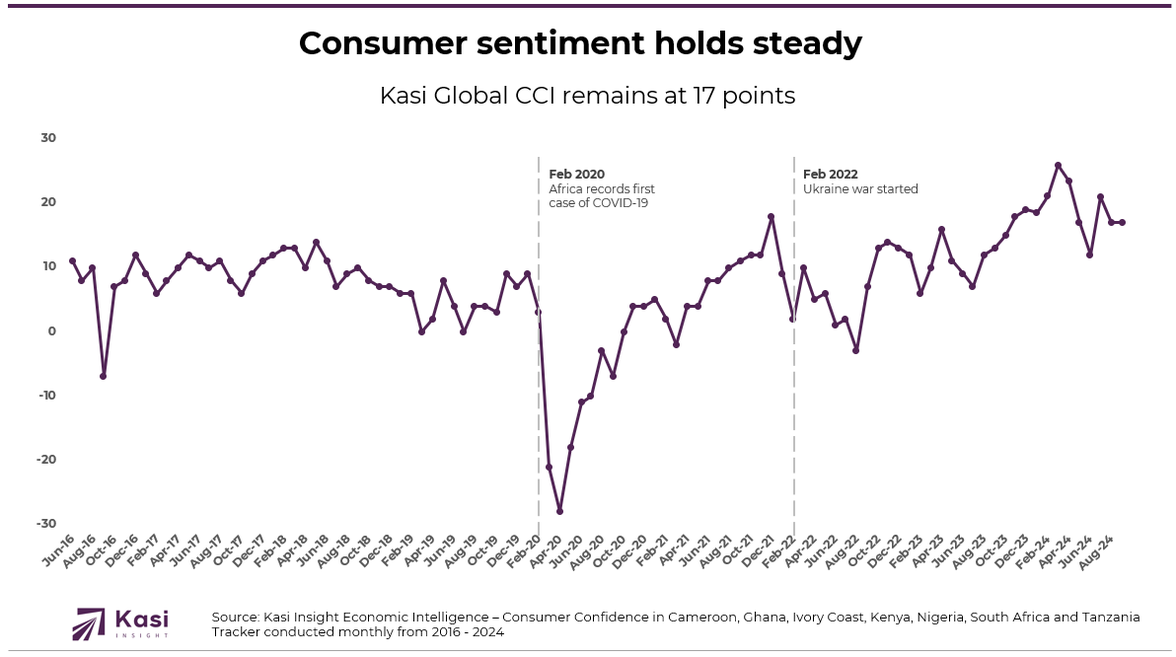
In September, household indices showed modest performance, reflecting a balanced yet cautious consumer outlook compared to the previous month. The discretionary spending index rose by 7 points, indicating a boost in non-essential purchases, while the household spending index saw a slight improvement of 1 point, signaling steady but limited growth in overall household expenditure. The job prospects index also improved, rising by 4 points, suggesting growing optimism in employment opportunities.
However, not all indicators were positive. The personal finance index declined by 1 point, reflecting weaker financial well-being among consumers, and household income saw a more significant drop of 4 points, signaling increased financial strain. Additionally, both broader economic indicators pointed to declining confidence. The general country economic conditions index fell by 3 points, while the general city economic conditions index dropped by 2 points, highlighting growing uncertainty in both national and local economies. This mixed performance, with improvements in some areas and declines in others, underscores a cautious yet somewhat resilient consumer sentiment as economic conditions continue to fluctuate.
As the holiday season approaches, the stable consumer confidence in September offers both opportunities and challenges for brands. While discretionary spending saw a notable 7-point increase, reflecting some consumer willingness to make non-essential purchases, declines in personal finance and household income indicate growing financial pressures. Brands should focus on offering value-driven promotions and affordable options, highlighting products or services that cater to both holiday desires and financial caution. Messaging that emphasizes affordability, practicality, and savings will resonate with consumers feeling the pinch from weakened personal finances.
The regional variation in consumer sentiment—such as the significant drop in Tanzania and the strong improvement in Cameroon—suggests that brands must tailor their strategies based on local conditions. In markets where sentiment has improved, there may be room for more optimistic, experience-driven campaigns. Meanwhile, in regions where confidence has declined, brands should prioritize building trust and offering practical solutions that align with consumers' immediate financial concerns.
With broader economic uncertainty reflected in declines in both national and city economic conditions, brands should remain agile and responsive to shifting consumer needs. Leveraging data to track regional trends and consumer behavior will help inform more precise marketing strategies. In this cautious environment, brands that focus on reliability, trust, and long-term value while adapting to financial constraints will be better positioned to capture consumer attention and spending during the holiday season.
Share on socials using this caption: 📉 Consumer confidence in Africa holds steady at 17 points in September! Modest gains in spending and job prospects offset declines in personal finance and household income. As brands prepare for the holiday season, it’s all about value, trust, and meeting regional needs. 🌍💼#ConsumerConfidence #AfricaEconomy #HolidaySeason #BrandStrategy
1742 views
Share article
Trust Is Becoming Economic Infrastructure
Consumer confidence loses momentum in October
Confidence plateaus in September as caution defines household behavior