Mercy Cyrus
February 25, 2025
Share article



Consumer demand for essential food categories in Cameroon is shifting, with staples and fresh produce seeing strong growth in 2024. According to Kasi Insight’s Retail Demand Index (RDI), which tracks consumer trends across 20 African markets on a scale from +100 to -100, the overall demand for food climbed from 34 to 37 between the first (H1) and second half (H2) of the year. However, this increase masks significant shifts within food categories.
Staples led the surge, jumping 10 points from 43 to 53, driven by strong demand for cooking oil (+19 points) and flour (+16 points). Rice, however, declined by 6 points, indicating shifting consumer priorities within essential food groups. Fresh produce also gained traction, with fruits and vegetables soaring by 17 points to 51, though the overall category only rose 2 points due to declines in meat (-5 points) and eggs (-6 points).
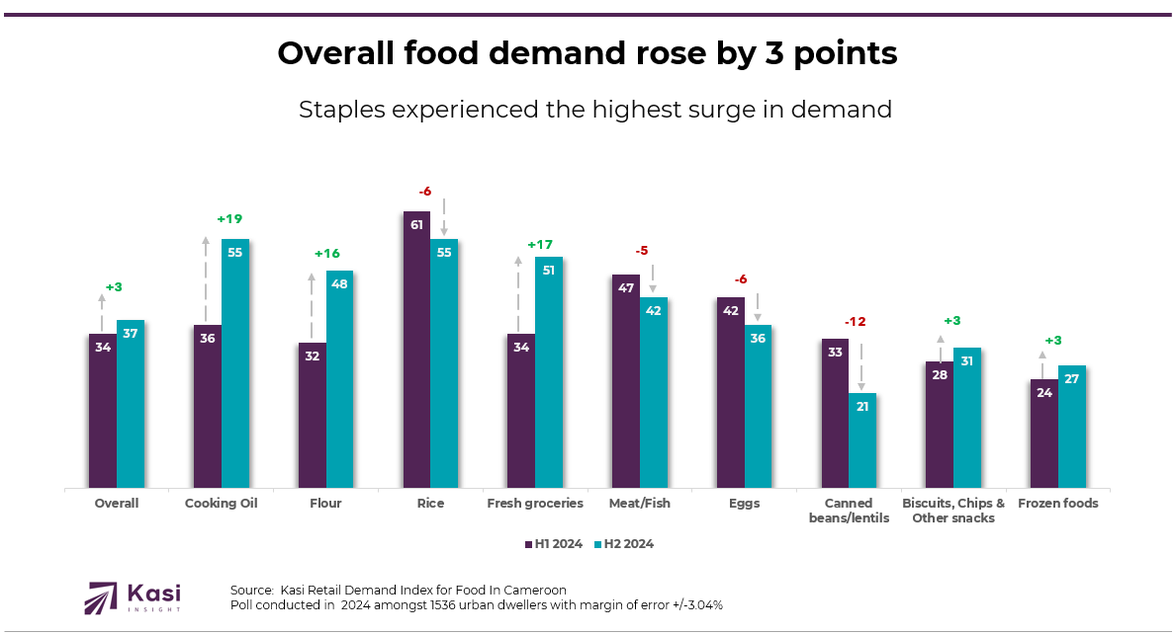
While demand for fresh produce and staples grew, processed foods saw an overall decline of 2 points (28 to 26). The biggest drop came from canned beans and lentils, which plunged by 12 points (33 to 21), signaling reduced reliance on processed protein sources. However, not all processed categories suffered. Demand for biscuits, chips, and other snacks edged up by 3 points (28 to 31), and frozen foods also saw a slight uptick (+3 points).
Cameroon’s food demand is evolving, with different income groups driving demand for specific staples. Mid-income earners lead in cooking oil demand (60), significantly outpacing both high-income (45) and low-income (47) consumers, signaling a stronger focus on essential cooking ingredients. Conversely, flour demand is highest among low-income consumers (56), surpassing both mid-income (45) and high-income (45) earners, suggesting that affordability is a key factor in staple food choices.
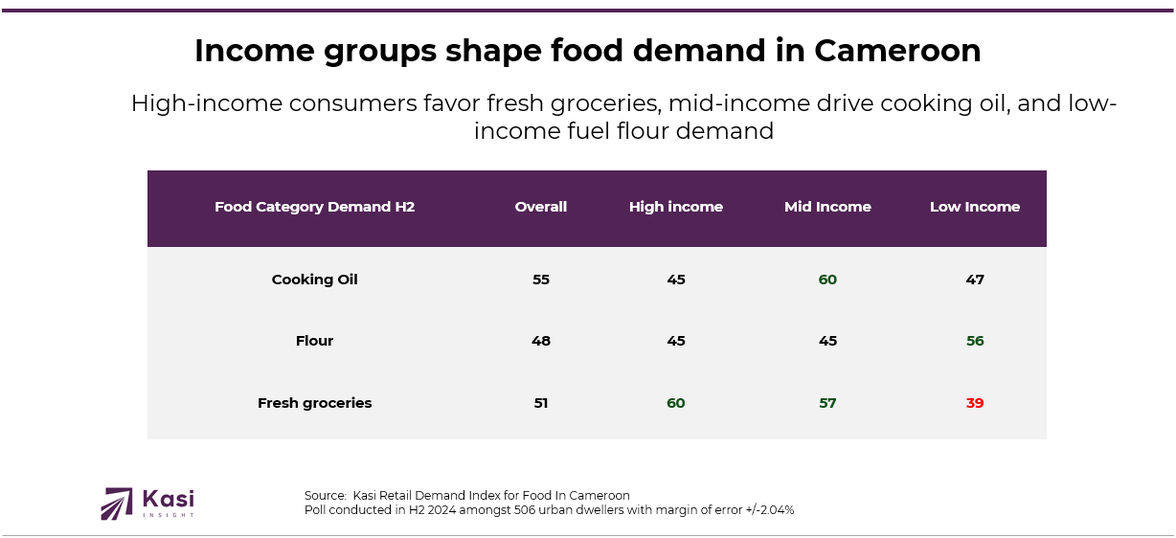
Fresh groceries exhibit a different trend, with high-income consumers leading demand at 60, followed closely by mid-income earners at 57. Low-income consumers report the lowest demand (39), likely due to financial constraints limiting their ability to prioritize fresh produce. This variation across income levels underscores the diverse factors influencing food choices—while mid-income households drive demand for essential cooking ingredients, low-income consumers prioritize budget-friendly staples, and high-income groups continue to favor fresh produce.
These shifting consumption patterns present both challenges and opportunities for food retailers and manufacturers in Cameroon. The surge in demand for cooking oil and flour among mid- and low-income consumers underscores the need for retailers to ensure stable supply chains and competitive pricing to cater to these price-sensitive segments.
Supermarkets and local markets can capitalize on the growing demand for fresh produce—particularly among high- and mid-income consumers—by optimizing inventory, improving affordability, and introducing promotions to sustain interest. Meanwhile, the relatively lower demand for fresh groceries among low-income consumers suggests affordability constraints, reinforcing the need for budget-friendly options.
For processed food manufacturers, the drop in canned beans and lentils highlights the need to reassess product positioning and explore innovations that align with changing preferences. More affordable or healthier alternatives may help brands maintain relevance in this evolving market. By adapting to these trends, businesses can refine their product mix, optimize marketing strategies, and implement flexible pricing models to stay ahead in Cameroon’s fast-changing food landscape.
Share on socials using this caption: 🥑🍞 Cameroon’s food demand shifts in 2024! Staples & fresh produce are on the rise 📈, while processed foods & proteins decline 📉. Brands must adapt with better pricing, supply chains & innovation! 🚀 #ConsumerTrends #Cameroon #RetailInsights #FoodMarket
2754 views
Share article
Uganda’s retail sector shows early 2025 fatigue as consumers cut back on essentials but remain engaged in wellness and lifestyle choices
Kenyan consumers are shifting from survival to intentional living reshaping value wellness and brand responsibility
Inflation fatigue is deepening financial stress for consumers in Ivory Coast