Paul Cheloti Mulongo
October 11, 2024
Share article


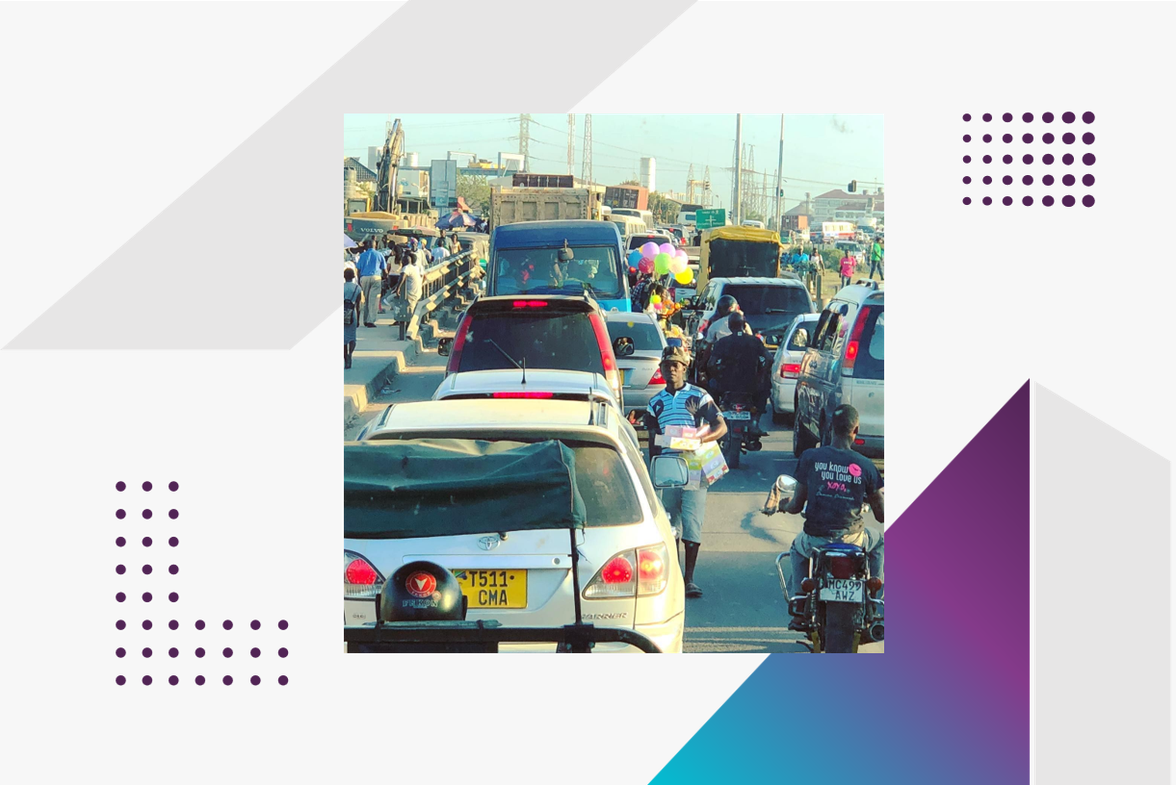
Kasi Insight’s quality of life survey offers a revealing look into the experiences of urban residents across African cities. The survey delves into a wide range of factors, including infrastructure, housing affordability, healthcare, safety, and employment opportunities, while focusing on residents' perceptions of public services and their overall city environment. In Tanzania, the survey reveals critical insights into commuting habits, preferences, and overall satisfaction with various modes of transportation among urban residents. Public transportation remains a vital part of daily life, with 54% of respondents using it regularly.
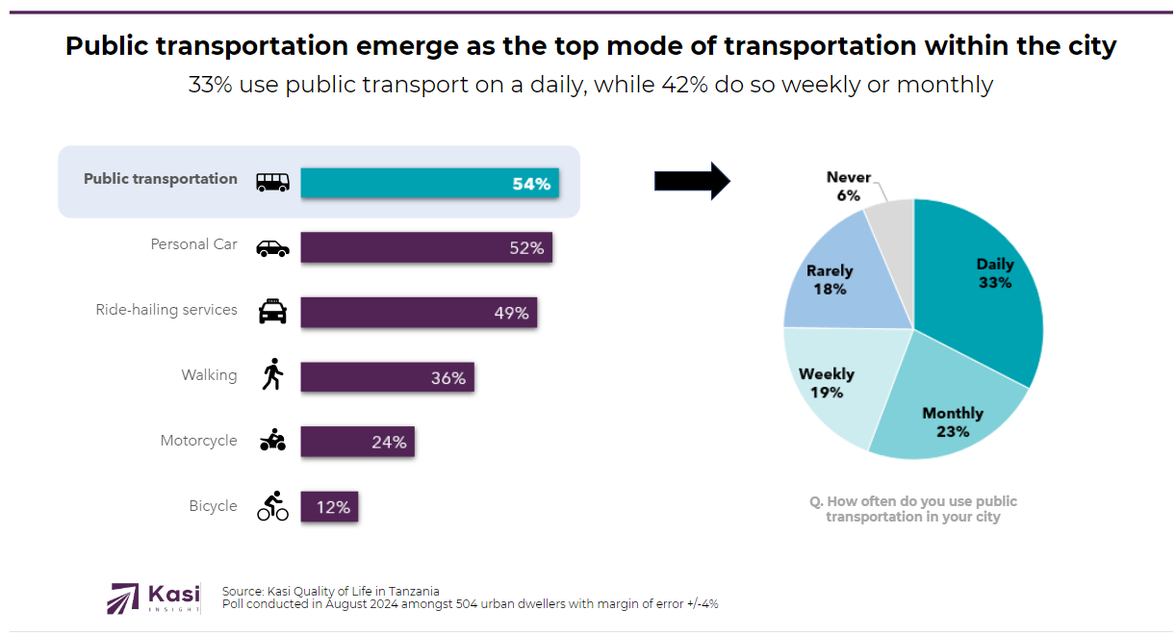
Deeper analysis of the data reveals that 33% of respondents use public transportation daily, while 42% rely on it weekly or monthly. A small fraction (6%) claim they never use public transport. Meanwhile, 52% of respondents use personal cars, pointing to a rise in car ownership—a trend that could worsen traffic congestion in rapidly urbanizing cities. Ride-hailing services are also prevalent, with 49% of respondents using them, signaling a shift toward flexible, on-demand commuting solutions.
Convenience and financial flexibility push Baby Boomers and Gen X toward personal car use
When examining transportation preferences by age group, younger generations—Gen Z (70%) and Millennials (62%)—are the most frequent users of public transportation, compared to the older generations like Generation X (40%) and Baby Boomers (22%). 88% of Baby Boomers and 64% of Gen X respondents use personal vehicles, as they are more likely to own one. This shift in transportation habits among younger residents reflects their focus on convenience, cost-efficiency, and perhaps a growing interest in sustainability, as they opt for public services over private car use.
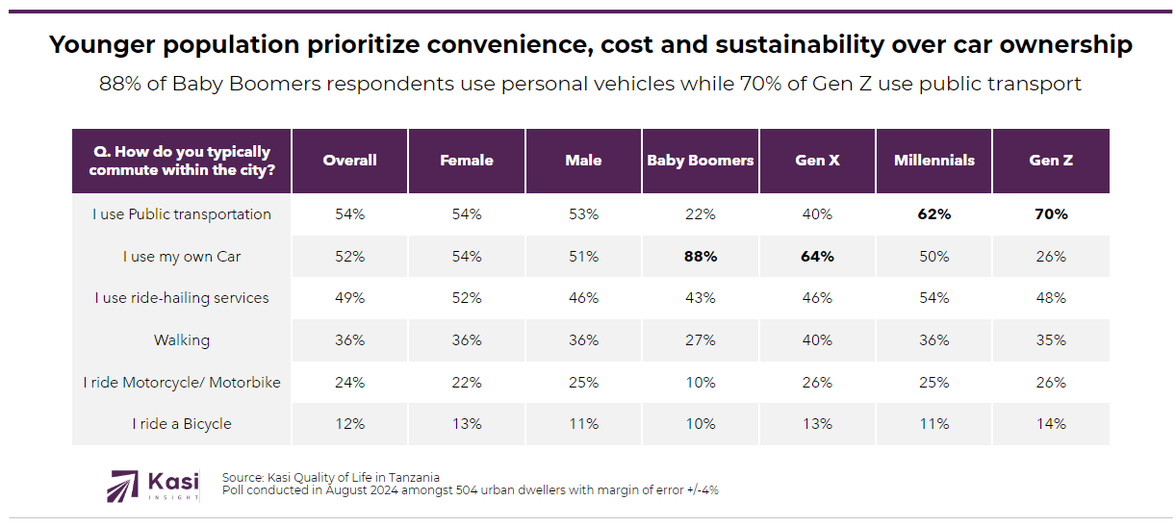
Walking is common across all demographics with 36% of respondents stating so, emphasizing the need for safe pedestrian infrastructure. Motorcycles, often used for short distances or to navigate traffic, are utilized by 24% of respondents. In contrast, bicycles are less popular, with only 12% of city residents opting for them. The gender analysis doesn’t show a significant difference between male and female, with both groups showing similar trends.
A multi-modal solution is the blueprint for future mobility in Tanzania
The reliance on public transportation (54%) signals a need for sustained investment in public transit systems. Expanding coverage, improving reliability, and increasing the frequency of services will be essential for meeting the demands of Tanzania’s rapidly growing urban population. Meanwhile, the rise in personal car ownership (52%) calls for proactive solutions to mitigate traffic congestion. Introducing policies that promote carpooling, ridesharing, and more extensive use of public transport could alleviate the pressure on road infrastructure.
There’s also an opportunity to promote non-motorized transport options like walking and cycling. A 66% satisfaction rate for bicycle lanes and pedestrian paths indicates a solid foundation, but expanding and improving these infrastructures could have far-reaching benefits. Not only could they contribute to better health outcomes for residents, but they would also help reduce congestion and pollution in Tanzania’s urban centers.
To enhance the quality of life in Tanzania’s urban centers, a comprehensive and forward-looking approach to transportation is necessary. Creating a multi-modal system that caters to the varying needs of city residents—whether by improving public transport, managing car ownership, or promoting non-motorized transport—is crucial. These efforts will play a pivotal role in shaping the future of Tanzania’s cities, ensuring they remain vibrant, accessible, and livable for all.
Share on socials using this caption: 🚗🚶♂️ As car ownership and ride-hailing rise, Tanzania's cities grapple with growing traffic congestion. Public transport is crucial, but a multi-modal approach is key to future mobility. #UrbanMobility #SustainableTransport #Tanzania #CityLife #PublicTransit #FutureCities
3019 views
Share article
The Future of AI in Africa Lies in Smarter Decisions, Not Just Smarter Models
Africa’s Critical Minerals: From Hidden Resource to Economic Catalyst
Perceptions of climate inaction persist among Ghanaian consumers, driven by income disparities