
Yannick Lefang, Eng
May 21, 2026
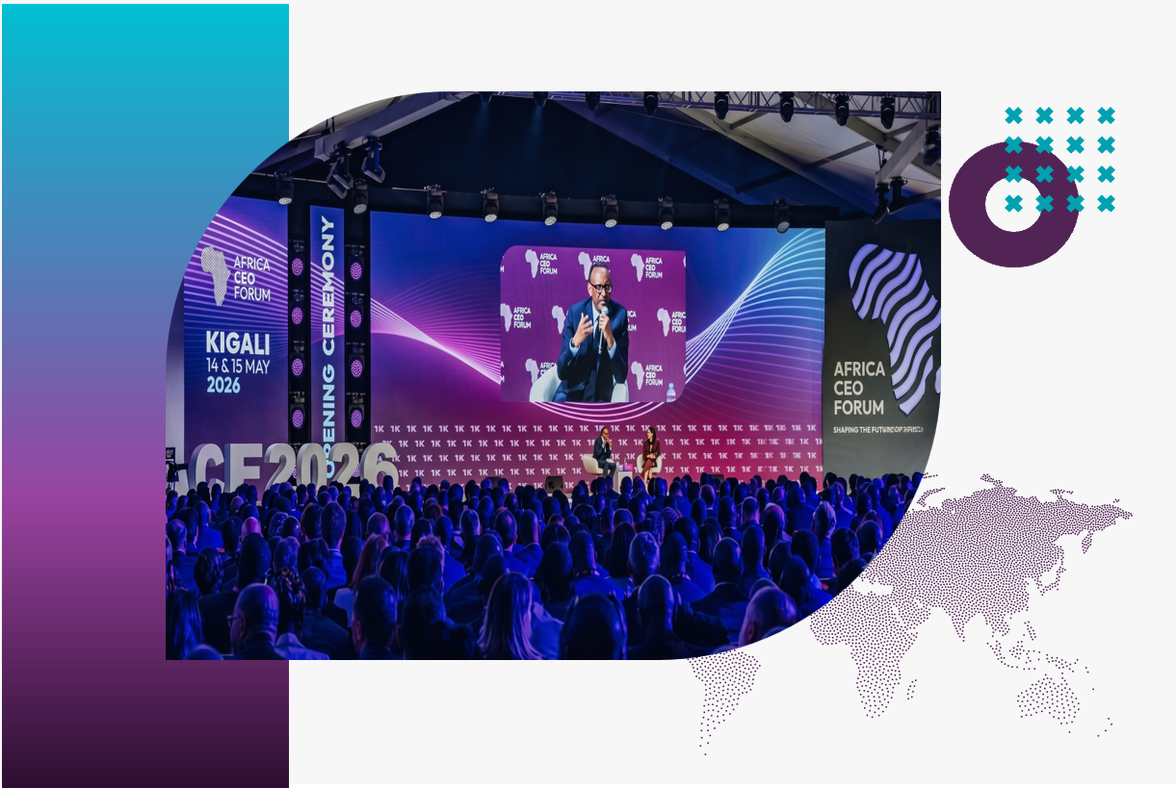
At this year’s Africa CEO Forum 2026, one message stood above the rest: Africa cannot achieve meaningful economic transformation without scale. The forum’s central argument was both compelling and timely: African businesses need to open ownership structures, attract larger pools of capital, consolidate fragmented markets, and trade more with each other if they are to compete globally.
In principle, the argument is difficult to dispute. Africa remains one of the most fragmented economic regions in the world. Most companies are still small relative to global competitors. Capital markets remain shallow. Cross-border expansion is expensive. And too many promising businesses struggle to move from founder-led enterprises into institutionally scalable companies.
The idea of “shared ownership”, whether through equity participation, regional integration, institutional capital, or strategic partnerships, reflects a growing recognition that the continent’s next phase of growth cannot be financed or built through isolation.
But the forum also raises a deeper and more uncomfortable question: Are the institutions promoting African scale themselves structured in ways that reflect the future they are advocating?
That question matters because Africa’s economic transformation will not depend only on speeches, panels, and declarations. It will depend on whether the continent’s leading business platforms, conferences, media groups, investors, and ecosystem builders are themselves becoming more African, more integrated, and more representative of the economic future they envision.
The Africa CEO Forum model
The Africa CEO Forum has unquestionably become one of Africa’s most influential private-sector gatherings. Over the years, it has successfully positioned itself as a continental meeting point for heads of state, multinational corporations, African banks, investors, startups, and development finance institutions. Its influence is real.
The 2026 theme “The Scale Imperative: Why Africa Must Embrace Shared Ownership” reflects an increasingly dominant narrative within African boardrooms: that the continent must move beyond fragmented national champions toward regional and continental platforms capable of competing globally.
The forum’s messaging strongly emphasizes: Pan-African integration, Cross-border capital flows, Strategic mergers and acquisitions, Public-private partnerships, Institutional investment, African-led industrialization, Intra-African trade under AfCFTA
In many ways, the messaging reflects exactly where Africa’s economic debate is heading. But when one looks at the structure surrounding the forum itself, the picture becomes more nuanced.
The paradox of African business platforms
Like many major Africa-focused business institutions, the Africa CEO Forum sits at the intersection of African ambition and international infrastructure. The forum was founded by Jeune Afrique Media Group and is co-hosted with International Finance Corporation.
This is not unusual; in many ways, it reflects a broader structural pattern across the continent where influential Africa-focused media platforms are often headquartered outside Africa, major conferences rely heavily on development finance institutions and multinational sponsors, much of the capital financing African growth still originates externally, and even many African investment narratives are distributed through non-African financial infrastructure.
This does not invalidate the forum’s message. But it does highlight a structural contradiction:
Africa is increasingly discussing economic sovereignty while many of the institutions shaping the conversation still rely heavily on external ownership, external financing, or external ecosystem architecture.
Following the money and partnerships
A review of publicly visible partners from recent editions of the forum reveals both progress and imbalance.
There is strong representation from African institutions: Ecobank, MTN Group, Afreximbank Rawbank, NSIA, Africa Finance Corporation, OCP Group. This reflects a genuine shift toward stronger African corporate participation. But the ecosystem remains deeply internationalized.
Global consulting firms, multinational corporations, western financial institutions, global logistics firms, international media companies, and development finance institutions continue to occupy a significant share of sponsorship visibility and ecosystem influence. Again, this is not inherently negative. Africa still needs global capital, global partnerships, and global market access.
The issue is not whether international actors participate The issue is whether African institutions are progressively building enough ownership, capability, and financial depth to reduce structural dependence over time.
The bigger issue is not the conference
The real issue is that the Africa CEO Forum reflects a wider reality about African capitalism itself. Africa’s private sector conversation increasingly celebrates: African champions, industrialization, capital markets, integration, data sovereignty, innovation ecosystems
Yet many of the systems enabling those conversations remain externally anchored. Even some of the continent’s most important business narratives are financed externally, rated externally, distributed externally, validated externally, or mediated externally. This creates a subtle but important tension.
Africa wants scale, but scale without ownership can become dependency at a larger size. Africa wants capital, but capital without institutional depth can limit strategic autonomy Africa wants globalization, but globalization without regional leverage risks reproducing asymmetric relationships.
What leadership by example could look like
If African business institutions truly want to champion shared ownership and continental scale, then the next frontier may be transparency and structural alignment.
Imagine if major Africa-focused institutions publicly disclosed: Share of African ownership, Share of African suppliers, Share of African staff and leadership, Share of revenue retained within Africa, Share of African sponsors versus external sponsors, Share of African procurement, Intra-African trade generated through their platforms
Such metrics would move the conversation from narrative to accountability. It would also create pressure for African institutions to evolve into genuinely continental economic platforms rather than simply Africa-focused convening brands.
The next phase of African growth
The Africa CEO Forum is right about one thing: Africa’s future will require scale. The continent is too fragmented to compete globally through isolated national markets and small founder-led businesses alone. But the next phase of African growth may require something even more difficult than scale.
It may require alignment between message and model. Because the institutions shaping Africa’s economic future cannot simply advocate for shared ownership, African integration, and continental resilience. Over time, they will also need to embody it.
About Kasi Insight
Kasi Insight is Africa's leading decision intelligence firm specializing in high-frequency consumer and economic data across Africa. Through its proprietary survey infrastructure and analytics platform, Kasi provides real-time insights that help organizations anticipate economic shifts, understand consumer behavior, and make better strategic decisions.
We welcome collaboration with:
Organizations interested in exploring partnerships or accessing Kasi datasets are invited to contact our research team.
📧 yannick@kasiinsight.com
20 views
The Future of AI in Africa Lies in Smarter Decisions, Not Just Smarter Models
Africa’s Critical Minerals: From Hidden Resource to Economic Catalyst
Perceptions of climate inaction persist among Ghanaian consumers, driven by income disparities